Tuesday, November 11, 2014

Joseph Gentile: Eight Things All Writers Should Do at Least Once

In the 34th in a series of posts on 2014 books entered for The Story Prize, Joseph Genitle author of Br'er Rabbit Destroys the Universe (Narmer Books), offers some unusual suggestions for priming the pen.


It has been my experience that writing itself is inherently contradictory. On one hand, you want to describe things to your readers so they can identify with what you are saying. But, on the other hand, you want to entertain them with fantastical and novel ideas, making them experience something fresh and exciting. How to combine the two?

The truth is, you can’t be a writer if you lock yourself up in a room all day and watch YouTube videos. (Columbo is pretty good, though.) In order to really master your art, you have to go out and live life. The more experiences you have, the better. That being said, “life experience” doesn’t really come from one or two wacky adventures. You have to be entrenched in something, be it a profession, a mindset, or a lifestyle, to really gain an interesting perspective. Still, a random jolt here or there can be just the thing to really lift up that massive body of experience and set it in lights. With that in mind, here are eight things that I think every writer should do at least once in order to prime the pen.

• Cook your parents a really nice Sunday dinner.

Show up at your folks place unannounced around three in the afternoon with three giant bags of groceries. Say, “Mama, tonight I’m-a cook you a nice-a supper!” Even if your mom isn’t Italian you should still talk like that. Most moms love Olive Garden so they’ll appreciate the ambiance. Sunday Dinner as a tradition has faded away, and it really is a loss. People are their true selves when eating, so you can learn a lot about a person by the way he or she twirls spaghetti.

• Write a song for a pretty girl (or a pretty guy).

This one is great because while you’re composing your ditty, you think that when you unveil it upon your sweetie, it’ll be like a scene in Pretty in Pink or The Breakfast Club where the two lovers finally realize that they were meant for each other and embrace in a passionate kiss that seems to be timeless. What really happens is that your girl will look at you like you are a total putz—which you probably are. She’ll be disgusted with herself, and you might get dumped. This is a fantastic way to learn about how expectations and results can spar with each other. So classic!

• Get in a fistfight.

Fisticuffs: Toughening up to face rejection
Truly, there is nothing like popping someone in the face. There is also nothing like getting popped in the face. It’s a startling realization when you learn that getting hit in the nose really isn’t as bad as it looks. It’s really more of a numbing sensation than a painful one. And once it’s over, you will gain an inherent toughness that you didn’t have before. You’ll need that skill because writers need to be tough. Rejection is around every corner. This one works best when you are fighting a real jerk-wad. Please don’t hit nice people.

• Give a nice person twenty dollars.

The fact is, karma doesn’t exist. Terrible, wretched things happen to nice people every day, and plenty of assholes go through their entire life having never once received their comeuppance. I’m sorry you had to learn this, this way. But better here than in the backseat of some car somewhere. So, the next time you see the Denny’s waitress get poo-pooed on by some guy because his Eggs-Over-My-Hammy isn’t fluffy “enough,” add an extra Jackson into your tip. Say, “Thanks for doing a great job!” Walk away before the waitress counts your payment.

• Write Mark Twain a letter telling him how much he sucks.

Actually, I think Mark Twain is the champ. No other author has created such rich, detailed, and dignified portraits of people of various stations—all while skewering himself. But that being said, too often authors are of the mentality, “Boo hoo hoo. I’m terrible at writing.” Shut up. You are great. You’ll never beat Mark Twain at being Mark Twain, but you certainly can beat Mark Twain (or whomever) at being you. What can you do really well that he can’t? Excel at that.

• Go bar hopping with Batman.

I can’t actually tell you how to do this one because it is a secret. But, believe me, it is totally worth finding out how to do.

• Write an arbitrarily numbered list.

Lists are nice. They let you feel like you have some control over the chaos that is this world. (Hint: You don’t.) So, making lists is a great way to organize thoughts and is also a great way to practice plotting. Both skills are essential for writers.

• Swing for the fences

Actually, you should do this one pretty much most of the time. I mean, there’s no shame in taking the easy win once in a while for an ego boost or to pay your electric bill. (“What’s that Mister Editor? You need an article on "The Twelve Cutest Kittens of Autumn"? Does that include Calicos?”) But, for the most part, take some time to look around and see what everyone else is doing. Then try to do something next level. Sure, you’ll crash and burn sometimes. But no matter what, I guarantee that your skills as a writer will improve. And, when you do hit a home run, it’s pretty much the best thing in world.
Calico kitten: Nailed it!
You’ll forget all about your unfortunate avant-garde, futuristic take on Dracula (with an all Canadian cast!) in a few years. But the times when you nail it? You’ll wear that as badge until the reaper drags you toward the light. In fact, you can even tell about your last great success while he fills out the appropriate paperwork.

Saturday, November 8, 2014

Antonya Nelson's Ten Writing Rules

In the 33rd in a series of posts on 2014 books entered for The Story Prize, Antonya Nelson, author of Funny Once (Bloomsbury), tells writers what they need to figure out and some of the best ways to do it.


1. As a fiction writer, learn early whether your temperament is more suited to the novel or the short story. Rarely does a writer do each equally well.

2. Learn how to revise. Your original impulse to tell a story is to be trusted; it's the follow-up that generally lacks diligence and labor. Discovering how to be happy in the revision process is a giant breakthrough.

3. Figure out how to read the work you love in a way that teaches you how to write better. Craft books, in my experience, are far less important to the writer than the literature you admire. Own the stories you love by committing them to memory, by studying them, by unearthing the care with which they are made. The process of re-reading is not unlike the process of revision: You are mastering the methods behind the artwork, complicating and texturizing and making it, inasmuch as you can, bulletproof.

4. Discover your own best process. Sprinter? Or marathoner? Wait for inspiration to build to a boiling point? Or labor every day at the precise same time? Subscribe to the method that works for you. Do not feel threatened by not being of the other type.

5. Locate three trusted readers to give you feedback when you're no longer able to improve the work. Return the favor. (That last is very important.)

6. Do not write to please everyone. Your first audience is yourself—and if you aren't charmed or amused or enlightened by what you're writing, nobody else is going to be, either. Do not hope to publish in every journal in the country. Instead, locate a few who get you. And be loyal to them. They will return the favor.

7. Write into the mystery. Write what you do not know. Write without having any eyes looking over your shoulder. Write the way you would dress for a party: utterly naked and alone, at first, and then, finally, stepping out and asking a trusted companion "Do these shoes go with this romper?"

8. Be tolerant of dry spells. Understand that being a writer is not illustrated solely by the act of typing. Mulling, reading, meditating, lollygagging, cooking, joking, traveling, watching television—all activity, as pursued by a writing sensibility, is potentially the stuff of writing.

9. Do not participate in the Writer Biz. That is, do not check Amazon ratings or PW triple-digit deals, or waste time being jealous of success or gleeful at the failure or humiliation of others. The only real way to be happy as a writer is to enjoy writing. To find in the solitary process some kind of succor. If you aren't satisfied with that, you will never be satisfied with any part of the life.

10. Report truthfully the world as you find it. Name it honestly, freshly, and put yourself on the line. A reader can tell if the work isn't revealing a genuine self behind it. It's the only kind of work that really matters.

Thursday, November 6, 2014

Phil Klay's Middle School Stint

In the 32nd in a series of posts on 2014 books entered for The Story Prize, Phil Klay, author of Redployment (Penguin Press), discusses his deployment in the classroom.


If I weren't writing I'd probably be teaching. I had the opportunity to student-teach 5th through 8th graders for half a year at a wonderful public middle school in New York, which was challenging, but also tremendous fun. Middle-schoolers are such wildly strange animals.

In addition to giving them some decidedly non-YA literature (I'm not sure how wise David Foster Wallace-exposure is for a very young mind, but I did give them a little), I ended up teaching a lot of quality journalism—Ellen Barry's piece for the Times on a mother in Staten Island who sends her son to Liberia during the Second Liberian Civil War, Lane DeGregory's Pulitzer-Prize-winning series about a neglected little girl who is taken in by a family committed to nurturing her (the students loved that one so much that, though I only assigned one article per class, many of the students came to our first class discussion having read the entire series). 

When we were going over what makes a sentence engaging or beautiful or compelling I gave them a sheet with maybe thirty or forty of my favorite first lines from literature and asked them to pick a few they liked and then explain why. In class we did an exercise where I had them to write bad versions of their favorite sentences (this to get them to think about how you can convey the same basic facts and yet lose all the rich qualities of voice that convey such important emotional information and aesthetic pleasures). One student rewrote the beginning of Moby-Dick as "'Hi. I'm Ishmael,' said Ishmael, introducing himself." 

At the end of the class I asked the students how I'd done. "You gave us more work than any other writer's workshop teacher has ever given us," I was told, though to my delight a debate then erupted in the class as to whether the assignments were too onerous or whether they were necessary for the students to, as one fifth grader emphatically put it after banging her fist on the table, "practice our writer's techniques!" I'd like to believe she was right. 

Tuesday, November 4, 2014

Drinking with the Bears: Dybek Reads Dybek


By Nick Fuller Googins
New York, NY, Oct. 24, 2014

If Stuart Dybek wanted to read from, say, Apple’s terms of service agreement, or the instruction manual to my Heaven Fresh rice cooker, I’d probably listen—the man reads with a rolling, low-pitched gravitas that rivals Sam Elliott’s Big Lebowski monologues. But better yet, though, is Dybek reading Dybek, as he did last Friday at the NYU Creative Writing Program’s cozy Village townhouse. He shared the spotlight with poet Fady Joudah in the latest of NYU’s “New Salon: Writers in Conversation” series, introduced and moderated by Darin Strauss, author and NYU Writing Program instructor.


Dybek, when it was his turn to take to the podium, chose to read his short story, “Córdoba,” a selection that was silently cheered by at least one audience member (disclosure: this audience member) because it includes:
  • The Chicago Bears
  • Heady make-out sessions
  • A small-calibered gun 
  • A sexy green dress with a plunging back
  • An engraved silver flask
  • A bartender with preternatural pouring skills
  • An apocalyptic snowstorm
  • Scraps of Fedrico García Lorca’s poem, “Song of the Horseman”
Those are some of the elements (presented in random order to prevent spoiling the uninitiated’s reading experience) that make up “Córdoba,” arguably the gem of Dybek’s collection, Ecstatic Cahoots, published by Farrar, Straus and Giroux this past summer. I say “arguably” because Ecstatic Cahoots contains forty-nine additional short stories, some as concise as two lines, others—like “Córdoba”—ten or so pages, all adding up to an embarrassingly large quantity of gems to sift through and discover. Oh, and add to those riches the nine stories from Paper Lantern, Dybek’s other collection (also published this summer, also by FSG). For those who’ve lost count, that’s fifty-nine Dybek stories. Enough to get Darin Strauss in a bit of trouble:

“It’s not every New York Times review that gets trimmed and twisted for over-enthusiasm. My last was.” That’s Strauss, relating his experience reviewing Dybek’s two collections. “For the first time in my years of occasional and by-in-large gentle reviewing, an editor blinked. ‘This is too much,’ she said.” Strauss went on to read a portion of his review as it existed pre-Times-editorial ax. A particularly lamentable casualty was the phrase, “jangling cinematography,” Strauss’s apt description for the narrative cartwheels and summersaults that make the experience of reading a Dybek story like that of reviewing a screenplay-adaptation of your latest, most pleasantly-bizarre dream. 

“Córdoba” seems to contain all the characteristics of one such pleasantly-bizarre dream (refer to aforementioned randomized list) but with one important caveat: It really happened. When Dybek finished reading, Strauss asked him to discuss the influence of literature in the story (“Córdoba,” in addition to the García Lorca poem, also references Emily Dickenson and Chekhov) and Dybek, on his way to answering the question, made this pit stop: “I write basically two types of stories. There’s the stories that often start with an image, and I never know what’s going to happen with those, and there’s the story that’s actually happened. This story really happened.”

It took a moment for the significance of what he’d said to sink in. Then Strauss, along with many of us in the audience, did a kind of awkward choking, double-take, laughing thing. “That’s amazing,” Strauss said. “You actually drank with the Bears?”

Okay, so now it’s known that Stuart Dybek drank with the Chicago Bears, and that “Córdoba” is a true story. Which is astonishing for all the items in the randomized list but also for the way in which Dybek manages to portray the “jangling cinematography” of reality. It’s wild—in some ways wilder than if Dybek had invented the story from scratch.

Strauss continued the conversation by asking Dybek and Joudah about their relationship to “place” as it figures in their writing. Joudah, a Palestinian-American who spent portions of his childhood in Libya and Saudi Arabia, spoke of locating his work in the Middle East as well as in the American South, where he earned his medical degree.

Chicago: A little touch of Pilsen
Dybek, naturally, spoke of Chicago: Nearly all of the fifty-nine stories comprising Ecstatic Cahoots and Paper Lantern are set in the city or in its immediate surroundings. “Image is central to a lot of what I write,” Dybek said. “And for me place is one enormous image.” Dybek was raised in the Pilsen neighborhood of Chicago’s Lower West Side, an area he credits for its influence on both his general outlook as well as that of his writing: “I was in a way very fortunate to be there to watch [Pilsen] go from Slavic to Mexican and it really fashioned my attitude toward America. The place that I was immersed in was not Leave It to Beaver, was not McDonald’s—my allegiance from early on was really to ethnicity and to a sense of foreignness.” As he began to write with Pilsen in mind, Dybek says, writing what he cared about came naturally, organically. “I was writing without even trying, about assimilation, about democracy, about class structure, minority culture, etc.”

Dybek is also a poet; he makes no secret of his love for both genres and their many hybrid forms. (His writer’s notebook is dominated by poetry—everything written in line—and he recalls Raymond Carver’s, when they compared notebooks, being the same way). Maybe it should come as no surprise, then, that reality, as recounted in prose by Dybek-the-poet and grounded in such specific sense of place, should take on the texture of wild cartwheeling dream-like imagination. I’m not still harping on “Córdoba” by the way; in a short discussion with Dybek post-reading, he divulged that “Four Deuces,” from Paper Lantern, is also cribbed from real life. The story—a boozy, dramatic monologue—includes mystical horse-track betting, M-80s, stigmata, and freight-train-hopping, to rattle off what comes to mind. If all that isn’t enough, keep an eye on the cinematography. It jangles.

Sunday, November 2, 2014

David James Poissant's Letter to His 25-Year-Old Self

In the 31st in a series of posts on 2014 books entered for The Story Prize, David James Poissant, author of The Heaven of Animals (Simon & Schuster), lays out for his younger self what what the next ten years will be like.


Dear Writer:

So, you want to be a writer.

Here’s the good news: You will be.

Here’s the rest of the news: It’s going be hard work. It’s going to be really, really hard work. A lot of what you write will be bad. And a lot of what comes along with being a writer—the hours alone, the living in your head, the writing not knowing what comes next or whether what you write will be good—all of this, frankly, is going to kick your butt.

There’s going to be angst. There’s going to be self-doubt. Joy, too. But also a lot of questioning of aesthetics and life choices and belief. Because, see, the thing is, once you start looking at the world through every possible combination of eyes, that world is going to reveal itself to be a bigger, badder, more beautiful and more nefarious place than you ever could have imagined.

The more you read, the more you write, the weirder things are going to get for you. Then, suddenly, you’ll be weird. Leastways, weird by your former standards of what weird is. You’ll keep weird hours, say weird things, spend weirdly enormous amounts of time behind computer screens and behind books.

And you’re going to go from being someone without much concern for other people to someone with an overactive imagination, which is to say an overactive accumulation of empathy, because if you can’t imagine yourself experiencing anything/surviving anything/perpetrating damn near anything, then you aren’t really imagining, are you?

The trick will be to hold onto that sense of imagination, of empathy, because it’s what’s going to keep you growing and learning, to keep you telling better stories. The danger lies in the other direction.

What’s the other direction? Well, you know that line from the Itamar Moses play? No, you don’t, because you haven’t read that play yet. But, you will, and, when you do, you’ll read a line that will haunt you, and that line is: “In order to do what I wanted to do for the rest of my life, I had to learn so much about it that I ruined forever my ability to enjoy it in the way that made me want to do it in the first place.”

That’s the danger. That’s the fire you’ll need to walk right up to but never step into. The goal? To tell stories. To write as well as you can. But never to fall out of love with the form, with the stories themselves. You’ll have to be careful. The coals are lit, the path is long, and that first step’s a doozy.

Getting there will be a journey. And here’s what that journey will look like:

You’ll be 25. You’ll know a writer. He’ll live in a California. He’ll have a book and a contract for another. His life will seem pretty great. You’ll want his life, and all you’ll have to do, you’ll think, is get into an MFA program and write a book. Easy. All you’ll have to do is get into the program that writer got into.

You won’t get into the program that writer got to. Don’t worry. Sure, you’ll be devastated. You’ll have read that huge anthology of writers who went to that program, and you’ll be convinced that’s the only place to go in order to make it, whatever making it means, but that won’t be true. There are lots of good places. You’ll go to one, and that place will treat you well.

And what’s going to happen is that you’re going to have a lot of success very quickly, and that success is going to go to your head. You’re going to have stories published, you’re going to win a few big contests, you’ll have a story anthologized, and, after two years of this, you’re going to feel like a big shot. But you’re going to have to remember that you’re a big fish in a small pond, that you’re competing mostly with other students, that, when it comes time to face what comes next, you’ll be just one more solidly decent fiction writer in a sea of other decent and, what’s more, many amazing fiction writers.

You’ll have a lot to learn, and, when you learn that you have a lot to learn, any expectation of doing this thing—this artsy, writing thing—for money or for accolades is going to dry up, and you’ll see that being in this for the long haul means making art for art’s sake, for the sake of story itself.

Go ahead and make this decision, because, after you do, you’re going to hit a rough patch, not in your marriage or friendships or health, all of which will stay mercifully good and strong, but in your writing life. You’re not going to publish a word for two years. This is okay. This is the way it’s meant to be. You’re going to be building an arsenal of beginnings and early drafts. You’re going to be generating material. You’re going to be undertaking new experiences. You’re going to be finding your voice, whatever finding your voice means. In short, it’s going to feel like you’re making no headway, but this will change. When you tell a writer friend that you’re going through a dry spell, he’ll tell you not to think of such times as dry spells but to think of all other times as puddles, and his words, though simple, will seem no less true for their simplicity—perhaps they’ll hit you harder because they’re so simple, plain as the pan you crack eggs into each morning as you wonder why you aren’t writing better, why book deals aren’t arriving on your doorstep—and this advice will kind of shake you up and remind you to be grateful for all that you have and for all that you’ve been given thus far.

Things will move quickly after that, the way things sometimes do. More stories will arrive, and you will write them. Other stories will beg to be finished, and you will finish them. Many of these stories will be published, but don’t let that distract you, because publication isn’t the thing, or it isn’t the only thing, can’t be the only thing. The book deal will come, but don’t let that be the thing either. The story is the thing, will be the thing. One story after another, each story demanding its due. The story must always, always be the thing.

Once you see that, a decade will have passed, and you’ll have come a long way. You’ll still have far to go. By then, you’ll know enough to know there’s so much you don’t know. A decade from now, who knows what 45-year-old you will have to say?

In the end, the story of our lives will be the stories we tell ourselves.

If this is true, maybe the best we can hope for, from writing and from life, is one good story after another.

Onward—

Friday, October 31, 2014

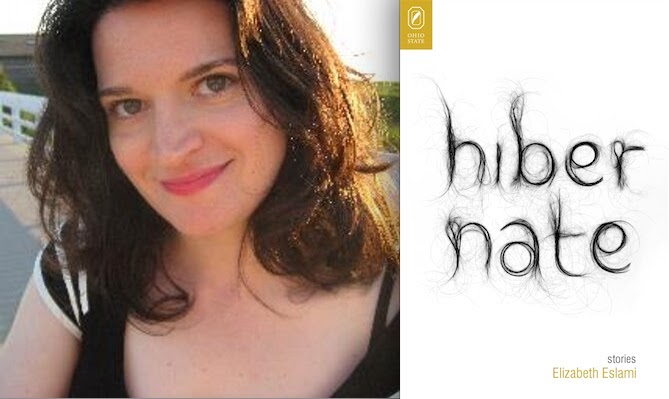
Elizabeth Eslami Embraces the Mess

In the 30th in a series of posts on 2014 books entered for The Story Prize, Elizabeth Eslami, author of Hibernate (Ohio State University Press), discusses the process of writing and the aftermath of publication.


If you build inside a garage, you tend to make a mess. An office is no different. Never mind the ergonomic chair or the ceramic frog with pencils sticking out of its mouth. When you publish a book, there’s sawdust everywhere. A lot of “no” from people whose refusal to believe in you matters, a lot of “no” from people whose refusal to believe doesn’t matter, not in the least. The mess of all the revisions you’ve made, all the books that have sprung to life while you’ve been waiting—books that have plopped right out of people, the exact way my mother once said one of our neighbors in South Carolina gave birth by accident, the kid dropped right out of her when she went to squat—this mess, which, by now, is three feet deep and spans the floor is the thing that is most surprising about publishing a book.

No one ever thinks of the mess.

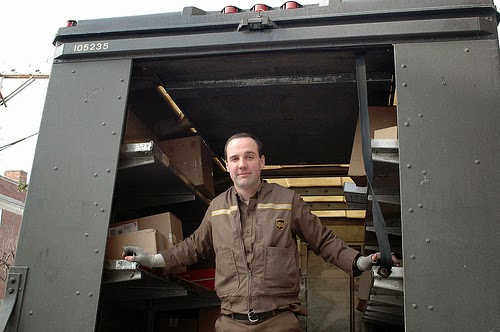
What they’re thinking of is the end, when the edits have stopped and you’re drinking orange juice in your rented brown shoebox in Oregon and the dog is going nuts because the UPS man has come with a box of books. Author’s copies. A box of dreams, but that seems awfully romantic when you’ve got orange pulp in your teeth and the dog is up on the couch now, lunging at the window, which you’ve tried to break her of, but dammit if she doesn’t use that nose-smeared window to deter the UPS man, who is going to leave that box on the mat because he values his life.
UPS man: Here he comes

The first book, the first time, the first box—you weep. If you don’t have children, people wink and say the book is your child now, finally birthed into a world that smells of motor oil and paint thinner and grass clippings. Even without children, you imagine that writing a book and having a child are probably nothing alike. There’s no reason for the analogy, to make ink into blood or paper into flesh. The world is plenty big for distinct pains and pleasures.

Now you have published a book. To be read and ignored, shredded and praised, bought and sold and remaindered, ARCs found two years later, their half covers flapping open in used bookstores like someone’s desperate wave before you walk away. The one thing you never imagined in all those years of submitting and getting rejected and saying words like “mutual exclusivity policy” is that you wouldn’t be working on this book anymore.

But now you’re not. And you won’t ever again. You’ll talk about that story as the years go by, but that talk will begin to feel far away, as if your characters are friends from grade school whom you think of fondly, though you’re not quite sure what it was that endeared them to you, what you did together other than make bracelets out of clover and pull spitballs from each other’s hair. You shared minor trauma, you know that much, crotch falls off balance beams, bloody noses. Who are these people now?

You have new characters with the second book, ones you know you’ll one day say good-bye to. How will you know how to do it the second time around? Have you learned a single thing about how?
The second book, the second time, the second box—the UPS man leaves in your garage while you’re tending to a basement flooded with sewage. It’s a different rental this time, in Connecticut, where foxes sometimes creep up into the yard and put their ridiculously small paws against the rubber trashcans. Where everyone is afraid of high taxes and rabid raccoons and your neighbor cuts the grass with his shirt off, his belly a purple cabbage in the summer.

Here comes the UPS man, all the way up into the garage with your books. Author’s copies. The dog is too old to bark, to see much of anything.

That’s okay, because by now you embrace the mess. The impermanence of dreams, the fading smell of glue. By now you know how to use a shop vac to suck up gray water, which is the romantic name for water after you shower, which has flooded all those old notebooks where you wrote about wanting to publish your book. Gray water. You’ve learned that much, even if you haven’t learned what you’re supposed to do after you publish, how you’re supposed to say goodbye for the second time.

Wednesday, October 29, 2014

Kyle Minor's Unwritten Time Travel Story

In the 29th in a series of posts on 2014 books entered for The Story Prize, Kyle Minor, author of Praying Drunk (Sarabande Books), lays out an elaborate fantasy that he couldn't work out as a story.


What's the worst idea for a story you've ever had?
I had a recurring and embarassingly self-centered fantasy about a special kind of time machine that would allow me to place the sum total of my by-adulthood life experience, knowledge, memory, muscle memory, and consciousness into my baby brain in the year 1976, not long after birth.

In this fantasy, I didn't have any noble aims. I didn't mean to use my future knowledge to bring about world peace or ward off disaster or alert people to soon-arriving trouble (with one exception, about which more in a minute), on the theory that people are going to be self-destructive one way or another, and, besides, most of us know that the thing we're about to do is going to undo us, but we do it anyway, because we want to do it, consequences be damned.

For about two years I tried to write a story out of this awful time machine idea. I developed very specific plans, most of them involving the entertainment industry, which I'd reach good and early by practicing the piano and the violin every waking hour as soon as I was big enough to pick up either. Around age four, I'd set up a concert, call all the television stations in Palm Beach County, beg them for their tapes afterwards, send the tapes to the Johnny Carson show, try to get booked the same night as John Lennon. Timing would be imperative, because I'd mean not only to get Lennon's attention, but also to avert his death.

And, here's the thing: I'd know all these great songs, and it wouldn't be plagiarism, would it, to write songs that would otherwise exist in the future but which in present time hadn't yet been written?

In the Green Room at The Tonight Show, John Lennon would stop by to see the curiosity, the freak show, maybe be kind to the child in person but have a perverse laugh later at my expense. But when he got in there, I'd say: "Wait a minute. Listen to my song. Then I'd hit him with something great, then another, then another. Then he'd say, let's go on together, you and me. Let's do these songs."

Johnny would wave us over to his chair. He'd ask how long we'd been playing together, and Lennon would say about two hours, but isn't this the beginning of something good? This is like a thing I remember a long time ago in Liverpool, with a kid named Paul.

John Lennon: Imagine
We'd start writing together, after that. He'd sign me to his publishing company, and set me up with my parents in an apartment in Manhattan. At some point in early December I'd throw a temper-tantrum, demand we immediately fly to Paris and record, explain this urgency was the central thing in my life, tell him I was dying, whatever it might take to get him out of New York before December 8, get him away from the Dakota Hotel and the evil that lurked just outside.

You can imagine the rest. First the songs, then the records, then TV, movies, a life of making things not terribly different in kind from the life I have now, but very different in terms of access and means and scope and duration. Instead of spending my childhood at the fundamentalist Christian school that was founded in large part to keep the white kids away from the black kids, and instead of spending my weekends at the Southern Baptist Church where the traveling preachers played Beatles records backwards and suggested they be burned, and instead of spending my nights staring out the window at the sky, hoping it wouldn't turn red, that Christ wouldn't return with the sword, command the graves be ripped open, leave so many of us behind to face the reign of terror by the eastern European Anti-Christ, while the U.N. helicopters chased us over the mountains as we fled the guillotine—a thing I'd seen more than once in movies projected in 16mm on New Year's Eve in the church Fellowship Hall, while sitting at tables filled with turkey stuffing and homemade banana pudding . . . Instead of all that, I'd spend my childhood fighting to complicate those stories, and making music, and learning to draw and animate and fill up real life with an imaginary and hyper-real version of life I could create and invent with all my waking hours and days and weeks and months and years, and generally throwing up my middle finger at the specter of death, even though, then as now, it would have been coming, it would have been everywhere.

It was a terrible story because it was an implausible story, and it wasn't an implausible story because of the time machine only. It was an implausible story because it was a wish-fulfillment fantasy, another fruitless run at coming to terms less than complicatedly with what William Styron called "the unfinished business of childhood."

It was my mother, a person who had never before encouraged me to write anything other than wish-fulfillment fantasies, who finally helped make things clear. I told her about my time machine story, the music lessons and the television tapes and The Tonight Show and John Lennon.

"Your time machine would never work out the way you wanted it to work out," she said.

"Why?" I said.

"Because I wouldn't have let you do any of those things," she said.

"Why not?" I said.

"Because I don't believe that any of those things are good things," she said. "The music, the movies, the television, the transgressive stories. The things you want are wrong, and people shouldn't want them."

If I had decided, then, to write the time machine story honestly, then maybe I was one beat away. Maybe she had given me my ending. For the first time, something in the story made the story true.

But I didn't want to write the story anymore, because by then it had become yet another iteration, another version, of the story I had already spent ten years and two books telling, the ever-wallowing in the grievances of childhood, in the desire to do it all again, make it better this time. As I thought about her words, their harsh closure, I began to feel a small and growing freedom. There would be no changing the past, and the only thing left to stretch out into was the future.

The time had come to find a new subject.