Wednesday, December 12, 2012

Ron Hansen and the Legion of Bad Ideas

In the 53rd in a series of posts on 2012 short story collections entered for The Story Prize, Ron Hansen, author of She Loves Me Not (Scribner), shares some of his favorite stories.


What made you become a writer?
I have written elsewhere that when I was in kindergarten I was the narrator for a Christmas pageant and recited from memory the nativity story from the gospel of Luke.  I stood there in front of a hundred people, mostly parents, and watched them pay strict and serious attention to what I was saying, even though words and phrases like "manger" and "swaddling clothes" and "the time of her confinement" were like gobbledygook, an absolute mystery to me.  The power of language took root in me, and over the years I realized that storytelling, at least on paper, was something I enjoyed doing enough that I did it voluntarily. In high school I discovered John Updike's work and read everything of his that I could.  Even though I then aspired to be exactly like him, one's own personality comes out even in imitation and few would find many likenesses in our fiction, though I have followed his lead in writing essays and book reviews—mind you, they're not remotely as good.

What's the shortest and longest time it's taken you to write a story?
Some come so quickly that I have little memory of writing them. My children's book, "The Shadowmaker," took only three hours in first draft. The first-person stories "My Kid's Dog" and "My Communist" and "She Loves Me Not" each took less than a week. But speaking of "My Communist":  the idea for that came from a Polish priest's homily in California in 1981. The gossip was that the pope had sent him away from Poland because he was on a KGB hit list for those priests involved in the Solidarity movement. In his homily, the priest said he was spied on by a man in a trenchcoat for several weeks and wanted to speak to him because he would surely know Polish, but then the man stopped following him and the priest was surprised by his feelings of loneliness. I knew immediately, in 1981, that it was the basis for a good short story, but it took me more than twenty years to get around to it.

Oscar Wilde
The necessary added ingredient came in the form of a newsletter that carried a Polish priest's narrative of his journey to Alaska to serve a parish. He'd asked the editor to correct his English, but the editor found his grammatical mistakes charming, and that voice was what precisely what I'd been missing for twenty years. "My Kid's Dog" was a true story that my late father-in-law related to my wife some thirty years after the events it describes. It just hung around in my head for a while, and then I knuckled down and finished it rather quickly. Same with "Wilde in Omaha." I discovered Oscar had visited my hometown in the course of writing a research paper on an entirely different subject when I was probably 21. Many, many years later I remembered a reporter's rather snide version of Oscar Wilde's day in Omaha and I finally thought it was time for me to write my own account. The gestation period can be very long. The blizzard of 1975 in Nebraska greatly influenced my writing about the famous blizzard of 1888 in "Wickedness," but that story was the last one I wrote for my first collection of stories, Nebraska, which was published in 1989. So again, more than a dozen years passed before the inkling got down on paper. 

What's the worst idea for a story you've ever had?
My bad ideas are legion, and I generally just tuck away the finished products in a garage file in the hope that I'll someday figure out how to solve their myriad problems. But one story comes to mind: It took place on Old McDonald's farm (of the children's song) among the talking sheep and cows and chickens who were involved in what resembled a contentious town meeting. At last Old McDonald descended into their midst like a deus ex machina and yelled, "Stop these shenanigans!" I got some chuckles myself in rapidly writing it down, but it really was a ludicrous idea. Sometimes you just have to get these things out of your system.

What stories by other writer do you most wish you'd written?
In no particular order:  

"Mars Attacks" by Jim Shepard.  
"Notes for a Story" by Gail Godwin.  
"Master and Man" by Leo Tolstoy.  
"Redemption" by John Gardner.    
"The Things They Carried" by Tim O'Brien.  
"Everything That Rises Must Converge" by Flannery O'Connor.  
"Pigeon Feathers" by John Updike.  
"In the Heart of the Heart of the Country" by William H. Gass.  
"Spring in Fialta" by Vladimir Nabokov.  
"Big Two-Hearted River" by Ernest Hemingway.  
"Absolution" by F. Scott Fitzgerald.  
"How I Contemplated the World from the Detroit House of Corrections . . ." by Joyce Carol Oates.  (She also edited an anthology titled Scenes from American Life and almost everything in it is something I wish I'd done.)  

And already I feel guilt over the many great stories and writers I've left out:  John Cheever, Edna O'Brien, Jean Stafford, Alice Munro. . . the list threatens to be endless.

Tuesday, December 11, 2012

Helen Marshall: Writing as Tourette Syndrome

In the 52nd in a series of posts on 2012 short story collections entered for The Story Prize, Helen Marshall, author of Hair Side, Flesh Side (ChiZine Publications), discusses the powerful, age-old urge for self-expression.


The difference between essay writing and short story writing, I recently had explained to me, is that there really is no market for short stories—you write them because you have to, because you can’t stop doing it.

There’s something about that I find amusing: short story writing as a kind of Tourette syndrome. You might be sitting alone at a restaurant, struggling with chopsticks as you try to get through your pad thai with the modicum of calm dignity attempts that using chopsticks inevitably attempts to shred, and—bang!—out pops a short story. You are embarrassed. The other patrons stare at you. Small children gape and point. The restaurant owner quietly, firmly asks you to leave.

Maybe short story writing is a bit like that.

The starting place for my collection Hair Side, Flesh Side was in the archives of the Bodleian Library in Oxford. In order to complete the research for my dissertation on medieval book production, I had agreed to spend four months touring various libraries in England and Europe, poring over four-hundred-year-old manuscripts, making notes on handwriting, discoloration, measuring punctuation marks. It’s the kind of work that is both terribly mysterious and terribly dull.

And I was alone.

I was alone in a strange, gorgeous city where gargoyles and grotesques hung from the hidden places of the buildings above me. I had rented a tiny room—so tiny, in fact, that the only place I could fit my suitcase was wedged between the highest bookshelf and the ceiling so that it overhung the bed by about two feet—in Cowley where the students lived. Half the people told me this was a lively, up-and-coming neighborhood; the other half were worried I’d be raped when I went home from the library.

And the truth was that as glorious as Oxford was, as exciting as the work was, I was lonely. So I wrote. And my stories grew out of the work I was doing and the places that I was seeing: Oxford, Siena, London, Croatia—all these places took on a sort of magical quality that leached into the stories. Stories about children receiving the bodies of dead saints from their divorced parents. Stories about women discovering lost manuscripts written on the inside of their skin. Stories about angels debating the finer parts of temporality, omniscience and art. And the stories were all about the things I couldn’t say. They asked questions too broad for me to ask in my dissertation. What is art? What is history? What is memory? And what have people got to do with any of that?

Illustration from The Three Edwards: War and State
in England 1272–1377
 by Michael Prestwich
The thing about reading old manuscripts is that as you flip through pages of Gothic Bibles, sometimes you’ll stumble upon something written in the margins. It might be a simple note about how tired the monk was, then, of copying. How the light was too dim. Or “Now I've finished: for Christ’s sake give me a drink.” This is where monks first began to write in English after the language was suppressed following the Norman Conquest. You see lyrics, fragments, bits and pieces written on flyleaves, on the backs of charters, or in the spaces between Latin texts. Images too. Apes dressed in lady’s clothing, dragons devouring their own tails, pigs on stilts, rats making off with the sacrament—all these fantastical images sketched out in a few ink strokes.

All writing, I think, is like Tourette syndrome.

It burbles out of us. It leaches out of the cracks in our lives. Writing is infectious. Irresistible. Even those monks for whom accurate copying would have been the most sacred duty could not resist the call to articulate their own experiences. And to elaborate on them.

What many scholars have found strange is how many of those images in the margins of Gothic manuscripts are profane. Quirky. Boisterous. Violent—all those arse-kissing priests and squires jousting with penises. I think there’s something in that. Writing is a space for play, a space to subvert, to argue and counter-argue, to attack, to provoke. Look at Chuck Palahniuk. I can’t think of a writer whose short stories more resemble the bizarre, raunchy scribbles of medieval monks than him!

Short story writing, for me, is wonderful because of its brevity. The short story allows you to play God, to construct a tiny universe and tinker with it, compress it, make it strange and startling. As short story writers, we can explode our worlds. We can push them and their inhabitants to the breaking point, escalate tensions, find the greatest sources of discomfort, the greatest moments of passion and zeal. It’s also one of the most confrontational forms because of its brevity. Short stories are like bullets sent out whizzing into the world:

BANG!
BANG!
BANG!

And because of that, the short story lingers in the mind. Like a dirty word. Like a monk’s jutting phallus. They embarrass us. They shock us. They excite us. A good short story finds the humanity in confrontation. It grabs you by the balls. It refuses to leave you unmoved.

Sunday, December 9, 2012

Lucy Wood Gets Inspired

In the 51st in a series of posts on 2012 short story collections entered for The Story Prize, Lucy Wood, author of Diving Belles (Houghton Mifflin Harcourt), discusses the roots of her stories and what other writers’ work has taught her.


Where do you find inspiration?
For my collection of short stories, Diving Belles, I was inspired by Cornwall’s folklore and landscape. The folklore and the landscape are intrinsically linked: Many of the stories grew directly out of specific locations. When you go walking around Cornwall’s coastline, you can see granite boulders that look as if they’ve been carved by giants and dangerous stretches of water with small peaking waves that look as if they are haunted by mermaids.

Zennor Mermaid Chair, Cornwall
When I started to read nineteenth-century collections of Cornish folklore, I was inspired by the very real, everyday lives that the folklore described. Although the folklore is full of magic and extraordinary events, it is, fundamentally, about human situations and relationships. For example, stories about mermaids luring men out to sea are stories about loss and absence. I find it fascinating that these stories may have evolved to describe the feeling of losing a loved one at sea.

I found certain images in the folklore very inspiring: a wrecker swinging a wrecking lamp in the dark, house spirits watching over a house, storm spirits hovering over the sea. I also came across lots of interesting Cornish dialect words during my research. The word “wisht,” which means melancholy or lonely, and is also the name of hounds that run over the moors, is very evocative. When I came across this word I was inspired to craft a story around its meaning and the atmosphere it evokes.

What writer or writers have you learned the most from?
I have learned things from so many writers. I think the ones that have had the most influence on me are Annie Proulx, Raymond Carver, Lorrie Moore, and the poets John Burnside and Alice Oswald. I am particularly influenced by writing that focuses on a particular place or landscape. The way that Annie Proulx writes about the landscape of Wyoming in her short stories and Newfoundland in The Shipping News is really inspiring—the language and style that she uses reflects the environment she’s writing about. And the characters and the action are shaped by place, too.

Along with many short story writers, I learned a lot from Raymond Carver’s stories. His stories are so well crafted and the tension is perfectly pitched. Carver’s stories show that nothing much needs to happen in a short story, as long as the tension and conflict is maintained and developed throughout it. I learned that what it unsaid and unspoken is just as important, or even more important, than what is said.

Lorrie Moore is such a playful writer: Her stories play with form and language, move backwards through time, and use second person narration. She finds the right balance between sadness and wit, often with a well-placed pun. This play with language and vivid imagery is evident in a lot of the poetry that I enjoy reading. Both Alice Oswald’s and John Burnside’s poetry are rooted in a specific place or landscape, and they evoke this through unusual language and imagery. Poems are often structured through movement from image to image, from conjuring a particular atmosphere, or through repetition, and I try to use these ideas in my own writing.

What story by another writer do you most wish you’d written?
I wish I had written Lorrie Moore’s collection Self-Help. The collection works so well because it is tied together by such a wonderful premise—stories that take the form of self-help guides. This means that Lorrie Moore can play around with, and poke fun at, the structures and clichés of self-help manuals, while at the same time gently poking fun at the disasters and tragedies of her characters. The whole book is full of wit and wry humour, but it is also serious and sad. I love the way that the stories use the second person ‘you’ to address the reader, as if the reader is a character in the book. Like the self-help manuals that the collection plays off, “you” implicates the reader in the action, the character’s small joys and mistakes are everyone’s. Lorrie Moore plays around with time to great effect throughout the whole thing, whether we are moving forward quickly through a relationship in small snapshots, or going backward, seeing a relationship between a mother and daughter from the mother’s death to the daughter’s birth.  

The stories are full of interesting language, vivid images, and poignant moments. There is a real confidence and playfulness to the collection, and it is wise without being earnest. It really influenced my decision to base my first short story collection on a specific premise, Cornish folklore, and find ways to play around with its ideas and structures in my own work.

Friday, December 7, 2012

Emma Donoghue on the Books Inside of Every Book

In the 50th in a series of posts on 2012 short story collections entered for The Story Prize, Emma Donoghue, author of Astray (Little Brown), explores intertextuality.


“No man is an island,” said John Donne, and no book is an island either. Your book may seem quite distinct from every other book, especially when it arrives so smartly dressed before publication day, with its hard covers and glossy jacket. But whether you know it or not—and whether you care to acknowledge it or not—your book is made up of other books, just as you’re made up of every meal you’ve had, every lover you’ve touched, every cut you’ve had and healed. We shouldn’t let our modern obsession with originality obscure the truth that our literary forebears always remembered: Books are born of books.

Sometimes that fact is flaunted right on the surface, when you quote another author in an epigraph or let one of your characters do it. I find that my characters, even if they’re not churchgoers, regularly cite or echo The Bible: It’s one of my cultural touchstones. For epigraphs, I often use texts from the oral tradition, such as ballads: There’s something lastingly powerful about words that have stood the test of centuries of time, even without the benefit of being set down in print, impressing themselves on so many people who bothered to pass them on.

Sometimes the intertextuality is found at the deeper level of structure and theme. In my novel Room, for instance, the imprisoned boy and his mother only own ten books (and not a great ten!), which she does her best to supplement with the para-literary tradition of fairytales, nursery rhymes, and pop lyrics. But many other books were crucial to my writing of Room, so every time I see my novel praised as, say, “unique,” I remember that it’s just one in a long tradition of child’s-eye fiction that includes, for instance, passages in Lewis Carroll’s Alice in Wonderland (a book not only explicitly referenced in Room but helping to shape its world-turned-inside-out structure) as well as many novels (from L P Hartley’s The Go-Between to Roddy Doyle’s Paddy Clarke Ha Ha Ha) in which a child fails to understand the complex sexual politics of adult life. Room also owes a huge debt to the years of reading eighteenth-century fiction that I did for my PhD: Jack is a wide-eyed, deadpan guide to a Fallen world, much like Voltaire’s Candide or Swift’s Gulliver.

There are books with which Room shares subject matter (John Fowles’s The Collector, which is such a definitive postmortem of the mindset of the kidnapper that I went to great lengths to stay out of the mind of the captor in mine) and others with which it shares a method (Lionel Shriver’s We Need toTalk About Kevin, for instance, inspired me as a freakish case that illuminates the everyday experience of parenthood).  Reading Cormac McCarthy’s The Road left me with a question—if that’s a father-and-son myth, what would a mother-and-son myth look like?)—to which Room was my best answer.  Books emerge from each other, and turn back to each other, talk to each other, and sing each other’s praises, much like human beings do.

And like us, they don’t always get along. A story can be written in response to another, as a thoughtful corrective or a furious rebuttal. Many a weak novel has inspired a better one, in a spirit of I’m-going-to-tell-it-like-it-really-is. Whenever I write a same-sex love story, for instance, I’m trying to sing louder and sweeter than the centuries-long chorus of clichés about bitter and suicidal gay or lesbian characters. “Genre” fiction writers tend to be very aware of the reader’s expectations; in romance or crime fiction, there’s a sort of unwritten contract between reader and writer, and if the writer chooses to ignore one of its clauses, she had better make sure to pay attention to the others. But genre rules are just another form of intertextuality: Your reader’s sense of what makes a good crime story has probably been shaped by a lifetime of Agatha Christie, Patricia Cornwell, and Stieg Larsson.

Maybe it’s because of my academic-gone-wrong background that I tend to be extremely conscious of these intertextual relationships: Whether I’m writing (as I often do) fiction based on real events, such as the fourteen stories in my new collection Astray, or a plot I’ve invented, I tend to be hyper-aware of my sources and influences. But a writer isn’t obliged to be: Some prefer to compose their fictions in a sort of dream state, and leave it to critics to worry about the why. Either way, no book is pristine, no matter how white the pages may look when they hit the bookshops: They’ve all got each other’s grasping fingerprints all over them.

Wednesday, December 5, 2012

Peter Levine on Writing Other People's Stories

In the 49th in a series of posts on 2012 short story collections entered for The Story Prize, Peter Levine, author of The Appearance of a Hero (St. Martin’s Press), discusses story ideas he's gotten from other people and a story that didn't work out.


If you’ve ever written a story based on something another person told you would make a good story, what were the circumstances?
I’m the worst when it comes to this. From my book alone, there are at least 4 or 5 stories that grew out of, at least in part, stories that others told me. My dad told me a story about how he took my older sister camping with a bunch of his friends and their daughters. Late 1970s, the dads got stoned the whole time (of course, my dad says he abstained). Another story told to me was about a guy who was sleeping with his boss and how she was completely nuts, but how he loved her so much he couldn't see how loony she was.

My best friend Dan told me three stories. One was about a high school buddy of his who made up an older sister. All throughout their growing up, this kid—Brian, I'll call him—would talk about his older sister, Beth. She was much older and was always away at school: boarding school, then college, and then living somewhere else. She had an elaborate biography—what she majored in, what her job was later, etc. One time, in high school, a bunch of his friends were hanging out at Brian’s house and one of the friends brings up this older sister, Beth, within earshot of Brian’s parents, and they’re like “Who are you talking about?” 

“Beth,” the friend says, thinking that maybe they didn’t hear him. But they had no clue what he was talking about, and Brian told them to shut up about the older sister. He’d just made up this sister—for years, making up stories about her! That became a story called “Our Hero David Katz,” but in that story, a guy makes up an older brother in order to fit in with the cool crowd. The other two stories Dan told me were about a friend of his who died in his early thirties and how he kind of always knew the guy—who was something of an idol—wasn’t long for the world. The other was about an older colleague of his whose father and mother were growing old and were nearing the end of their lives. The father, who had bad dementia, wrote his dying wife a letter about bringing their son—the colleague—home from the hospital. That became part of a story called “Havasu.”

As an aside, Dan often did me the favor of printing out many manuscripts on his computer at work. Another lawyer (he’s a lawyer) came in and, seeing my manuscript on his desk, asked him what it was.

“It’s a long story,” he said.

What’s the worst idea for a story you’ve ever had?
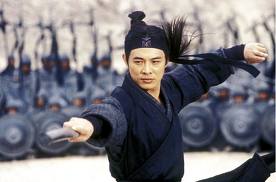
Jet Li in Hero
I don't know about the worst idea, but the dumbest/strangest idea I’ve had for a story was about a guy who finds a stone outside his house and spends the entire day (and story) kicking it around town. The story was called “The Kicking Stone.” I had been reading too much Murakami and had also just watched the movie Hero, with Jet Li, which was a cool movie. The story shared the setting with the movie, though no one who would have read that story would have known it. 

Anyhow, this guy goes around kicking this magical stone and encounters different people, and they tell him their stories and it’s supposed to lead up to something meaningful (what, I don’t know) —at the end, he swallows the stone. I actually put this before my graduate class and they didn't laugh at me, kind people they were, and then sent it out, never to be taken, though I was very fond of it then.

Monday, December 3, 2012

Amy Willoughby-Burle's More Than Three-Ring Circus

In the 48th in a series of posts on 2012 short story collections entered for The Story Prize, Amy Willoughby-Burle, author of Out Across the Nowhere (Press 53), talks about juggling parenting, home schooling, and writing.


The lights go up in the Burle Big Top and it’s “Show time!”

“Get your peanuts. Get your popcorn.”

“Turn your attention, folks, to the center ring. What looks like any given household in America is actually the setting for an amazing chaos defying feat. Gaze upon this ordinary woman as she attempts to write a story while juggling the laundry, the dishes, and homeschooling her children. The phone rings, the dog gets loose, the baby eats a crayon. Will she be able to get the story finished? Just as she sits down one more time, the kids wants lunch, the baby starts to cry, and her best girlfriend calls to chat. It doesn’t look good for our writer, but don’t give up hope—she turns off the phone, sends the kids out to play and puts the baby down for a nap. She won’t get much time, but she’ll make the most of what she has. She throws vacuuming to the wind, the laundry will wait, and if dinner doesn’t get made—well, that’s what Pizza Hut is for. Watch her go, folks! Write, ordinary woman, write!”

Ok, so no one is selling peanuts and there’s not an MC to narrate, but it certainly does feel like I’m writing in the midst of a circus sometimes—that circus we all know as our life. I had a writing student ask me once how I find time to write. How do any of us? I thought about that question and usually when you ask a writer that, they seem to tell you what their routine is, but they don’t say how they “found” any time. It’s not hiding under the couch. Believe me, I looked. The time is right in front of you. It just might not be as luxurious an amount as you’d like. It  might not come with a peaceful office, a big desk, and beautiful view out the window. But it’s there.

Each morning, I wake before my children do, grind some coffee beans, brew my drink, open my laptop (which sits on the kitchen table) and pick up where I left off. I get a moment of that thing called silence. But just a moment. The baby wakes and I feed him breakfast and turn on Disney Junior. Yes, I let Mickey Mouse and his whole clubhouse babysit for just a while. Other writers may turn on their favorite musical muse, but not me. Instead: M-I-C-K-E-Y  M-O-U-S-E  It’s the Mickey Mouse, clubhouse, come inside, it’s fun inside.

Later, the girls stumble out of their room still clouded with slumber, looking for cereal, and hoping that this will be the morning that Mommy forgets about home schooling and writes all day long, leaving them to the freedom of parental abandon. The more they wake, the louder they get. The baby cries out for his bottle. The phone rings. The laundry buzzes. I don’t forget about school, and we pull out the books. There’s lunch to make and dishes to do. But then later the older kids go out to play and the baby takes a nap and even though the house is a wreck, there are still dishes in the sink, and I never did return that call, I open up the laptop again and pick up where I left off. Again. That’s the time I have and I’m happy for it.


The curtain closes for the night and the performers get a few hours of sleep before the crowds return for the next show. Tomorrow the sun will rise on the Burle Big Top, and it will be another chaos defying feat as that ordinary woman opens her laptop, spins a tower of plates, dodges a clown shot from a cannon, and finally finishes her story.

Saturday, December 1, 2012

Hampton Fancher and "The Plaza of Death"

In the 47th in a series of posts on 2012 short story collections entered for The Story Prize, Hampton Fancher, author of The Shape of the Final Dog (Blue Rider Press), reveals how snatching a copy of Death in the Afternoon from a library launched his writing career.


Terms like “dyslexia,” “learning disability,” and “attention deficit disorder” were not in use when I was an adolescent; what I heard was lazy, uncooperative, and incorrigible. I’d flunked the 3rd grade twice, had gone to six different schools, and was in the 7th grade for the second time when the older sister of a friend of mine told me I was an asshole but said it might help if I read a book.

She gave me a novel called The Conscientious Objector. I had no idea what “conscientious” meant and couldn’t pronounce it. It was about a young American soldier over in Korea who didn’t want to fight. At one point he got a pass to go to into town and somebody told him to make sure “to get laid.” He got laid. I’d never heard “laid” used in that way and it moved me. Until then I had no idea books could be sexy.

I wanted to read another one, with more sex maybe, but it took a while and it happened by chance, walking by a library. I’d had no experience with a library, wasn’t sure how it worked, the checking out of a book, so I stole one, shoved it through the bars of the men’s room window.

It was called Death in the Afternoon by Ernest Hemingway and it changed my life. Two years later, in 1954, I ran away, caught a Greyhound from L.A. to Phoenix then hitch-hiked to New Orleans and a month later to Galveston where I caught a freighter to Barcelona and wound up in Madrid.

Bull fodder
I tried to write a story about three bullfighters who die the same day of three different kinds of death. The best thing about it was the title. I worked on this story on and off until I was eighteen. I also illustrated it. Sent it to Hugh Hefner and got a rejection slip, but with a handwritten note. It said they had recently published a bullfight story and they had no interest in “The Plaza of Death,” but that they liked the illustrations and encouraged me to continue drawing.

Writing started with reading. The joy of my solitude was to read and in the romance of that, try and write what I read. I became a poor, but earnest student of William Burroughs and Joseph Conrad, Dostoyevsky, Walker Percy, Nathanael West. I’m still doing it. It’s never stopped.