Monday, December 31, 2018

Anjali Sachdeva: In Praise of Old Stories

 In the 35th in a series of posts from authors of 2018 books entered for The Story Prize, Anjali Sachdeva, author of All the Names They Used for God (Spiegel & Grau), explains why she finds reading old stories alongside newer ones instructive.


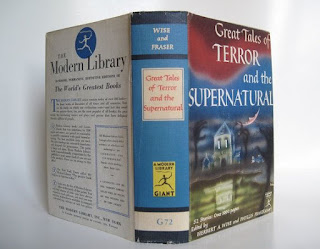
When I was in the sixth grade I checked out a book from my school’s library entitled Great Tales of Terror and the Supernatural. It was at least 2 inches thick, cloth-bound, falling apart at the seams. The stories were all classics, from writers long dead, though as a middle schooler I had never read them before. Images from the initial stories stick with me to this day: a jealous husband burying his unfaithful wife’s lover alive; a ferret with a bloodied mouth disappearing into the bushes. The unabashed drama of these stories, just at the verge of being maudlin (and sometimes beyond the verge) was entrancing. I returned the book to the library at the end of the week, as required, but could not get the stories out of my head. But when I tried to check it out again, the book was gone, and it never returned to the crowded little shelves of my school. 

Those old stories attracted my attention for a lot of reasons. They were scary and more grown-up than most of what I read. But also, they functioned differently than the stories most authors write today. Often times they included a frame story that modern sensibilities (and editors) would find superfluous and slow: a traveler sitting down by the fire to tell his tale to another guest at an inn, or a retrospective narrator gazing back into the past. They held the mark of older oral storytelling traditions, in the same way that early films contained holdovers from stage performance. But there was a fearlessness to them, an unabashed emotion and showmanship, that I found—and still find—irresistible. I sometimes feel as if modern stories are driven by quieter and more efficient electric engines while the older stories derive their power from a smoking, clanking boiler that shoots off the occasional spark.
This is not to say that I don’t like new stories. Every year I read many stories by contemporary authors that I love, that I want to return to and read again. And every year I read a few stories by contemporary authors that take me by surprise. In each of those surprising stories, the author has employed some technique I haven’t seen before: a particular manipulation of voice or of structure, a dive into subject matter I would never have considered interesting in less capable hands. Not all stories I enjoy do this, of course; some are simply using traditional patterns in a masterful way. But stories that change the game make me rethink my own writing, make me realize all the possibilities I’ve been ignoring, and push me to search for those other possibilities that are still out there, unexplored or at least unpopular.

What we tend to forget is, old stories can do that too. If you buy a collection of stories written in the last ten years, you’re unlikely to find one that’s telling a story the way O. Henry did, the way Kate Chopin or Ralph Ellison or Willa Cather did. Writing, like fashion, has its trends. I always want to know what new writers are doing, and given access to a limited number of books in a year I’d probably always choose to see what’s new. But happily, I don’t have to choose, and neither do you. I’m grateful for the lessons in writerly possibility that old stories have given me, the way they force me to examine my assumptions about how a story should work. I know that reading them has made me a better storyteller, and I know they still have more to teach me.  

Friday, December 28, 2018

Chaya Bhuvaneswar on Writing Under Difficult Conditions

In the 34th in a series of posts from authors of 2018 books entered for The Story Prize, Chaya Bhuvaneswar, author of White Dancing Elephants (Dzanc Books), discusses continuing to write while in labor and in the aftermath.


Writing on the day I went into labor for the first time wasn’t hard. There were strange sensations, sure, but nothing to get panicked about. Eventually, after nearly an hour of moaning while writing (and not even because what I was writing was erotic, per se), my partner convinced me to call the Ob-gyn, who in turn laughingly convinced me that I might want to “come in.” The labor itself, thanks to providence, wasn’t hard either. By then I was already far along, also quite adrift in my own head, satisfied with a denouement of a novel in progress that felt so natural, I was confident of never losing it—even if it would be hours before I could write again!—I thought, all naivete. (It would be weeks). My active labor lasted fewer than ten minutes, and joy was mine, long, wet and slightly quiet on my breast, those eyes regarding me, so deep, my partner turning back from the window, where he had retreated, scared, to look at this darling. I never wanted to stop holding this baby. I wondered how I could be so selfish as to ever want to write again.

Prompted by reminder emails, calls, voice messages, weeks later I tried to return to the page. By then the task of “turning in” (a manuscript under contract, to a publisher) felt utterly beyond my reach.
“Baby’s sleeping” became words that might allow me to write. So was the imperative to “lose the baby weight.” These two activities competed, vicious, for my waking life. In the lobby of our building, though in theory only: happiness. A glossy gym. A lockable conference room, with pad for laptop and laptop charger, where I could sit for “hours” undisturbed, if I could bear the guilt of the nanny being without me, with the baby.

I tried and cried, tried and struggled, also on the phone negotiating a move to another Northeastern city. Between the three activities—moving, working (full time, as a doctor), and the unpredictable, often terrifying process of learning how to be a mother (with my spouse traveling much of the week, to that other Northeastern city, where he worked full time)—I don’t know how I wrote.

But I have words, pages, lingering from that time. Ideas. Structures and reworkings of myths. Short stories I wrote in bursts, then revised over several coming years, including into my next pregnancy, which was only slightly easier (and followed, again, by a second attempt to “finish that book” by a deadline that fell six months postpartum, while I was going through still another city move, and still working full-time, this time in public health rather than clinical medicine). I couldn’t really finish any project, during that time. But I still wrote every day and thought about writing most of the minutes and hours that I spent watching other small people claiming my body, drawing from it, needing me.
What I learned most, about writing—it can make postpartum insomnia (a disruption of sleep borne of waking up so many times to nurse, then sleeping lightly so as to hear the baby monitor) thrilling. It’s a fun thing to do if you happen to be waking up at 4 a.m., after a night of very little sleep, to pump milk anyway.

I wrote while crying and alone, in dreadful little lactation rooms that were really janitor’s closets. I wrote when we struggled through bad latching experiences and even worse-tasting formula. I wrote when conflict with extended family stressed out our little family even more; when we had moved and exhausted postpartum, my partner did all of the work and shouted at me, to where I sat with the baby in the bassinet, rocking it while writing in a notebook on my lap. I wrote. I knew I didn’t have a choice, per se, and gloried in that fact, and glory still. I wrote.

“Words alone are certain good”—especially when you’re singing, as I did, to small children. Yes, I never again had, nor will have, the same kind of guilt-free, peaceful writing “studio”—like the converted closet where I sat, so content, writing through the earliest stages of labor, when I was pregnant with my first. I know I have to write, and that is all. I know that even when my postpartum body had so many other tasks (as my current self does, years later) I could not stop writing. 

Friday, December 21, 2018

Kirsten Sundberg Lunstrum on Stargazing and Writing Short Fiction

In the 33rd in a series of posts from authors of 2018 books entered for The Story Prize, Kirsten Sundberg Lunstrum, author of What We Do with the Wreckage (University of Georgia Press), discusses finding inspiration through a skylight.


When I was ten, I discovered Orion. Not that spotty character of Greek mythology, but the constellation bearing his name. My family had moved that summer—our third move in as many years—this time to Lincoln, Nebraska. We leased a 1920s era Sears, Roebuck and Co. kit house that—like my family—had been uprooted from its original neighborhood and relocated to a bare plot of land on the low-rent side of town. The house had many charming features (a front porch ceiling painted sky blue, a heavy wooden banister along the staircase—perfect for sliding down, glass doorknobs from another time), but my favorite was the skylight cut into my bedroom ceiling. At night, lying in my bed, I could see Orion through that square of glass. There he was—the hunter—body outstretched, glittering belt and sword at his waist, standing guard in the bewilderingly oceanic Mid-western sky.  

Orion the hunter’s mythology is muddy. He may or may not have been the son of a god. He raped a woman and was blinded in punishment. Helios, the god of the sun, restored his sight; but eventually, his bluster and violence led to his death. His body was set among the heavens, where every winter he stalks the sky, hunting there, despite the darkness and the cold.

Hunting for stories
I didn’t know this story when I was a little girl looking for Orion through my skylight. If I had, I think I would have felt something other than comfort in seeing his shape there in the black square of my night. Instead, I made up my own stories about him—stories more like fairy tales than anything else. My Orion was a hero. He rescued rather than ravaged. He restored rather than wrecked. These stories were the ones I needed to hear, and so I wrote them—not on the page, but in my head—soothing myself through my childhood anxiety with fiction, ordering the uncertainties of the world with narrative.

That year of looking up at that narrow square of sky and finding story is the one that made me a short story writer, I think. My rootless childhood turned me into an outsider, an observer, a seeker of connection—all requirements for the writer. But also required of a short story writer, in particular, is the ability to look at a sky muddled with stars and zero in on the single constellation. What I love about short fiction is the acuity it necessitates, the sharp gaze, the polishing. In writing short stories, I spend a great deal of my time squinting into the vast expanse of possibility, and then narrowing, narrowing, narrowing my focus.

For years, I kept on my writing desk a one-inch in diameter, round picture frame. Inside the frame was a tiny disc clipped from a magazine page, an abstracted bit of image. The point, of course, wasn’t the image itself, but its reminder to cut away everything that didn’t belong in the story. That—as I see it—is the crux of my work in telling stories: to see with clarity the burning center, and then to slice and shear away everything else.

If I were to give advice to my own younger self—or to any new short story writer—it would be to spend more time thinking about how to see the complexity of a whole constellation through the narrow frame of one window.

Now, as an adult, I have left the Midwest and made my home instead in the far northwestern corner of the country. In the winter—when Orion is visible in the northern hemisphere—the sky here is often hidden behind a quilt of clouds. On the rare clear winter night, however, I still find myself looking up and searching out Orion. There he is—Betelgeuse, Rigel, Bellatrix, and Saiph. And, though I didn’t know to look for it as a child, I can now spot the Orion Nebula there, too. From my vantage in my front yard, the Orion Nebula appears to be simply a brighter point in the blade of Orion’s sword, but it's actually a stellar nursery. Looking at it, I know that I’m watching something incredible. New stars are forming up there—light and beauty coming together through a process of collapse and compression and fusion.

The metaphor, I think from my spot on the ground, is just too good.

Monday, December 17, 2018

Why Audrey Kalman Reads Mary Oliver in the Morning

In the 32nd in a series of posts from authors of 2018 books entered for The Story Prize, Audrey Kalman, author of Tiny Shoes Dancing (Terrella Media), on a helpful daily practice.


“The first words seem so portentous. But they must be.” With those admittedly florid sentences, I began the session that would evolve into an ongoing morning writing practice.

It was 7 a.m. on Aug. 4, 2016. I was attending a writing retreat that offered participants the option to gather every morning for silent writing. Anyone interested in giving up an hour of sleep for their craft congregated before breakfast in a big, chilly room where someone would light a fire in the pot-bellied stove. We sat on lumpy couches or hard chairs in front of narrow countertops. I chose a spot on the floor and used a large wooden coffee table as my writing surface.

This writing experience was new to me, and revelatory. Not that I’d previously ignored the advice you find in almost every result from Googling “writing habits of successful writers,” which boils down to “write every day.” As someone who has written professionally for most of my adult life, I’ve learned how to be productive.

But this wasn’t about productivity. It was about dreaming.

I returned home transformed by those four days. I continued rising early and sitting in silence, now at my kitchen table. I wrote for as much time as I could before starting my day. I did it for two days, then a week, then a month.

I’m still doing it.

I reflected on the value of this practice as another NaNoWriMo drew to a close recently. I have nothing against National Novel Writing Month, but it’s a practice with a very different goal and different tactics.

The approach practiced at the retreat suggests avoiding spoken language before beginning to write—no listening to the radio or exchanging pleasantries with your partner. The idea is to foster a connection with one’s dreaming self, the part that comes alive in the night and that feels to most writers like the closest they will get to a direct connection with the wellspring of creativity that fuels their work.

The retreat leader suggested reading poetry if you want to read anything before you begin writing. Of all the writing forms, poetry probably comes closest to the realm of dreams. I chose Mary Oliver, to whose work a friend had introduced me several years earlier, and began reading a poem every day from New and Collected Poems, Volume One.

For me, the spareness and vigor of her language, her natural imagery, and transcendental themes set the perfect tone. You might choose different poets. The point is to prime the mind at the same time you’re quieting it, warm up the writing muscle, and find the silence so you can hear the stories inside you, begging to be told.

Making time and space for a writing practice that sparks your creativity isn’t easy. Morning works for me because my kids are grown. I’m a morning person and my husband is a night person, so all I have to disturb the morning silence are the cats, who do not require thoughtful conversation, or any conversation at all.

You may have early morning obligations—toddlers to wrangle, presentations to prepare for work, aging parents to care for, another half hour of sleep to chase. But you don’t have to rise early and you don’t have to read Mary Oliver. You could write in the evening. You could read Maya Angelou or Charles Bukowski, W.H. Auden or Walt Whitman, Emily Dickinson or Adrienne Rich.

But no matter the time of day or what you choose for inspiration, I urge you to explore creating a daily writing practice that’s about more than word count.

Monday, December 10, 2018

Camille Acker on an Individualistic Writing Process

In the 31st in a series of posts from authors of 2018 books entered for The Story Prize, Camille Acker, author of Training School for Negro Girls (Feminist Press), looks for but doesn't find a writing formula.


As a younger writer, I wanted to be given the secret formula for writing a book. I would go to talks of some of my favorite writers to hear how they did it, ready to take notes so I would remember how I could do exactly what they did.

One favorite writer said he got up every day at 5 a.m. to write and didn’t leave the chair until late afternoon. I tried early rising a few weekend mornings, until a couple of weeks in, I turned off the alarm and never turned it back on. Another favorite writer worked at a full-time job and stayed after work hours to craft stories. I tried staying later than even the cleaning crew at my corporate office job until I could no longer bear to be at trapped in my cubicle for 12 hours.

I felt ashamed of my writing habits. I must be lazy if I couldn’t sustain the early morning writing. I must not really want to be a writer if I couldn’t make the sacrifice of staying a few late nights at my job. I berated and bullied myself for years.

Then, I went to workshops and grad school where I began to find my true voice, telling stories set in my hometown about the diversity of the black female experience. I weaved in 1980s and 1990s popular culture, wrote in the wry and wise voices I heard from the women in my family and made no apologies for reckoning with race, class, and gender in the everyday lives of my characters.

Just as I came to embrace the individuality of my perspective, I began to accept the individuality of my writing practice. I realized that everyone pursues their craft differently and that the only thing I need have in common with the next writer—even the writer I greatly admire—is that we both kept writing.

I used to envy friends who were lawyers or in finance who knew that A Higher Degree + Years of Work = Success and Money. Creative careers follow no formula and neither do daily practices to produce creative work. We want so much to be given a game plan, a step by step, “Ten Easy Steps for Becoming A Writer.” The work challenged me enough, why wasn’t there a way to make the process easier?

Excavation: Digging deeper
But when we write, we are excavating, digging deeper into the way we experience the world, are other matters entirely. I learned to be open to even the fallow places in my practice when the words would not come and my characters were tenacious in remaining one-dimensional. I learned to allow the rhythms of my writing time to vary rather than laboring to match the movements someone else makes in their writing life, to twist my creative self into unnatural postures.
chipping away at our curiosities, and mining personal, familial, or cultural pain. Our tools for the excavation are the same: time, persistence, courage, and an open mind. How the dig will go and how primed the ground is for it

That doesn’t mean the work is easy. When I reach the midpoint of a story or the scene in the novel that must be written but I'm not quite sure how to write it, forcing myself to stay put can yield a breakthrough. I know that if I work past the thirty-minute mark in a writing session, I’m likely to discover a way into the story that I hadn't imagined when I sat down.

I’ve added to my creative toolbox over the years. Sometimes jazz fuels my writing sessions and other times, punk is what I need. Occasionally, I chant to myself as I write or type at the top of the screen No one else is reading this in order to get past the imaginary criticism I can hear in my head before I even hear the voices of my characters. I have a home office but sometimes the only way I can see my way through the writing is at a cafe surrounded by other people pecking away at their laptops.

I discovered no secret formula, but the closest I’ve found is to be gentle with yourself and to be the writer you are.

Friday, November 30, 2018

Jendi Reiter on Choosing Relationships That Support Their Writing

In the 30th in a series of posts from authors of 2018 books entered for The Story Prize, Jendi Reiter, author of An Incomplete List of My Wishes (Sunshot Press), discusses the powerful influence writing can have on a writer.


In the Tarot, the Tower card signifies a disruptive, fundamental change. Richly robed figures tumble headlong from a crown-topped edifice struck by lightning, as droplets of fire rain from a black sky. Yet the building stands on a sturdy rock that has likely weathered many of nature's assaults.

Conventional Tarot readers may dread this card, wanting to give clients good news. But it's one of my favorites. I even have it on a T-shirt.

Writing is hard because our deepest intuition is a force as disruptive—and vital—as the lightning that cracks the Tower wide open. Some cherished beliefs or relationships may not survive the personal growth and truth-telling that the creative process brings forth. Fear of such changes is often the real reason for writer's block, for me and other writers I've known.

Difficulties balancing "writing" and "life" aren't always financial or time-management problems, or even codependence. There's a deeper layer that writing-advice books don't usually acknowledge. We may be correctly perceiving the risk that our work will take us places that our family, friends, community, or religion doesn't want us to go.

Case in point: When I began writing fiction in my early 30s, I thought I was a Christian woman, and now I'm neither. The narrator of my first novel, Two Natures (Saddle Road Press, 2016), simply took over another project and insisted that I tell his story, which somehow felt like my own, despite the superficial differences in our backgrounds. Writing in the voice of a sexually adventurous gay fashion photographer made me realize I'm transmasculine/nonbinary—an option I didn't even know existed till my novel research brought me into a diverse and welcoming queer community.

What does this mean for my happy marriage to a straight man? We're still figuring it out, but it does slow down the process of writing the sequel...and I have to be kind to myself about that. You're not always a "better person" for choosing to preserve relationships—a truth that feels transgressive for writers socialized as female. On the flip side, don't doubt your commitment to the writing, just because you're being careful about its real-life impact.

"Problems with your novel are really problems with your soul," my first fiction-writing mentor, a virtuoso of the literary short story, used to tell me. As an evangelical, she meant that I was blocked and depressed about Two Natures because "sodomy dishonors God." I'll always be grateful for her encouragement of my writing as a spiritual vocation—and I'm still unraveling my shame, fear, and anger from the abusive theology of the community where I first felt the Spirit move. No wonder the book took eight years to finish!

The card that precedes the Tower is the Devil: a giant hairy goat-headed fellow who holds a nude man and woman in bondage with chains round their necks. But interpreters often note that the shackles are loose enough to escape if the human figures weren't so passive. I've learned to welcome writer's block as a sign that some situation in real life is entangling me in chains of my own making, and I'd better break them before the unsustainable structure comes crashing down. In that sense, my Christian mentor's advice is still golden.

Re-committing to my writing flushes out relationships where I'm being gaslighted—made to feel unclear about my perceptions, ashamed of my emotions, obligated to ignore my gut instincts, or forbidden to set boundaries. When I'm in a toxic relationship, I become afraid of my own mind, which arrests the journey into the creative unconscious.

Jesus reportedly said, "If your right hand causes you to stumble, cut it off and throw it away. It is better for you to lose one part of your body than for your whole body to go into hell." (Matt 5:30) This unsettling text has been weaponized against queer people, as a command to cut off a vital part of ourselves—our embodied identities, our capacities for love and pleasure. As with the Tower card, though, I've found the good news within the disruptive shock. It's a promise that I can survive without an attachment I once thought essential—if the alternative is that I'm slowly dying within it.

After the Tower comes the Star, the card of inspiration. An angelic woman, nude and unashamed, pouring the infinite water of life into a pastoral pool. On the other side of writer's block, when outworn supports have crumbled, lies not isolation but a clearer and stronger empathy for myself, my characters, and the world into which I release them.

Monday, November 26, 2018

Victoria Patterson's Letter to Her Beginning Writer Self

In the 29th in a series of posts from authors of 2018 books entered for The Story Prize, Victoria Patterson, author of The Secret Habit of Sorrow (Counterpoint), shares some insights gained through experience.


You have no idea what you’ve undertaken. That’s OK. You’re going to love writing. No matter what happens, it’s yours. But here are some ideas and thoughts.

Don’t suppress who you are—your oddities, wackiness, your un-literary background. You’ll end up closing off the source of your most true impulses. If you alter who you are because of fear of not succeeding, or of not fitting into a capricious market, you’ll hate yourself, and then your work will suck anyways.

Stop asking others, “Do you think I have talent?” It’s like asking, “Should I buy it?” i.e., “Should I buy myself?” No matter how difficult, no matter the obstacles, no matter the years it takes, be willing to trust yourself.

Learn to honor yourself through your failures. Let them contribute to a stealthy self-respect, steadiness, and poise, which will be integral to your work.

Praise your adversity-bred toughness. Many writers have abandoned their craft due to the necessity of rejections.

It’s not that exciting. Learn to appreciate the drudgery. It’s a requirement. The grind becomes part of your ability to write well.

One of your best teachers will be yourself: by copying sentences, paragraphs, pages and pages in private notebooks, from authors you revere. Don’t worry. It’s not imitation. Go hog wild. Copy as much as you want. The magic of these sentences will cast a spell, impelling you toward your own expression.

Try not to worry too much about angering people. Chances are they’ll be angry at what you didn’t predict, and the things you fretted over won’t matter.

Your deficiencies and weaknesses will paradoxically become the best and worst qualities of your prose. Don’t despair. Whatever you don’t or can’t overcome, you can let it be purposeful and useful to your work. But to do this, you have to be aware and alert, otherwise, it’ll hide in your prose, diminishing it, and you won’t even notice.

Don’t use talent as exhibitionism, withholding behind language. Move deeper, risking vulnerability and foolishness. Don’t fall for the easier, flashier accomplishment.

A commitment to your work is not a pledge to achieve fame or success. Try not to dwell over the fate of your work. Instead brood over the writing.

Remember that your truest appreciation comes from silent, absorbed readers.

Learn to live for the next thing you write, and the certainty and thrill when your own work speaks back to you.

Don’t fall for the constant fatuous exhibitionism of social media, a need to be in public view as conspicuously as possible. Most of your time must be reserved for privacy.

Don’t be afraid to write badly, just do it in private, where mediocrity and badness can flourish, and where you don’t have to strain not to be trite, sentimental, or clichéd. You have to loosen up and write badly. Unless you’re willing, you can’t write well. You’ll need lots of privacy for your inevitable bad writing.

One of your greatest attributes is your urgency to write, that vital seed of determination, interest, need, and desire. It’s all yours. You might not know what the story means yet, but you are impelled to tell it, and this fundamental element propels a reader’s interest and can’t be faked.

Be glad that your stories are hungry. If the motivation is trivial to the writing, the story will lack the passion that generates interest, no matter how beautiful the prose.

Try not to worry about intellectual expression or academia. Your respect and delight in the incidental and prosaic details of life are more helpful, as well as your ability to perceive through emotions.