Showing posts with label Jacob M. Appel. Show all posts

Monday, June 18, 2018

Jacob M. Appel's Misguided Advice

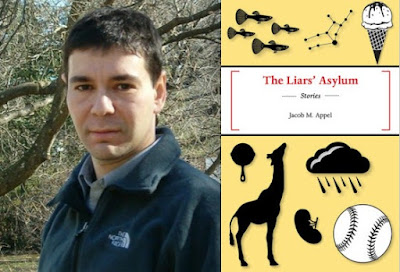
In the first in a series of posts from authors of 2018 books entered for The Story Prize, Jacob M. Appel, author of The Amazing Mr. Morality (Vandalia Press), offers his worst possible guidance for writers.


One of the perks of publishing literary short story collections—alongside the secure income and ticker tape parade up Broadway—is the prerogative to offer aspiring authors unsolicited writing advice. Having been the beneficiary of such guidance in my youth, it seems only fitting that I now avail myself of the opportunity to share my own wisdom with others, whether or not they are interested in hearing it. In that spirit, here are eight highly misguided ideas guaranteed to derail your career in the book business.

1. Write about what you don’t know. The less you know the better, especially if your readers are highly familiar with the subject. Depict places you have never visited, cultures regarding which you have minimal understanding. For instance, a writer named Franz Kafka once wrote a novel (or part of a novel) called Amerika, about a continent he had never stepped foot upon, in which the Statue of Liberty carries a sword, rather than a torch, and a bridge connects New York to Boston. Who has ever heard of Franz Kafka?

2. Ignore basic rules of grammar and punctuation. These are tools of the oppressor, designed to impede communication and render the already challenging task of putting pen to paper all the more difficult. Admittedly, Molly Bloom’s dream sequence in the final fifty pages of Joyce’s best-selling Ulysses lacks a comma and a period here and there, but few readers make it that far anyway.

3. Never glorify untoward behavior. Or, at a minimum, exert discretion. Nobody minds the sixteen-year-olds marrying in Jane Austen’s Pride and Prejudice or Elena Ferrante’s Neapolitan Quartet, just don’t go all Nabokov on the reader and overdo it. Similarly, a subtle stalking novel in the spirit of Fitzgerald’s The Great Gatsby is likely to appeal to our best selves.

4. Avoid talking animals, inanimate narrators, and above all, extended discussions of nineteenth-century whaling. The western canon has precisely room for three of the first (Orwell’s Animal Farm, Adams’s Watership Down, What’s-his-name’s The Metamorphosis), two of the second (Pamuk’s My Name Is RedShearman’s Tiny Deaths) and one of the third (Naslund’s Ahab's Wife). Don’t see your novel on the list? Well, it won’t be, because life is unfair—and publishing is like life, except owned by Germans.

5. Include a gun that does not go off. 
This is roughly Chekhov’s idea, although much easier for him because Tsarist Russia didn’t require handgun licenses. Dostoevsky does this brilliantly in The Idiot where, as readers may recall from the Wikipedia summary, Ippolit Terentyev, forgets to put the cap in his pistol before shooting himself.

6. Write in your second or third language. Doing so impresses agents and editors; if you don’t already speak a second or third language, it’s never too late to learn—the more obscure the better. Rosetta Stone Frisian only costs $199.99. For instance, as a native English speaker, Joseph Conrad would be hardly memorable—but knowing that he only spoke Polish into his twenties makes Lord Jim a rather entertaining party trick. (If that approach fails, take a page out of Arthur Koestler’s Darkness at Noon: Have your girlfriend translate the manuscript and then misplace the original.)

7. Torment your darlings, but don’t kill them. J. M. Barrie tormented an entire family of Darling children in Peter Pan to great acclaim. The initial draft, in which Wendy, John and Michael Darling were massacred by pirates, fared poorly with focus groups.

8. Favor quirky antics and implausible coincidences. There lies a crucial difference between verisimilitude and reality. For instance, take the moment in Sterne’s Tristram Shandy when the title character urinates out a window is accidentally circumcised by the falling sash. I suspect most readers—or at least half of them—find themselves crossing their legs and reflecting, “Ah yes, that’s the human condition!”

Since this is all deeply misguided advice, I have ignored it—and look at the great fame and fortune that have been my reward. I was a household name in my grandparents’ house, before they died, which is more than Philip Roth or Toni Morrison could ever claim.
Thursday, August 24, 2017

Jacob M. Appel on Being a Good Literary Citizen

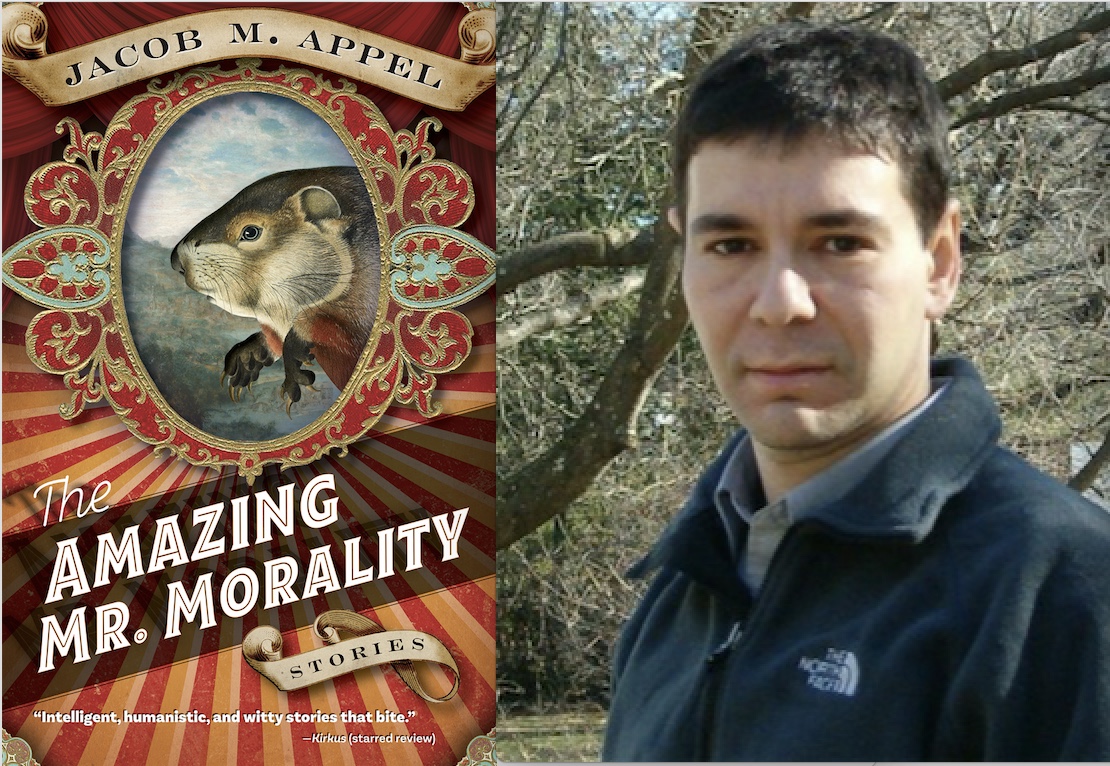
In the 13th in a series of posts on 2017 books entered for The Story Prize, Jacob M. Appel, author of The Liars' Asylum (Black Lawrence Press), lists a few things writers can do to give back.


I am frequently asked to give advice to aspiring writers—which usually means offering whatever limited wisdom I have on how to craft better stories, secure agents and publishers, and increase book sales. All of these are reasonable goals, likely shared by the overwhelming majority of readers of this post. Yet as a professional ethicist, I thought I might tackle this subject differently this time around and offer some tips on how to make the literary world a better place:

1. Be Positive or Be Quiet
I am proud to say that I have never written a negative book review, either for publication or on sites such as Amazon, Goodreads, Librarything, etc. You shouldn’t either. Any literary work you encounter was once someone else’s baby, a beloved repository for another human being’s imagination and emotion. Needless to say, some of these metaphorical babies grow up to be admirable adults—and others, quite frankly, do not. But what possible good comes of denigrating them once they are in print? If you don’t admire a work, not reviewing it at all is statement enough. With so many wonderful books on the market, any time or space spent penning a negative review occurs at the expense of other great works deserving of exposure.

2. Donate Books
Not everyone is James Paterson and capable of providing millions of dollars in seed money to public libraries, but most writers can afford to give away a few free books—or, at least, ebooks—to worthy individuals, causes, and institutions. Generosity starts at your local public library. Ask the librarians if they’d like free copies of your forthcoming book; if they tell you they have it on order already, ask that they cancel the order and provide them with the copies at no cost instead. Maybe suggest the work of an emerging or marginalized author they might purchase with the savings. Send copies of your latest volumes to charitable auctions, book drives, schools, hospitals, and nursing homes. You need not spend a fortune: even one or two copies a month, over time, can make a difference without breaking your piggy bank.
James Patterson: Super-mensch

3. Thank Other Writers
I do not mean to thank them for doing you favors such as writing generous reviews or offering blurbs—although obviously, one should do that too. I mean thank them for being good writers. If you read a story or novel that you admire, send a brief email message to the author telling him or her so. A kind word from the ether never hurts, and on occasion, I have struck up wonderful friendships with fellow authors that originated in a complimentary note. And, needless to say, blurb liberally. I do not blurb every manuscript I read, or even read every manuscript I am sent, but I at least try to read an opening chapter or two whenever possible.

4. Thank Your Readers
The easiest and least costly way to thank your readers is to answer their correspondence. I suppose that may be difficult if you are one of the dozen or so authors likely to be recognized in a public place, or a serial killer with a best-selling memoir, but most of us mere mortals do not receive enough mail to require secretarial assistance. Another way to say “thank you” is to give freebees to fans: free PDFs or signed galleys always make welcome appreciation gifts. Even an email, letting a reader know you’ll be speaking or signing books in her state or city, can show gratitude for a kind review or fan letter.

5. Do Not Complain
The literary life is tough – on the pocketbook, on the ego and on the soul. But if you had wanted an easy job, you’d have become a neurosurgeon or an astronaut. While it is certainly acceptable to point out structural inequities in the publishing system, far less palatable are personal jealousies or claims of individual victimization. Bear rejection gracefully. Admire candles that burn brighter than your own. We’d all like to be Toni Morrison or Philip Roth—but nobody is owed that success. Not even if he or she pens a brilliant book. Being published, and being read, is not a right, but a privilege.

There is a lot of incivility in the world today. Sometimes it feels as though anger is the new national currency. But in the literary community, at least, that need not be the case. And any writer, no matter obscure, has a part to play: The wheels of fate may decide whether you are eulogized as a brilliant writer, but each of us has the power to determine whether we are remembered decent and virtuous literary citizens.

Monday, August 15, 2016

Jacob M. Appel's Tips on How to Market Your Short Story Collection(s)

In the tenth in a series of posts on 2016 books entered for The Story Prize, Jacob M. Appel, author of Coulrophobia & Fata Morgana (Black Lawrence Press) and The Topless Widow of Herkimer Street (Howling Bird Press), gives it all away.


Over the past three years, I have had the good fortune to publish six short story collections with four excellent independent presses—and I’ve spent nearly every free waking minute of that time, not devoted to writing or paying my bills, traveling the country in an effort to market these books. My itinerary has included forty states, dozens of literary festivals, and scores of bookstores and small libraries. I’ve delivered talks for audiences as large as five hundred and as small as one. I’ve waited in the airport while TSA agents flipped through the pages of fifty identical books, ascertaining that none contained a hollow compartment. I have even been mistaken for another author named Jacob Appel and asked to sign one of his books. In that time, I’ve picked up a few tidbits about marketing independent short fiction—and while my wisdom is limited, I am more than glad to share the few tips I have:

1. Give away books! 
Give away as many books as you can afford to anyone and everyone who might be interested in reading them. Your goal as an independent author is not to guard your prose like a Great Depression survivor stockpiling cash under a mattress, or to turn a quick profit, but to build up an engaged readership. If you deliver a talk in a library, make sure you donate a few books to its collection. If you sign books in a bookstore, offer complimentary copies to the cashiers—and ask them to hand-sell your work. Even if you’re too impoverished to provide free paperback copies to anyone other than your grandmother, you can always distribute free PDFs, which cost you absolutely nothing. (If you are reading this, and you’d like a free PDF of one of my collections, please email me.)

2. Market collaboratively. 
Unless you are a household name, you’re unlikely to host an event that exceeds the capacity or potential sales volume of most independent bookstores. However, you can easily team up with two or three other authors and pack the house. So why go it alone? Whenever I pitch myself to a venue for an event—especially those away from New York City—I offer to coordinate a reading or signing with other authors. Often, these are writers whom I’ve never actually met, but whose work I’ve enjoyed. Such joint events enable me to meet colleagues, and their fans, while offering the attention of my (however meager) fan-base to them. (If you’re a published author who would like to do a joint reading, please email me.)

3. Accept all invitations. 
I suppose there are some limits: If my Uncle Saul invites you down to his cellar to inspect his cleaver collection, I’d politely decline…but, for the most part, any opportunity to write, speak, present or endorse is worth serious consideration. Over the past year, I’ve given free talks at libraries, community centers, nursing homes—in short, any place that asks me to come and doesn’t charge me a fee. I won’t blurb a book I don’t admire, but I make every effort to consider every request. What better free publicity than your own name on the back cover of another author’s brilliant book? I’m always willing to sit down for an interview, even with a junior high school newsletter. (If you’re the editor of an obscure publication interested in an interview, please email me.)
Rejection? Get in line

4. Support other authors. 
One of my hobbies—possibly my only hobby fit for mention on a family website—is reading literary journals. Lots of them! About five years ago, I started writing brief notes to the authors of stories and poems that I’ve liked. I did this with no ulterior motive—merely a desire to convey appreciation from the ether. However, I’ve recently discovered that these kind words often lead to valuable professional connections—a pool of literary teammates who can provide juicy information and moral support when I visit their cities. (If you’d like me to visit your hometown, please email me.)

5. Never take rejection personally.
Even when it is intended as such. I have now acquired roughly 21,000 rejection letters—and that doesn’t even include romantic propositions. If you strive to market yourself proactively, you will face the same. Not every bookstore or university library is begging for you to squander their space. Fortunately, unlike that boy or girl who rejected you in high school, most of these venues are likely to reconsider in the future, especially if you keep in touch and build up a good track record. (If you’d like to reject me, please take a number.)

Saturday, June 13, 2015

Jacob M. Appel Conjures the Impossible

In the second in a series of posts on 2015 books entered for The Story Prize, Jacob M. Appel, author of Miracles and Conundrums of the Secondary Planets (Black Lawrence Pressindulges himself in a fantasy.


So I have this fantasy. Each time I settle down in my cozy little garret with its panoramic view of the airshaft and the brick wall beyond, surrounded by my sparse furniture and copious rejection slips (from journals, from agents, from women I knew in college), steeled against distraction and chronic disc pain and the understanding that most geniuses go misunderstood in their own lifetimes, and also the lifetimes of others, I lay my fingers on the keyboard with the hope, nay the dream, verily the expectation, that my few fragmentary ideas will cohere on the page into a story, or possibly a collection of stories, or an epic of Homeric proportions, a work so vast in its scope as to capture the full range of human experience and so deep in its sensitivity to the nuances of human character that hardened editors at The New Yorker and The Paris Review will melt into sobs, topping off their first martinis of the morning with emotion so that gin and vermouth and tears merge into one salty flood, and yet so accessible that factory workers, and subsistence farmers in the Congo, and children as young as six, or possibly six months, and enlightened cats of various breed, and even ferns, fronds unfurling in tribute, will quote my words like currency, like food, like the very blood of life as they struggle against the elements and the outrages of fortune.
Sophia Loren: "Take a number."

In this fantasy, my stories pass through the hands of an A-list agent to an A+ list editor to the CEO of a major American publishing house, which is now part of a major German publishing conglomerate, a colossal enterprise endowed with its own military budget, famed for breaking down the barrier between books and household appliances, and this omnipotent CEO finds himself so enthralled with my stories that he grants me my own imprint, my own in-house advertising agency, staffed with troubadours and acrobats and Nobel laureates, not just in literature, but in physiology and chemistry and physics, and arranges for Annie Leibovitz to snap my cover photo and for Philip Roth to write my jacket copy and for Pope Francis to bless my launch party. The wisdom of my enterprising German publisher is not misplaced, as soon my collection fights its way up the all-time best seller list, above Dr. Seuss, beyond Shakespeare, atop The Bible. His firm discontinues its line of self-cleaning caskets, of automobiles with prescription windows, devoting all of its resources, which dwarf the GDP of several lesser continents, to promote my magical, lyrical, incomparable words to the few deprived souls, tucked away in Antarctic research stations and Eritrean prisons, who have not yet experienced the pleasure, nay the ecstasy, of my prose.

I receive warm congratulations from friends, and acquaintances, and former acquaintances, and fan letters from my congressman and Karen Russell and the Dalai Lama and Sophia Loren—this last letter soaked in perfume, sealed with lipstick—and then Ms. Loren shows up at my doorstep, star-struck, or climbs up the airshaft into my cozy garret, which is now a luxury penthouse, ever since I bought out all of the neighbors and knocked through the connecting walls, only Ms. Loren is now twenty-five, and possibly in lingerie. I tell her to “take a number,” because I am busy at the moment accepting the keys to the City of London, and the Palme d'Or, and the Croix de Guerre, and the embrace of my third grade teacher, Mrs. S., who acknowledges she was wrong to correct my spelling, and my high school sweetheart, who wishes to retract our breakup, and my late grandfather, risen from the dead to express his pride in having such a gifted descendant.  

Needless to say, I find myself swimming, nay drowning, in literary prizes, including The Story Prize, not just this year’s, but next year’s, and the year after’s, acknowledging that I have written a masterwork that is not merely great, or unequalled, but truly perfect. Perfect. And then I press my fingers to the keys, and the first words appear, reality settling in like a cold washcloth on a winter morning, and the harsh business of writing begins in earnest….

Thursday, May 15, 2014

Jacob M. Appel and the Door to Eternal Life

In the second in a series of posts on 2014 books entered for The Story Prize, Jacob M. Appel, author of Scouting for the Reaper (Black Lawrence Press) discusses literary immortality.


Let’s start with the bad news first: I’m dying. That’s something I’ve learned in my medical career*—always start with the worst. No patient wants to hear: “Your blood pressure looks good, your cholesterol is down, and I’m glad to see you’re keeping the weight off….Oh, and by the way, you have brain tumor.” Fortunately, in my case, the bad news isn’t imminently grim. I don’t have a rare disease likely to kill me tomorrow, or even a more common disease likely to kill me next Thursday; I haven’t been diagnosed with any disease at all, in fact, although in the spirit of full disclosure, my gums could be in better shape. And yet, there is no shaking the inevitable: One of these days, whether in five years or fifty, I will find myself as dead as Jacob Marley and Custer’s cavalry and the campaign to bring the Dodgers back to Brooklyn. (I mean no offense to anyone who is dying imminently of a rare disease—but if you are, and you’re spending your final hours reading my musings on the Internet, I strongly urge you to reconsider your priorities.)

And now the good news: You’re dying too. So we have something in common. (If you happen to be a single female who bears a striking resemblance to Sophia Loren at twenty-five, I’d like to emphasize that last part: We do have something in common.) The stark reality is that no matter how many books a person publishes, no matter how many O. Henry Prizes a writer wins, the understated fellow with the scythe corrals every last one of us in the end.

We all know this truth—although deep down, myself included, we don’t really accept it. We still believe that somehow we will prove the outlier, the one exception. In smaller ways, while leading our lives of often vocal desperation, we cling to other false hopes: that a long-lost uncle will bequeath us a mining fortune, that a girl we adored in high school will track us down in mid-life to profess her devotion, that our piddling yarns will win a prize.

Wilt the Stilt: In your dreams
So now for the better news: Fiction is both the great equalizer and the door to eternal life. Walter Mitty has nothing on me when I’m seated before my computer. At four in the morning, in my bathrobe, I can play hopscotch with the Kaiser, and free Sacco and Vanzetti, and lure Scarlett away from Rhett—although this final triumph has copyright implications. Last night, I singlehandedly overthrew the brutal dictatorships in Equatorial Guinea and Eritrea simultaneously. Jimmy Carter may have committed adultery in his heart many times, but on the printed page, my love life rivals Wilt Chamberlain’s. That cute girl I adored in high school can take a number. My uncle, who in real life wouldn’t loan me a spare mask during a sarin attack, has already transferred his fictional billions into my Swiss accounts. The magic of writing fiction is that it enables a poor sop like yours truly to reimagine the world as I’d like it to be. And there’s not a damn thing anybody else—not by boss or my landlord or even a battalion of federal marshals—can do about it. Give me a crayon and an index card, and my days are no longer numbered.

Writers don’t want immortality after death. We want it while we’re alive. Who doesn’t fantasize of showing up at one’s own funeral and announcing, “I told you so”? Or at least complaining about the beer selection. Living in a fictional world of my own creation—even if only for a few moments each morning, before I have to trade my bathrobe for my white coat—is the closest I can ever come to eternal life on earth.

Now for the best news of all: You can share my immortality. You can read my collection, Scouting for the Reaper, and live vicariously through me as I live vicariously through somebody else. And then someday I might see you on the subway, reading my stories, and I might live vicariously through you as you live vicariously through my characters. And if you bear a striking resemblance to Sophia Loren at twenty-five, I’ll likely return home and write a story about you, and in that story, I’ll have the courage to say hello, and my uncle will leave us a mining fortune, and we’ll live happily ever after. Forever.

* Editor's note: The author is also a physician