Friday, June 19, 2015

Michal Lemberger's Letter to a Young Writer Emphasizes Empathy

In the fourth in a series of posts on 2015 books entered for The Story Prize, Michal Lemberger, author of After Abel (Prospect Park Books) discusses how she came to write short fiction—and what she's learned.
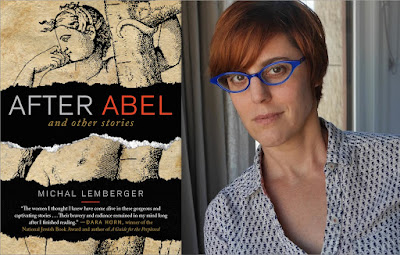


Dear writer,

You asked what it takes to write? I’m no Rilke. In fact, it wasn’t long ago that I’d be the one asking that question. That’s because I never thought of myself as a fiction writer. I was, however, a devourer of fiction from a very early age, the kind of kid who hid books in the small space between my bed and the wall so I could read after bedtime and first thing upon waking. I appreciated fiction. I studied it for years. I admired those who could write it. I especially admired those who could write short stories. I just never imagined that all that reading would one day lead me to write short fiction, too.

I was a writer, though. Primarily a poet, but then I went to grad school and wrote academically. After that, there was a stint as a book reviewer, then a long fallow period, and then I sat back down—I’d like to say pen in hand, which is a lovely if outdated image—at my computer and began writing poetry, essays, and some reported pieces again. It never occurred to me to try my hand at fiction.

As it turns out, all that reading and writing—and teaching, which I didn’t mention above, but which was an important component, too—was leading to an outpouring of short stories. Which is to say: experience matters.

We sometimes fall into the trap of thinking that only certain things count as experience: travel, love affairs, poverty, addiction, kinky sex. For writers, reading counts as experience. We learn how to write by reading. And thinking counts as experience. I think about books a lot, about how authors construct their characters, how they keep the action moving, word choices, and paragraph breaks, plot points, images, and themes.

Nomads: Been there? Done that? Not exactly...
The phrase “write what you know” gets bandied about, but it needs to be banished, to be kicked in the ass so that it flies through a window with a cartoon whoosh. Lived experience will make its way into your writing. You may end up writing about travel, love affairs, poverty (or affluence), addiction (or recovery), kinky (or boring) sex, and so much more that you draw from your life. I began writing fiction after I had children. Being a parent informs every sentence I write. But the stories in my book are set in the ancient world, which was much more brutal, but also smaller, than the one we inhabit. I’ve never lived in a caravan of nomads, herded sheep, or even seen the Nile, except in photographs. It was reading, specifically a years-long, deep immersion in ancient texts and other people’s writing about the ancient world that allowed me to imagine myself into its landscapes and rhythms.

Which brings me to the next important aspect of writing fiction: empathy. Empathy so complete, so radical, it hurts. It is empathy that lies at the heart of the writer’s imagination, and it is, I think, the trait that writers share, because we have to enter into our characters’ minds. We have to become their brain stems, sending out the signals that will move them through the arc of the story. Those of us inclined to write are born with the capacity for that level of identification, but if it’s not nurtured it will disappear, like a predisposition to gymnastics or piano. There, too, reading is a crucial tool. All of human life can be found in literature, which means you can find in it every passing squall of temper, or that surge of love that seems to take over all your nerve-endings, or the moment confusion tips over into embarrassment. The empathy you naturally feel will grow stronger the more you read.

The people we encounter as we go about our day are closed to us. We can’t enter their minds. Even though I am writing this to you, I remain a mystery to you, as you are to me, because we give each other just slivers of ourselves, that 10% of the iceberg that juts out into the air. It’s in stories that we learn how to shimmy into another person’s consciousness, how to wrap ourselves in it. Only once we’ve learned to do that can we write something worth reading. Here, then, is the key lesson: what your characters do will advance your narrative. What they feel will be your story.

Yours,

M.L.

Tuesday, June 16, 2015

Charles Baxter and the Restored Sentence

In the third in a series of posts on 2015 books entered for The Story Prize, Charles Baxter, author of There's Something I Want You to Do (Pantheon Books) discusses what gets him going and what keeps him writing.


Describe a good writing day.
Time passes, but you don't notice the time because you're so deeply inside the story. You're so hyped up by what you're doing that your palms and underarms get sweaty. It's like a workout or lovemaking, but really there's nothing else like it.

What keeps you going?
The art and the difficulty and the grace of storytelling, and the effort to be a part of its great traditions.

What do you think is the source of your impulse to write stories?
A watchful childhood and what therapists call "hypervigilance" and a love of stories and of being taken away somewhere, anywhere by the power of the imagination.

Where does a story begin for you?
It can begin anywhere, sometimes with an opening line ("She thought he was a decent enough man until she tried to break up with him") or a situation (a paroled murderer moves in next door), or an image (a wheelchair on the beach, tipped over on the sand, and no one nearby).

Describe your revision process. 
I rewrite as I go, so I don't really count them up. Sometimes, rarely, I'm in the zone and don't have to rewrite at all. But that's very rare.

What’s the best phrase, line, or passage you’ve had to cut from a story?
"She has the complex dignity of many small town people who do not resort to alcohol until after night has fallen." The magazine that accepted the story in which that sentence appeared refused to print that sentence. They said that the narrator wouldn't know such a thing about that character. I countered by saying that such information is exactly what many small town inhabitants do know about each other. They weren't convinced. When the story was printed in the collection, I restored the sentence. It's still there. The poet Edwin Arlington Robinson attributed his survival to the fact that he didn't start drinking every day until it got dark. I remembered that, and I put it into that story, revised for my own purposes, where it remains.

Name or describe some hidden influences on your work.
Katherine Anne Porter's stories, and William Maxwell's prose style.

What surprises you most when you re-read your own writing?
That I was able to do it at all.

If you teach writing, how has it affected your work?
It has made me a Bad Cop whenever I read over what I've done. I'm very tough on myself.

Describe your collection in ten words or less.
It's a decalogue without moralism or didacticism.

Sunday, June 14, 2015

George Saunders (and The Story Prize) on CBS Sunday Morning


If you watch this profile George Saunders that ran earlier today on CBS Sunday Morning, at the 3:05 mark, you'll see Story Prize Founder Julie Lindsey announcing Saunders as the winner of The Story Prize. A producer asked for permission to film at last year's event. We, of course, said yes, and we've been waiting for our 15 seconds ever since then.

Saturday, June 13, 2015

Jacob M. Appel Conjures the Impossible

In the second in a series of posts on 2015 books entered for The Story Prize, Jacob M. Appel, author of Miracles and Conundrums of the Secondary Planets (Black Lawrence Press) indulges himself in a fantasy.


So I have this fantasy. Each time I settle down in my cozy little garret with its panoramic view of the airshaft and the brick wall beyond, surrounded by my sparse furniture and copious rejection slips (from journals, from agents, from women I knew in college), steeled against distraction and chronic disc pain and the understanding that most geniuses go misunderstood in their own lifetimes, and also the lifetimes of others, I lay my fingers on the keyboard with the hope, nay the dream, verily the expectation, that my few fragmentary ideas will cohere on the page into a story, or possibly a collection of stories, or an epic of Homeric proportions, a work so vast in its scope as to capture the full range of human experience and so deep in its sensitivity to the nuances of human character that hardened editors at The New Yorker and The Paris Review will melt into sobs, topping off their first martinis of the morning with emotion so that gin and vermouth and tears merge into one salty flood, and yet so accessible that factory workers, and subsistence farmers in the Congo, and children as young as six, or possibly six months, and enlightened cats of various breed, and even ferns, fronds unfurling in tribute, will quote my words like currency, like food, like the very blood of life as they struggle against the elements and the outrages of fortune.
Sophia Loren: "Take a number."

In this fantasy, my stories pass through the hands of an A-list agent to an A+ list editor to the CEO of a major American publishing house, which is now part of a major German publishing conglomerate, a colossal enterprise endowed with its own military budget, famed for breaking down the barrier between books and household appliances, and this omnipotent CEO finds himself so enthralled with my stories that he grants me my own imprint, my own in-house advertising agency, staffed with troubadours and acrobats and Nobel laureates, not just in literature, but in physiology and chemistry and physics, and arranges for Annie Leibovitz to snap my cover photo and for Philip Roth to write my jacket copy and for Pope Francis to bless my launch party. The wisdom of my enterprising German publisher is not misplaced, as soon my collection fights its way up the all-time best seller list, above Dr. Seuss, beyond Shakespeare, atop The Bible. His firm discontinues its line of self-cleaning caskets, of automobiles with prescription windows, devoting all of its resources, which dwarf the GDP of several lesser continents, to promote my magical, lyrical, incomparable words to the few deprived souls, tucked away in Antarctic research stations and Eritrean prisons, who have not yet experienced the pleasure, nay the ecstasy, of my prose.

I receive warm congratulations from friends, and acquaintances, and former acquaintances, and fan letters from my congressman and Karen Russell and the Dalai Lama and Sophia Loren—this last letter soaked in perfume, sealed with lipstick—and then Ms. Loren shows up at my doorstep, star-struck, or climbs up the airshaft into my cozy garret, which is now a luxury penthouse, ever since I bought out all of the neighbors and knocked through the connecting walls, only Ms. Loren is now twenty-five, and possibly in lingerie. I tell her to “take a number,” because I am busy at the moment accepting the keys to the City of London, and the Palme d'Or, and the Croix de Guerre, and the embrace of my third grade teacher, Mrs. S., who acknowledges she was wrong to correct my spelling, and my high school sweetheart, who wishes to retract our breakup, and my late grandfather, risen from the dead to express his pride in having such a gifted descendant.  

Needless to say, I find myself swimming, nay drowning, in literary prizes, including The Story Prize, not just this year’s, but next year’s, and the year after’s, acknowledging that I have written a masterwork that is not merely great, or unequalled, but truly perfect. Perfect. And then I press my fingers to the keys, and the first words appear, reality settling in like a cold washcloth on a winter morning, and the harsh business of writing begins in earnest….

Thursday, June 11, 2015

Karen E. Bender's Ten Ideas For Revision

In the first in a series of posts on 2015 books entered for The Story Prize, Karen E. Bender, author of Refund (Counterpoint Press) offers advice on polishing prose.

  1. Remember that it’s better to have a few pages of something rather than no pages of fear. Revising a story is just playing, seeing where your characters, your voice takes you. The story already exists and is waiting for you, the writer, to find it.
  2. Read over your draft, looking for the emotions that are most alive, the characters who are most interesting to you. Begin playing with these emotions/characters, seeing where they take you.
  3. Try to write a beginning or end scene to your story. This may not be the final version, but may help you see that the story can have a shape.
  4. Try to find a clear line of desire in the story. What does the main character want? What do the other characters want? Try to simplify the characters’ main urges. Find a spine that you can develop complex reactions/experiences around.
  5. Think about compression. How can one scene do the work of many scenes? Which scene seems most interesting to you? Can you layer some of the interactions/episodes of other scenes into this scene? Are all of the characters necessary? Can you compress characters?
  6. Think about point of view. Are you interested in the protagonist’s point of view? Are you interested in writing from the point of view of one of the other characters?  If so, try writing some scenes from that character’s point of view. If you enjoy it, you may want to switch; if not, you will learn more about that character.
  7. Think about specificity. Specific details will act as “tips of the iceberg” in a story—find the ones that will imply a life for the characters outside the world of the story. If you can’t figure out how to specify part of your story, leave abstract language as a place marker and come back to it later.
  8. Think about what is in the story because you want it to be included, and what is in the story because you think it should be included. Does some of the writing feel dutiful, unnecessary? Think about what you need in the story, and what you can let go.
  9. Remember that taking a break from a story can be a great way of getting perspective on it. Take a day, a week off from your story. Read something new or something you love; look at paintings or sculpture or dance or theater or film that inspires you.
  10. Remember that revision is a process and happens in stages. The first stage, you may be trying to find out what the story is about. Then you may develop scenes, layer characters. Later, you may compress scenes/characters. Then you may work on pacing. A late revision focuses on clarity and language. You may work on any of these issues during the process, but try not to get too focused on honing the language too early, as you may not know what will remain in the story. As one writer I know says, “Writing a story is like building a boat. I don’t want to spend too much time intricately painting a hatch when I don’t know if the boat even has a rudder.”

Thursday, April 9, 2015

Colin Barrett on Writing Irish Fiction That's NOT About "Crushingly Catholic Repressed Lonely Farmers Weeping in Fields"

Authors Sam Lipsyte and Colin Barrett in conversation
at the Irish Arts Center (photo by Amanda Gentile)
By Nick Fuller Googins
New York, NY, March 31, 2015

A hundred or so of us had packed into the Irish Arts Center’s cozy Hell’s Kitchen theater to hear Colin Barrett’s read from his award-winning debut story collection, Young Skins, followed by a conversation with author Sam Lipsyte. The event, co-sponsored by publishers Grove Atlantic and Stinging Fly and literary magazine A Public Space, kicked off late because of the lousy weather. Folks lingered in the lobby, shaking rain from umbrellas, chatting, ordering early-evening drinks from the bar. When we finally did shuffle in to take our seats, the first thing Barrett said was how thrilled he was for the late start. His reasoning: “The longer we were delayed, the more drink you were going to have, and the more you drink the better I sound.”

The six stories and one novella that make up Young Skins don’t really need any help from the bar or elsewhere. Barrett crafts his sentences with precision. For example, the story “Stand Your Skin,” originally published in A Public Space, features the young Bat (other delightfully-named Young Skins characters: Arm, Tug, Tain, Heg, Nubbin, and Dympna) whose “scuzzy cascade of dark hair,” is a “crackly and stiff, an inextricable nest of flubs, snarls and knots.” A vicious attack years earlier has left poor Bat with a face “exuding all the definition of a bowl of mashed-up spuds,” and a drooping mouth, that “makes him look always a little gormless.”

To kick off the event, Barrett read from the “The Clancy Kid,” the first story in Young Skins, which also serves as a foundational piece, introducing the fictional Irish town of Glanbeigh: “My town is nowhere you have been, but you know its ilk,” the opening sentence reads. “The Clancy Kid” holds a special place for Barrett, serving the role of what he calls the “keynote story” that enabled him to write and shape the collection. “[‘The Clancy Kid’] did make me realize that I had a specific place to write about,” Barrett said, talking on stage with Lipsyte. “It seemed to access some different kind of energy, and that became a fixed point in my mind.”
Colin Barrett (photograph by Amanda Gentile)

"Fixed” indeed. Of the 210 pages in Young Skins, none stray beyond the borders of Glanbeigh, and while Barrett himself did grow up in a rural-ish Irish town, he maintains that Glanbeigh is “a composite of towns and people and attitudes.”

“I needed the membrane of fiction around it in order to just have the right perspective on it, to have that freedom to write without having to be tethered to what actually happened. Once I happened upon this town, it really was generative.”

Common setting aside, Young Skins is not linked in the traditional sense. Characters rarely spill over from story to story, and Barrett likes it that way. “What’s good with the short story form is that there can be these encompassing acts or overall threads. The stories will talk to each other and they don’t have to be overtly connected. I was confident, without knowing why, that they would talk to each other and the attentive reader would see connections and threads without having to repeat characters.”

It’s clear from Barrett’s attention to language that he incorporates a poetic ear in his writing, and Lipsyte asked him to expand upon the relationship between the genres. The short story, Barrett said, “is probably closer to poetry than the novel. They are both within the narrative form but that’s pretty much where the similarities end. You can tell people, ‘This novel gets really good eighty pages in, it’s brilliant after that,’ but you can’t really tell someone, ‘Once you get through the first five pages of this story, the next four are exquisite.’ That’s what I love about [short stories]. The high stakes. You can’t really mess it up. It all has to be the good part.”

When asked by an audience member if he wrote poetry, Barrett hesitated, laughed to himself, and answered, “I don’t. No, I don’t. And none of it’s been published. Thank God.” He went on to explain that he had taken a few late-adolescent stabs at poetry as well as novels, and that these failures eventually led him to writing short stories. “I’m a believer that you have to shed a lot of skins on your way to wherever you’re going to get.”

Influences that pushed him toward writing stories included Denis Johnson’s Jesus’ Son, old copies of The Paris Review and The New Yorker, plus fellow Irish writer Kevin Barry, whose 2007 collection There Are Little Kingdoms showed Barrett that an Irish author could write about Ireland and, as Barrett phrased it, the writing “doesn’t have to be about crushingly Catholic repressed lonely farmers weeping in fields.”

Barrett’s recipe for success? Patience. “Very slowly, lots of back and forth,” he said of his writing process, describing himself as “one of those people who work incrementally and go over things over and over again.”

It seems to be working. Young Skins scooped up the Frank O'Connor International Short Story Award and the Rooney Prize for Irish Literature, among other accolades. Amid such success, the thirty-two-year-old author maintained an almost self-deprecating air of humility on stage at the Irish Arts Center. Discussing the pain of starting a new story, he said it “resembles a prolonged feat of incompetence. It’s amazing how bad you can be at something you’ve done previously several times.”

Lipsyte, toward the end of their discussion, wanted to know what was next for Barrett. “I hate to ask you that dreaded question, but do you have something going?”

“I have something going,” Barrett said.

“A longish thing?”

“Longy. I’m attempting a novel. And it’s really fun but terrifying because I don’t know what I’m doing. So that’s an interesting place to be in.”

“Well there are plenty of amazing writers who just don’t write novels,” Lipsyte said. “There’s this pressure, this commercial pressure to write novels, but I see some people get a little trapped, maybe they’re not ready….” He petered out, then looked over at Barrett and quickly added, “I think you’re going to be fine, though.”

When the laughter died down, Barrett said, “I might show up in eighteen months time with a second book of short stories and a glassy-eyed expression and claim this conversation never happened.”

Sunday, March 8, 2015

News Coverage of The Story Prize Event and Announcement

L to R: Story Prize winner Elizabeth McCracken, founder Julie Lindsey,
finalists Francesca Marciano and Lorrie Moore, and director Larry Dark

Here are some links to press accounts of The Story Prize event on March 4, at which eventual winner Elizabeth McCracken and fellow finalists Francesca Marciano and Lorrie Moore read from and discussed their work onstage at The New School, and Julie Lindsey announced the winner:

Reuters