Friday, December 30, 2016

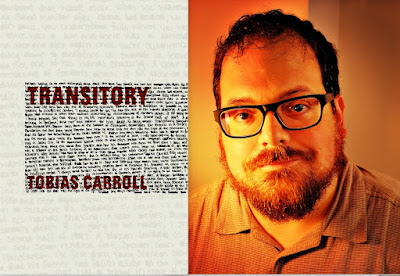
Tobias Carroll on Broken Structures and Unfinished Stories

In the 66th in a series of posts on 2016 books entered for The Story Prize, Tobias Carroll, author of Transitory (Civil Coping Mechanisms), talks about trying to make use of an admired and complex story structure.


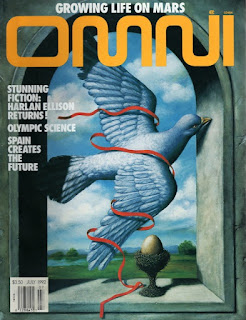
When I was young, I subscribed to OMNI magazine mostly for the science fiction stories that accompanied articles about technology and the future in each issue. And while I don’t remember every story that I read in my high school years, a few have stayed seared into my mind: Ted Chiang’s “Tower of Babylon,” with its reimagining of a familiar story in an entirely fresh form; Jonathan Lethem’s “The Happy Man,” for its jarring blend of a surreal cosmology and quotidian realism; and Harlan Ellison’s “The Man Who Rowed Christopher Columbus Ashore,” for a number of reasons related to both its structure and the narrative that slowly unfolds.
What struck me about it then, and still does, is the way in which it establishes a very rigid structure, and then thoroughly dynamites it. Several stories are nestled within this story. Each paragraph begins with a sentence with the same structure: “On [day of the week] the [date] of [month].” In each, the protagonist, a man known as Levendis, carries out a particular action—some of them innocuous, some heroic, some horrific. It quickly establishes Levendis as someone with miraculous abilities: he can easily traverse time and space, and each day’s events are unique: a story within the stories that make up the larger story.

By the end of “The Man Who Rowed Christopher Columbus Ashore,” Ellison defies the structure he established earlier, however. It begins with events taking place on the first of October; given its structure, one might expect the story to end on the 31st. It does not; it goes beyond that, treating the framework as one more boundary to transcend—all of which makes for a neat evocation of Levandis’ own ability to leap around the corridors of space and time, as well as an echo of the playful way in which he does so. It’s a hypnotic feat: Ellison established a particular rhythm, and then dismantled it, propelling the reader into the full-on unknown along the way.

***

Clearly, I wanted to try my hand at something that took a similar approach. So far, I haven’t been able to accomplish this. I have a story in progress that would follow a character as they carried out a series of tasks at the rest areas on the Garden State Parkway–partially because, as someone who grew up in New Jersey, rest areas are inexorably wrapped up in my memories of long car trips, and partially because, as spaces go, they fascinate me.

But I haven’t quite found the right way to pull this off yet. There’s a confidence and bravado in Ellison’s story that makes the risks in his structure pay off. And there’s the fact that he uses the repetitive aspects of his structure to counterbalance the more sprawling aspects of it. A narrative that covered similar ground—which could literally be set in an infinite number of locations and an infinite number of points in time—is ultimately given a kind of unity through this device. Remove that scaffolding and the disparate elements might become discordant. Leave it in and there’s a sense of comfort: the reader’s anticipation of what Levandis might do on the next day, and on the day after that.

What makes Ellison’s story work so well is its juxtaposition of rigidity and playfulness—which eventually folds back in on itself as it reaches its conclusion. It’s a work of fiction from which I’m still drawing lessons, and one to which I hope to eventually find the right way to pay homage. “The Man Who Rowed Christopher Columbus Ashore” is a fascinating story to revisit and study, though its balance of formality and irreverence seems unique. Still, it’s a short story that contains worlds within it, and closes with a gleeful wink. It’s hard to avoid being impressed, and I’ll most likely be chasing aspects of its structure for years to come.

Tuesday, December 27, 2016

Theodore Wheeler on Writing Stories from Inside Trump's America (Before It Was)

In the 65th in a series of posts on 2016 books entered for The Story Prize, Theodore Wheeler, author of Bad Faith (Queen's Ferry Press), reexamines his story collection in light of recent events.


As part of my literary citizenship here in Omaha, I co-host a literature-themed pub quiz at a Midtown nightspot called Pageturners Lounge. It’s a good chance to come together with friends and hear various folks from the community who we invite to talk about their books or small press or the local library. Our event in November fell the day after the election, something that seemed fortuitous at first. Who wouldn’t want to put all that nastiness behind them and tilt a few pints in honor of the nation (hopefully) going on about its business in a quiet and dignified manner? Or not. 

Being good citizens, we showed up ready to give our best to the event, though the proceedings were decidedly low-energy. Only about a fifth of our typical crowd showed, and half the teams featured the word “sad” in their usually-cheeky team names. (For example, Big Trouble in Little Vagina was a crowd favorite the previous month). Safe to say, it wasn’t our best night. However, given the small crowd, the occasion did allow for reflection and conversation. 

As it happened, that particular Wednesday turned out to be much more roiling than many of us expected. Only about a fifth of our typical crowd showed, and half the teams featured the word “sad” in their usually-cheeky team names. (For example, Big Trouble in Little Vagina was a crowd favorite the previous month). Safe to say, it wasn’t our best night. However, the occasion did allow for reflection and conversation. 

At some point in the night, one of my compatriots noted that Bad Faith, my short story collection, could be billed as an exploration of “Trump’s America.” To many, the phrase must provoke an image of unemployed white men whose political views center on xenophobia. That’s definitely not how I see myself—I’m employed! I don’t shout hate speech!—but now that Trump had won, would it mean that all the U.S. was Trump’s America? And, in a more personal way, have I always been writing from this place and about these people, however you want to label them? Would that also change now that the presidency might go in unprecedented directions?
Omaha's Pageturners Lounge: A sad crowd gathers

In some ways I could see where my friend was coming from. Many of my stories feature rural, rough-edged types who fill the outline of a Trump voter that’s been iterated in the media. My fiction has fit under other labels in the past—rural noir, prairie gothic, dirty realism, etc.—all both dissatisfying and appropriate. Given that I spent years with these characters, digging deep to reveal and refine their natures to the core, I tend to resist thinking about them in demographic terms. On the other hand, with all the talk of recounts and Electoral College shenanigans, maybe it’s worthwhile to think about my characters in this way too, even with the book out. Times change, so why shouldn’t the way I see my book change, too?

Going off my friend’s suggestion, I began to think about who fit into what electoral bucket. Certainly the crotchety Harry Kleinhardt of my opening story, a man who’s forced to face his disappointment of a son while dying from cancer, who spends his afternoons sunning himself in the mudroom listening to Limbaugh and reminisces about how bright life once was, at least before it all went to shit. There’s one vanguard of Trump’s America. Then there’s Anna from “Impertinent, Triumphant,” who met her politician husband while both were congressional interns for Kit Bond, the former Republican Senator from Missouri. It’s easy to see how Anna would coalesce behind the Trump campaign. While not a “build that wall” kind of gal, she wouldn’t be opposed to chanting “lock her up” if others were doing so, say, on the floor of the Republican National Convention, exchanging a loftier political ideal or two in order to take a pantsuit-wearing liberal down a peg.

But there’s some noise in the populous of Bad Faith—as with anywhere, the distance between perception and reality isn’t so clear. Sam and Jacq, also from “Impertinent,” a former travel entrepreneur and an experimental landscape artist, leave Manhattan to settle on a ranch near the Sandhills. And what about the biracial man from Omaha who has to face his fear of being an outsider in a small town (and being exposed to small town police) to attend the funeral of his estranged white mother?

Tallying my characters’ likely votes, I found the Bad Faith results to be remarkably similar to those from November 8. Trump won by a margin of 50%-38% among my characters, compared to his 60%-34% margin in Nebraska this year. About 30% of my characters wouldn’t vote at all, which nearly exactly hits the 29% of Nebraskans who didn’t vote. If the statistics are to be believed, I was writing from inside Trump’s America all along— the only slight error being a 10% underestimate of the president-elect’s support here.

The numbers themselves don’t matter so much, of course. The calculus is too complex for either statistical example to hold much worth beyond the referential. In the end, it’s Nate Silver’s job to make sense of the macro; it’s the fiction writer’s job, in particular an author of short stories, to dissect the micro. While some characters in Bad Faith fit the stereotypical Trump voter, nearly as many in the aggregate flee from deep-red counties or are unaffiliated misfits who live in ways that are beyond a pollster’s imagination. I don’t know if that makes me a chronicler of Trump’s America. But maybe it offers some evidence that the culmination of microscopic details do in the end form a clearer portrait of a certain place in a certain time.

Wednesday, December 21, 2016

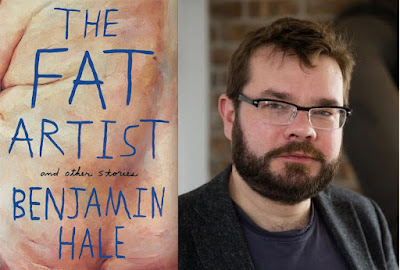
Benjamin Hale's Four Essential Fiction Writing Rules

In the 64th in a series of posts on 2016 books entered for The Story Prize, Benjamin Hale, author of The Fat Artist (Simon & Schuster), focuses on some basic approaches to making stories.


I set out to write a ten-rules-of-writing-fiction essay á la Elmore Leonard, but I only came up with four essential ones. (I have quite a few more after these, but that’s under the “advanced” menu.) These are four basic rules that I give myself when I write fiction, and they work for me.

1. Don’t write disingenuously.


I have many opinions on the art and science of writing fiction, but the foundation they all rest upon is this commandment: Write what would give you, as a reader, pleasure to read.

Questions arise. What gives me, as a reader, pleasure? What is literary pleasure? There are simple pleasures and there are complex pleasures. There are immediate pleasures and there are pleasures a reader must work for, and oftentimes are more pleasurable in the end because of the work done. There are pleasures I know, and I revisit them again and again: the stories of John Cheever, Patricia Highsmith, Franz Kafka, Jorge Luis Borges, and Flannery O’Connor, to name a few examples. The only way I have of discovering new varieties of pleasure is to keep on reading, as widely as I can, and in the spirit of exploration: contemporary literature, ancient literature, “high” and “low” literature, literature from as many languages and cultures and times as have left stories behind. The more new pleasures a reader finds, the more techniques of producing literary pleasure that reader as a writer can incorporate into his or her own work.

Do not ever write for someone else’s idea of pleasure. This pitfall is harder to avoid than it seems at first. One might think, Well, The New Yorker seems to like stories that do so-and-so, so I will try to write a story that does that. Or, x writer won x prize, or y writer got an advance for infuriating sum of money z for her book, so I will try to write a book like that. If one drop of this horrible substance falls onto your page, it will contaminate it. If it does, then you are now writing disingenuously; you are writing (as Sinclair Lewis put it in his letter rejecting the Pulitzer in 1926) “not for inherent excellence but for alien rewards.” Don’t write for extrinsic praise. Don’t write for critics. Don’t write for scholars. Don’t write for writers. Don’t write for a “readership,” or an “ideal reader.” Simply try to write what you, as a reader, would honestly find pleasure in.

2. When experience and imagination fail you, research.


There are, as far as I can discern, three sources of inspiration for any maker of stories: (1) experience, (2) research, and (3) imagination.

Experience is everything that you as a human being have learned, thought, seen, touched, smelled, tasted, heard, felt, observed, and remember. I happen to know what an unseasonably early snowfall on an aspen grove on a mountainside in Colorado looks like, what it feels like to be held at gunpoint by robbers, the curiously bizarre smell of the penguin enclosure at the Denver Zoo, moral shame, romantic obsession, and heartbreak so brutal it feels life-threatening (at first)—among other things. These are things I can use in my writing because I have experienced them firsthand.

When a story forces me to write about things I have not experienced firsthand is where research comes in. What it feels like to be a chimpanzee. What it smells like on a fishing boat. What it feels like to have a brain tumor. What it feels like to breastfeed a baby. What a drag queen might have observed at a rooftop cocktail party in New York City in May of 1981. Research can involve reading lots of books about chimpanzees, reading memoirs written by people who have survived brain tumors, asking someone who has breastfed a baby to describe it, interviewing a retired drag queen, calling up a commercial fishing company and asking if they mind if I stand on their boat and try to stay out of the way while they work, so that I can take mental notes on what I see, smell, and hear as they haul in their first catch of the morning. Almost anyone—mothers, drag queens, fishermen—will be enthusiastically receptive to a phone call from a fiction writer politely asking what it feels like to do what they do, or have done. The world is pretty big, and the work of writing fiction does not have to be confined to the surface of your desk, or the walls of whatever room you write in. If a story steers you toward the task of rendering something in words that you have not personally experienced, find someone who has experienced that thing, and ask him or her about it.  Most people will be delighted to tell you.
Old salt: Imagination setting sail

Then, take (1) experience, and (2) research, and mix these with (3) imagination. No one on earth will be able to tell you what it feels like to be a chimpanzee in a zoo, so if that’s what you’re writing about, after reading lots of books about chimpanzees, at some point you’re just going to have to plunge into dark territory and imagine it. You can read a lot of books—histories, journals, diaries, and so on—trying to get a sense of what it felt like to be a Scottish sailor in the Royal Navy onboard a ship in the Atlantic on a sunny day in the eighteenth century (I have not finished that particular story yet), but at some point you’ll have to put your imagination in the driver’s seat. If imagination fails you, return to experience or research, and begin again.

3. Structure is crucial.


The single most useful tool anyone has ever given me to go about the craft of storytelling is a technique the writer William Melvin Kelly taught me sixteen years ago. Here it is:

First, tell your story in three sentences.  Beginning, middle, and end.  Then, break those three sentences into nine:

1.) The beginning of the beginning.
2.) The middle of the beginning.
3.) The end of the beginning.

4.) The beginning of the middle.
5.) The middle of the middle.
6.) The end of the middle.

7.) The beginning of the end.
8.) The middle of the end.
9.) The end of the end.

Once you’ve got that down, you now have an outline. The novelist Edward Carey told me (and I think he’s right): “Very few stories that get finished haven’t been outlined at some point.”

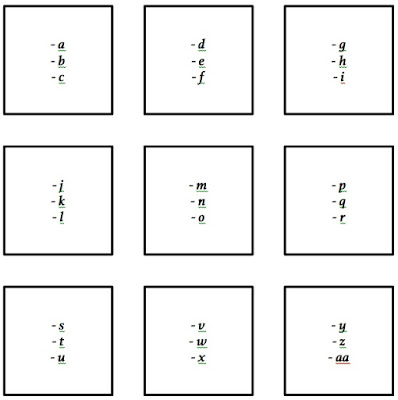
In the years after he taught it to me, I have tweaked Willy Kelly’s nine-sentence method somewhat to suit my purposes. I make a nine-box visual outline for every story I write (that actually gets finished*). It’s similar to the storyboarding method screenwriters often use. I go through four or five drafts, and when I’m done it looks like this:


All those letters represent little notes—plot points or bits of information the reader needs to go on into the next box. With this outline, I’ve got the story blocked out into nine “boxes”—or “chapters,” or chunks of narrative; then I’m ready to begin the sentence-by-sentence composition of the story. If I start with box #1, I’ll sit down to write, and tell myself, “You can shoot off into whatever tangents or spandrels you want, describe all the bathtubs and bird feeders and so on that come to you at the moment of putting words on the page (knowing that much of that will get cut later), but whatever you write, you must make happen or convey a, b, and c plot points or data points before moving on to box #2.” And then, when all the actions or bits of information necessary to the story have happened or have been revealed, it’s time to move on to the next box. I follow the boxes until I’ve come to the end of my first draft. Then it’s time for the fun part—revision.

This method builds a three-act structure into a story, and it helps me construct a story horizontally, rather than vertically. It allows a story to expand from inside-out, reaching outward from its center like the branches of a tree. Most importantly, it builds structure into a story. If you don’t think structure is important in storytelling, just listen to someone tell a joke badly: A bad joke-teller forgets to plant information at the right time, and has to backtrack—“No, no, wait, I forgot to tell you…”—and by then, the timing is ruined; the moment is lost, unrecoverable.

Sometimes, of course, it happens that in the process of writing the sentences, I think of something I like better than what I had planned in the outline. That just means I have to go back to the outline and fiddle around with things. The carpenter, in nailing the planks and boards together, has noticed something that did not occur to the architect, so he informs the architect, and the architect tweaks the design. Another metaphor I find useful is that of the composer and the musician. Not so much a classical composer, but a jazz composer, who allows his musicians more leeway for improvisation. There is a vital interplay between the two. The composer needs the musician to play the notes, but the musician who thinks he doesn’t need the composer is just noodling.

4. Write your first drafts by hand.


Again, I’m not saying these “rules” are anything but what I have found works for me. When I write by hand, I don’t get stalled trying to think of exactly the right word—I just leave a blank there, promise myself to reencounter that little problem in the future, and move on with the story. Later, when I’m typing up what I’ve written by hand, I stop and think of what that missing word should be, I experiment with restructuring the grammar of my sentences, I take things out and put things in, and so on: In typing it up, I create my second draft. Some writer, I can’t remember who, said about the subject of what to do on those doldrums days when one doesn’t feel much like writing: “When the fish aren’t biting, I mend the nets.” While writing a first draft, if I am able to stay significantly ahead of myself with the handwritten manuscript, then I’ll always have nets to mend on those days when the fish aren’t biting. Also, writing by hand will keep you away from the Internet, which is absolutely crucial in writing a first draft.

_____________________________________

*A few months ago, I was talking on a panel about short stories at a writers’ conference. I told them about my rule of nines, and someone in the audience asked me, “Do you always use this method to outline stories?” I thought about it, and said, “No. I use this method to outline all the stories that get finished. The stories that dribble and drool and eventually dither out into nothing after meandering for a hundred pages—those are invariably the ones that haven’t been outlined in this way, and they never actually get finished.”

Monday, December 19, 2016

Jaimee Wriston Colbert's Perfect Writing Day

In the 63rd in a series of posts on 2016 books entered for The Story Prize, Jaimee Wriston Colbert, author of Wild Things (BkMk Press), lays out the ideal conditions.


The perfect writing day...

...would not be today, with the fall semester just ended and the grading piled up, and the student requests for recommendation letters pouring in, graduate novels to read over break. Break? What break? The holidays? As a fiction writing professor you shrink away from the mistletoe, the yuletide greetings, please don’t buy me anything because I have no time to return the kindness. You remind yourself over and over that this was the job you dreamed of, worked half a lifetime to get. Creative Writing Professor! Which is true, and you are glad for it. Tell yourself this. Teaching is inspiration.

But the perfect writing day cannot happen while thus-employed. You dream of summer…waking up to the good rich scent of coffee after a refreshing night’s sleep with gorgeous dreams, or maybe no dreams, just that lovely feeling of immersive sleeeeepppp. The coffee magically appears at your bedside, along with some sort of delicious breakfast; maybe these are transported to you on a drone, a hovercraft of some sort, humming up the stairs—Meet George Jenson!—because in your perfect writing day nobody else is at home. Repeat—family members, spouse, poof! All have disappeared into their own lives outside your house; only the cats may remain.
Coffee? Give me a break

Well-nourished and caffeinated you head to your den, your desk beside the window where outside is the long green stretch of your yard leading down to the river; and how about we part that curtain of trees for the day so you can actually see the river, water is inspiration. Now let the ocean appear in your memories of it, growing up on Kailua beach, words pouring forth onto the page forming themselves into poignant, inspired stories. Except you’ve been working on a novel—so scratch the stories for now, let the hovercraft bear them to some magical place where all your small creative moments are translated into images and ideas of vast humanitarian importance, saved for you when next you need such gravitas.

The novel! On your perfect writing day you would not waste these hours in the usual panic, at how can you possibly write a novel in just three short months, until the academic year begins again. You do it, brilliantly, and when you grow tired the hovercraft serves you tea, with an avocado, kale and salmon salad (wild salmon flown in fresh from Alaska!), and a glass of chilled chardonnay. Wine is inspiration. Outside your window, fox pups are playing and birds are singing and the neighbor’s dogs, with their incessant barking are sucked back into their house—safely, you are an animal lover after all, even if these dogs drive you crazy—and the other neighbors’ power tools, leaf blowers, lawnmowers, all of those whiny suburban implements run out of electricity, gas, and the cars, motorcycles, semis roaring down the highway, helicopters beating overhead, all noises and distractions disappear as you step into the world of your novel for six gorgeous hours that belong only to you. Silence is inspiration.

Okay, maybe you are dreaming, after all, your need for silence, your yearning for it: how to be alone with your characters in a world of constant commotion? So what is the perfect writing day? We covet retreats where what we do is validated by the care others give us while we do it, our writing. But let’s face it, that’s the rarefied experience, highly competitive and mostly exclusive. For many of us, it’s while serving pie in a diner, pouring coffee, rotating tires, changing the oil, schlepping kids to this and that, mopping up their messes—and suddenly language is alive within us. Maybe the perfect writing day is in our heads, biking on a trail, taking out the garbage, waiting at a red light and we listen to our characters tell us their lives.

In the Dec. 9 edition of The New York Times, Nia Vardalos, who is acting in a show based on Cheryl Strayed’s Tiny Beautiful Things, talks about how back when Strayed was a struggling writer, she “walked around for weeks, asking friends, should I do it? Should I not do it?” Ultimately, of course, she did it. Perhaps the perfect writing day is when we make that decision above all else: Yes, despite all of life’s challenges, disappointments, and distractions, the perpetual noise of being alive, I will hold this one thing, precious! Inspiration is doing it.

Sunday, December 18, 2016

Odie Lindsey on Recovering Love in Fiction (Care of a Self-Prompt)

In the 62nd in a series of posts on 2016 books entered for The Story Prize, Odie Lindsey, author of We Come to Our Senses (W.W. Norton), talks about anger, disbelief, and the struggle to maintain empathy in his writing.


At Vanderbilt, I have the privilege of teaching fiction to future physicians and social scientists, asking them to empathize with bodies and circumstances often beyond their, our, bubble. At the public high school where I led a recent workshop, it was a gift to challenge young writers to imagine acts of compassion by individuals they despise. During my own readings and panels, when asked if it is appropriate for me to write about female soldiers, or queer soldiers—groups to which I do not belong—my answer is that I’m not sure; that I welcome critique and criticism, and am thankful for the discussion; that I am committed to mindfulness, and craft, and to stories not being told, to the best of my way-limited ability.

I am immersed in calls to, or questions of, empathy. Yet I’m having a hell of a time finding it in my new fiction. Right now, post-election, 2016, I am overwhelmed by fury. I am sick with disbelief.

I’ve taken to looking backwards, auditing the process of writing my story collection, a consideration of southern veterans and war-culture. The book is girded by twin objectives: to bring forth narratives of nontraditional soldiers, and/or to explore, if not explode, the militarized, masculinized South that would rear boys for battle but deny the disaster of their postwar lives. The latter—part satire, part too-apparent polemic—was inspired by my own combat deployment, 1991, and by the emotional tsunami that hit me 12 years later, as I watched another generation be sent to the same fight…knowing their homecoming would be far worse than mine.

Most pivotal, if only a glint in those pages, was love. Is love. I love my characters—even the worst of them. I love my culture—even when uppercutting it. I was taught that as a storyteller, my obligation was to seek difficult, complicated truths, charging past rote ideal and assumption, and into the intimate mess of humanity. To quote a former teacher, Barry Hannah, pursuing anything else was a “coffee shop skill.”

Only now, I can’t find that love. That mess. My latest fits of fiction import nothing more than rage, or resignation. They are one-liners at best. Lonely.

Only yesterday, I read a New York Times review of a book that dismisses empathy as unreliable, as bullshit. The Right Now Me can dig it.

Only yesterday, I re-read a section of Strength to Love, in which MLK asks: “Have we not come to such an impasse in the modern world that we must love our enemies–or else?”

This morning, I chose “or else.” Though when it comes to fiction-as-in-life, the quote at least raised a process question: how to both fight and love?

I have known the answer, but I can’t recover it. This morning, I can only muster a concept, a claim, a prompt for me, the selfish little squat taking advantage of an invitation to post his thoughts on storytelling: the characters you do unto in their role as others, are in fact a doing unto of yourself. When your fiction seeks the vile and beautiful, the frail and fraught, even nurturing the pigs and monsters, you are in effect revealing your messes to your neighbors, your loves, and your enemies alike, welcoming them to trust, to invest, to critique…and to perhaps nurture their own emotional messes. To fight. To love. To be un-alone.

So get back after it, pal—or else.

Friday, December 16, 2016

Karen Brennan on Fighting to Find Solitude

In the 61st in a series of posts on 2016 books entered for The Story Prize, Karen Brennan, author of Monsters (Four Way Books), discusses how difficult in today's world it is to avoid distractions.


I grew up in a world without cell phones and Internet. A calm world of family TV shows and mailmen. Long distance phone calls were exorbitant and so keeping in daily touch across state—or country—lines was not always an option. We didn’t know much and our lives were full of space. Likewise, time unspooled more like a meander in the woods than like an arrow zinging us to the next thing.

I used to write stories at my grandfather’s desk with a black number two pencil—I loved those pencils. They came in a box and were stored in the desk drawer. I wrote on a small yellow lined legal pad situated on top of a green blotter that protected the polished mahogany desk of my grandfather. My legs, not quite reaching the floor, dangled. Who knows what I was writing? In the silence of the room, the sun pouring in the tall window to my left, the window overlooking the driveway and the street, the calm suburban street with its big houses close to the road and its gardens, with old maples and oaks and big pine trees shading them, I remember exploring my cave of mind for “ideas.” I was alone, as they say, with my thoughts.

Solitude is not a given in my life anymore. Every day, my computer screen is crammed with visual tags that lure me through their portals, the relevant and irrelevant, the trivial and the tragic sharing screen space that more and more resembles my vanishing tabula rasa (the child star at 50, the fire that kills 46, an Anthropologie ad featuring shoes I might like, the president-elect’s twitter feed, the seven signs of impending stroke).

If I want to be a good writer, I need to fight for my solitude—which is to say I need to wipe the slate of my mind clean of distractions, to make space for reflection and imagination. If I miss anything from those narrow-minded, poorly informed days of my past, it would be that time hunched and scribbling over my pages, that time of staring aimlessly out of windows, waiting for the next word or scene or the tiniest nudge from the invisible muses…or pacing, incommunicado, in the silence of a room or insisting on a nap at 11a.m. or feeling the need of a solitary walk around the park.

Albert Einstein: “[T]he monotony and solitude of a quiet life stimulates the creative mind.”

Aldous Huxley: “The more powerful and original a mind, the more it will incline toward the religion of solitude.”

Henry David Thoreau: “I never found the companion that was so companionable as solitude.”

It must have been in the spirit of such companionable solitude that Virginia Woolf writes in her A Writer's Diary passages such as the following:
A disgraceful fact—I am writing this at 10 in the morning in bed in the little room looking into the garden, the sun beaming steady, the wine leaves transparent green, and the leaves of the apple tree so brilliant that, as I had my breakfast, I invented a little story about a man who wrote a poem, I think, comparing them with diamonds and the spiders’ webs, (which glance and disappear astonishingly) with something or other else; which led me to think of Marvell on a country life, so to Herrick and the reflection that much of it was dependent on the town and gaiety—
I choose this passage, quite randomly, from Woolf’s diary because as with many of her entries it so beautifully expresses that blessed quality of the solitary scavenging mind, the imagination on its journey through time and space, the neurons' unimpeded travel, sparking synapses, the ideas and images that are the material of any writer’s best work.

If I want to have a shot at my best work, I will carve my solitude at the expense of other things—things I have to shut down and turn off and get away from. “That other loneliness, “as our great reclusive genius Emily Dickinson calls solitude, is un-countably rich for all of us who are blessed with it:

There is another Loneliness
That many die without
Not want or friend occasions it
Or circumstances or lot
But nature sometimes, sometimes thought
And whoso it befall
Is richer than could be divulged
By mortal numeral

Thursday, December 15, 2016

Dustin M. Hoffman's Letter to A Young Writer (Probably Himself)

In the 60th in a series of posts on 2016 books entered for The Story Prize, Dustin M. Hoffman, author of One-Hundred-Knuckled Fist (University of Nebraska Press), gives himself a pep talk.


Dear Doubt,
Dear Young Writer,
That is: Dear Young Writer Who Is Probably Me,
That is: Dear Doubt, Embarrassment, Anxiety,

Not much has changed, I suppose, from that first workshop story. The doubt and embarrassment shadows you and will continue. To be a writer is to question your purpose, your prose, your themes, your commas. To be a writer is to doubt and to delete adjectives. Even writing this now, I hesitate to spill advice. But I urge you to build confidence in your gaping doubt. That dark pit will house your foundation. I worry much more about you, young writer who is probably me, when you’re sure and blustering and building stories atop sand. Confidence happens rarely for you, I know, and here I am stealing those grains.

Listen and be humble and be obsessed with writers better than you. There will always be more of them than you’ll ever have time to read, and that’s a shame worth embracing. Compare yourself to the world and find yourself small. That smallness allows you to explore the crannies where tiny truths may have slipped. These tiny truths are much more interesting than the boulders you try to heft on your shoulder when you scratch maudlin poetry on notebook paper, when you turn those angst-filled ambiguities into end-rhyming song lyrics of protest in your punk-rock band. Eventually, young writer who is probably me, you’ll find a small truth hiding, and you’ll write a story about a drywaller you used to work with. You’ll be scared to write that story that doesn’t seem meaningful enough, because it isn’t death or love or revolution or madness. Your story is merely work, merely that living you make and try to forget so you can make big bleeding art.
Putting up drywall: The shape of truth

Listen to the teacher who tells you that drywaller is worth writing about, the drywaller who was your friend when you worked construction, a job that was the opposite of art, of those hulking-with-purpose punk rock songs and obtuse poems. In the corner of that drywaller’s mud pan, behind the dried mud, you might find your little truth. Gripped in his callused hands, there’s something worth writing around. And that you don’t understand the shape of this truth or how to hold something so small is the reason you should try. That you are terrified of getting it wrong and embarrassing yourself and betraying that drywaller is why you should write it.

I’m going to risk a foolishly big truth here: Write the stories you’re scared to write. Skip those ones that feel big enough to be literature. Don’t worry about whether your story has enough in it to turn into a novel and sell a million copies and live forever. Don’t write the stories packed full of relatability for the workshop. If you write your small stories that make your teeth grind and bladder hurt and spine sweat because you’re so scared you’ll get them wrong, I promise there will be pages for you and readers for those pages. And then when you become good at finding more small stories, only write the ones that make you anxious, that you doubt you’re good enough to write.

Under the neon flicker of the short story form, those small stories have a home. Stay anxious as you imagine every reader. Only when you’re worried and doubting will you care enough to find the small truth that fits into the palm of the short story.

Sincerely,

A Not-so-old Writer with More Embarrassment Ahead