Monday, December 9, 2013

Aurelie Sheehan Comes Out of Hiding

In the 48th in a series of posts on 2013 books entered for The Story Prize, Aurelie Sheehan, author of Jewelry Box: A Collection of Histories (BOA Editiions), parses the strange relationship between truth and fiction in storytelling.


When I was in college my teacher said, as teachers sometimes do, write what you know. Excellent idea. But at the time it also seemed essential to mask the origins of any given work. First of all, this was fiction, and so by definition an imagined world. Secondly, and probably more importantly, I found it necessary to the point of despair to separate characters or circumstances from their inspirations (especially if those inspirations were my father or mother or boyfriends I might have had—or myself). Thus brown-haired “inspirations” would find themselves blond in my stories, brown eyes would become, alas, gray or green, and people would up and move to New Jersey when they might have more likely come from Connecticut (had my garden not been one of pure Anxiety).

Fictional setting?
The Chrysler Building
This compulsion to mask was new. As a child, I didn’t write about myself, at least not consciously. I wrote about gods and monsters, and therefore didn’t require the shifty secondary move in which I made Ken “Joe” or Jenny “Kate.” My need to write out of reality, or let’s call it lived experience, came at the same time as an equally strong interest in hiding. I was sure my clothes, gait, musical tastes—the very expression I wore on my face—needed to be carefully crafted for impact, my interior tucked away.

Time passed. Novels were written. Chitchatting after readings, I’d find myself saying, “Like Alison, I grew up in Connecticut in the Seventies, though we are very different people,” or “As it turns out, I too worked as a secretary in a law firm in the Chrysler Building, but this is an imagined story.” Damn it, a full-on adult, and still the shiftiness! Yet I wanted to—I needed to, for legal reasons if nothing else—separate out from my characters. I used my own experience as inspiration, but the narrative details deviated from what I had actually lived. It was a value-added My Life; it was Me—with benefits. But was it me? No. Or yes? The ambivalence is, exasperatingly or intriguingly, obvious at the sentence level.
"Winona Bartlett, Win to her friends, might not have been the world’s best secretary, but her nature was such that serving, subservience, and coffee service came easily, and, in fact, she felt there was an inherent good in doing things well… "
I am not Winona—my name is Aurelie. I was a fine secretary (though a little bit roiling inside and a little bit going insane). My nature is such that those things do come easily—or they did—but there are other qualities too, that make up about 75% of me.

In my new book of stories, Jewelry Box: A Collection of Histories, I wanted to work with this edge, this double life as fiction writer and reality revealer, more directly—hence these pieces are “fiction” but they are also “history.” For once I just grabbed what I wanted from my own life without apology. Doing this was useful, not because it got me any closer to writing a memoir or autobiography, but because shifting the paradigm broke the locks on some stories. The pieces in Jewelry Box are no more or less confessional or factual than the stories and novels that I carefully constructed not to be me. What changed, simply, was a sense of prerogative. I made liberal use of my life, finding or revealing or creating a passel of psychological, intellectual, and imagined states. I wrote what I knew (!), using the craft of fiction to tell my own stories.

Sunday, December 8, 2013

Donald Lystra and That Sense of Discovery

In the 47th in a series of posts on 2013 books entered for The Story Prize, Donald Lystra, author of Something That Feels Like Truth (Switchgrass Books), discusses where his ideas come from, where he writes, and how he's gotten used to a different way of thinking.


How often does an idea for a story occur to you, and what triggers those ideas?
In most cases I start with a situation or characters I've seen or experienced firsthand, though possibly in a very incidental way. Usually there is something in the situation that feels unresolved or out of balance, something that is not apparent but that you feel is slightly wrong. Then I move the characters forward, seeing how they interact and deal with each other and with their circumstances. If I can do that with honesty, a point will usually come when something gets revealed, a character will have some insight that gives him or her a better or more honest grasp on life, or the reader will have that kind of insight. Someone—maybe Flannery O’Connor—said that the ending of a short story should be "surprising but inevitable" and I think that's a good way to think about it. Something is wrong but it's not clear—to either the reader or the writer—what that thing is until a character has struggled for a while to uncover it. That, for me, is one of the great pleasures of writing fiction (and one of the great values), that sense of discovery that comes from blending facts and imagination.

Where do you do most of your work?
Fortress of solitude
I write in the morning and I write in places that are rather stark. I don’t want things around me that provoke thoughts or memories because I want to concentrate on the characters I'm writing about. Most of my writing is done in a carrel of the Hatcher Library on the University of Michigan campus in Ann Arbor, which is the town I live in. Generally I make my way to the Library when it opens its doors at 8 a.m. and stay until about noon. The library is sparsely populated during the morning hours so I have the added benefit of solitude.

In the summer and fall I live at an old farm on the Leelanau Peninsula in northern Michigan. There’s an abandoned pump shed on the property that I’ve cleaned out and turned into a writing studio. It has a small but beautiful view of Grand Traverse Bay, which violates my rule about starkness, but I manage to deal with that.

What obstacles have you encountered as a writer, and what have you done to overcome them?
I was an engineer during my working life, so I suppose the biggest obstacle for me was getting used to the different kind of thinking that creative writing demands. As an engineer you assemble a set of facts and work through them to a conclusion, going from one level of certainty to another until you arrive at the final answer, which is never in dispute. As a writer of fiction you make instinctual leaps that are sustained only by the sense you have about the world. The conclusions you reach—if that's the right word—are only as true as your feelings. Being confident about that, to make those instinctual leaps, is difficult for someone trained as an engineer, though once I understood the difference I found that I could deal with it.

Another thing that might have helped me is that I’ve never particularly believed in the left-brain/right-brain model of intelligence, so I wasn’t daunted by the idea that I couldn’t do it (write fiction, I mean—at some level). I think the idea that a person is programmed to go only one way in life is pernicious, and a recent invention.

Friday, December 6, 2013

Ethel Rohan Says: "Enough"

In the 46th in a series of posts on 2013 books entered for The Story Prize, Ethel Rohan, author of Goodnight Nobody (Queen's Ferry Press), seeks approval.


Enough

Today the clocks are talking, tick-tock, tick-tock. The wall clock in my office, wall clock in my kitchen. The same clocks, same monologue, for years, but today I hear them. I notice. As if I were meeting them for the first time. Funny, I recently met myself for the first time, too. Noticed the noise of the mouths in my mind, fat red lips all knocking out that other big T word, Trouble. I am in trouble. Have become that which I never wanted to give credence to, that which I wanted to disabuse: A tortured writer. Tortured and yet another T word, Tired. I have wrecked myself chasing that of which I will never achieve enough: Your approval.

Look, see, like? Whimper.

Yes: Wag tail, run circles, try again.

No: Yelp, retreat, try again.

What if clocks said something else. Imagine. Mouths in my mind, say this, I am enough.

How can I get people on the page to say things, but not my own mind. I am enough.

Listen. I can get even the clocks to say it. I am enough.

Hello new tattoo on my inner left wrist, strings of blue ink on strings of blue veins: I am enough.

Mouths in my mind, I would freeze you just to shatter you. Make you again. I am enough.

Even the hands of the clock know the journey decides the destination. I am enough.

Mouths in my mind, who are you, really. I am enough.

Ma said I shot out of her. I’ve stayed a bullet. Never have, never will, hit arrival. Arrival’s not there. If no there, then here. Here is all. Ask a clock. Bullet can lodge at last. Why, how, what, where, when, would I write if I wasn’t begging for your approval? When did I first start to believe the lie that I’m not enough? Listen and learn, red-blue loudmouths up top. The truth beats in threes from the chest of the clock.

Thursday, December 5, 2013

Susan Tepper on Making the Most of Insignificant Things

In the 45th in a series of posts on 2013 books entered for The Story Prize, Susan Tepper, author of The Merrill Diaries (Pure Slush), talks about randomly organizing collections and refusing to see obstacles.


How often does an idea for a story occur to you, and what triggers those ideas?
I get story ideas constantly, several a day, and often when I first wake up in the morning. Everything and anything. I have to push them away. It’s my belief that a writer can make a story out of the most insignificant things, such as a mud puddle.

If you've ever written a story based on something another person told you would make a good story, what were the circumstances?
Never. I don’t like it when people say “Oh, this would make a good story.” My answer invariably is, “Yes, you should write that story.”

What's your approach to organizing a collection?
I don’t really have an approach, I kind of follow my instincts. Though I did steal an idea from Billy Collins. He said he threw all his poems on the floor, then walked around randomly picking them up and making a pile. I did that for my first collection “Deer” and it worked really well, it had this organic unity for which I thank Billy Collins.

What's the worst idea for a story you've every had?
I wanted to write a story about a man who vacuum-packs his annoying wife in one of those blanket storage devices that suck the air out of the plastic bag and flatten the blanket. But I couldn’t get that story off the ground. But now that I think about it, maybe I should give it another go.

What's the best story idea you've had that you've never been able to write to your satisfaction?
I tried to write a contemporary version of Pride and Prejudice before others started doing it successfully. Mine was pretty sexy. I made Miss Lizzie into a contemporary character who wears red leather, a thong, and goes back in time in order to snag Mr. Darcy. I think it came out too clichéd. 

Where do you do most of your work?
On a teensy computer in a newly fixed up room in my house. It used to be a junk room but I recently transformed the space adding a red leather desk chair, an aqua cage-type metal thing to hold my books, and there are always fresh flowers on the desk. Also some very nice pictures on the walls which are painted a pale butter yellow. And there’s a Pier One candle to attract the muse.

In what other forms of artistic expression do you find inspiration?
I write a lot of poetry, I’m about 50/50 with poetry and fiction. My first published book was a poetry chapbook called Blue Edge (Cervena Barva Press, 2006)

What's the best and worst writing advice you've ever gotten?
The best was: Writing is a business.
The worst was: Writing is hard—are you crazy?—you’ll never get published.

What obstacles have you encountered as a writer, and what have you done to overcome them?
I don’t see obstacles in anything. I’m wired not to see them. My mom is like that. She is a poet and essayist who got a piece on The New York Times Op-Ed page when she was 70 years old.

What's the shortest time it has taken you to write a story?
Micro-fictions I’ve written in five to ten minutes.

What's the longest time it has taken you to write a story?
I have stories I’ve been working on for over a decade. They kind of get lost. Then I’ll be poking around and find one, and start to re-work it. It’s good to do this, especially with very long stories. The span of time gives you a better perspective on what you’ve gotten down and what the story still needs.

Wednesday, November 27, 2013

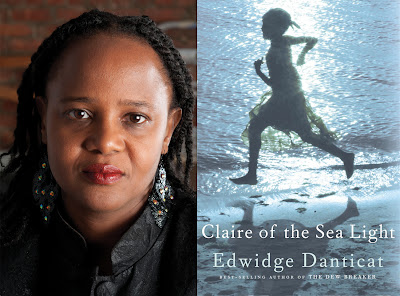
Edwidge Danticat Gives the Reader a Story

In the 44th in a series of posts on 2013 books entered for The Story Prize, Edwidge Danticat, author of Claire of the Sea Light (Alfred A. Knopf), reveals how she thinks and works.


How often does an idea for a story occur to you, and what triggers those ideas?
I get quite a few story ideas that never pan out, never become actual stories. I get them in the shower, in dreams, while I’m doing my hair, while I’m playing with my kids, sometimes while I’m cooking, and often when I’m reading newspapers or magazines, or books. The trick is their acutally becoming stories. Sometimes I begin writing a story and get stuck, then I try combining several of my story ideas. And sometimes after putting a half a story away for a while, it beckons me back and finally becomes a full story. But what triggers story ideas I’m never sure. It’s not something you can seek out, I think. You can just be curious and expose yourself to new experiences and hope the ideas come.

If you've ever written a story based on something another person told you would make a good story, what were the circumstances?
Actually, I try to stay away from those types of proposals because I’m always afraid that person would sue me or say I stole their idea. If writers got a dime for every person who told them they had an idea that would make them rich, they would actually be rich.

What's your approach to organizing a collection?
I try to organize the stories in a way that makes sense to me and I hope will make sense to the readers. I imagine the reader as having a story herself or himself in the book. The reader is the character in the book who is trying to figure out the rest of the stories.

What's the worst idea for a story you've every had?
I once tried to write a story about foreign missionaries who lead to a baby boom in a small Haitian town by providing support to Haitian pregnant women who are thinking of aborting their babies. Thanks to their program, all of the town’s women of child bearing age get pregnant so they can get the aid and it becomes a kind of epic disaster. This is partly based on a true story, but as hard as I tried I could not get it out of the zone of caricature into even satire.

What's the best story idea you've had that you've never been able to write to your satisfaction?  I’m still working on and I’m afraid that revealing it out would kill it.

Where do you do most of your work?
In a small office I have at home, often in the middle of the night.

What obstacles have you encountered as a writer, and what have you done to overcome them?
As far as writing itself, time is always an obstacle. Finding time is always a challenge. Sometimes you have to ignore important things—you’re not always timely with that e-mail, two hour phone calls with friends are gone—just so you can find the time to do this work for which there is no clocking in or out, which in essence you are always doing, no matter what else is going on in your life.

In what other forms of artistic expression do you find inspiration?
In film. I used to work in film and I think it is a very instructive medium for short story writers in terms of the economy of pacing and dialogue, etc... I sometimes like to think of my stories as short films.

What's the best and worst writing advice you've ever gotten?
I’ve never gotten really bad writing advice. Or maybe I’ve just blocked it out. The best writing advice I ever got was from a writing teacher in college who told me never to expect my work to match the image in my mind. There are so many words in any language, she said, but the mind is infinite. You try to get as close as possible to the film in your head, knowing it will never be the same.

Monday, November 25, 2013

Victoria Redel's Secret Joke

In the 43rd in a series of posts on 2013 books entered for The Story Prize, Victoria Redel, author of Make Me Do Things (Four Way Books), discusses where she likes to do her writing and how she puts together a collection.


Where do you work?
I try to get away and most especially from the familiarity of my own home. So I go to the library. I love the library because of the anonymity it provides, nothing needs me, no one is asking for attention, affection, or when I’m making dinner. It’s kind of funny I’ve come to this, since when my kids were little I often worked right in the midst of the tumble and chaos of our everyday life. My office was also where we kept our television. On days when a child was home sick from school, I’d pop a video in—Peter Pan, The Little Mermaid—and while Chef Louis crooned, "Les Poissons, Les Poissons"—I’d try to eek out a day's work. There are more than a few lines from children's movies buried in my books. It is my secret joke. I felt a little ruthless writing while dosing a kid’s spiking flu. But now, even with the kids grown and gone from home, I go to the library where I don’t feel compelled to look up if someone at the next desk sneezes.


How do you organize a collection?
Each time I’m working on a new story I honestly believe (or conveniently delude myself) that the concerns and questions in that story are new territory for me. And, of course, lo and behold, my concerns and interests and obsessions show up in all the stories. Half the stories in this collection stay close to a man’s perspective and half to a woman’s perspective. This wasn’t intentional but now seems inevitable. I’m interested in how we manage (or not), stay true to (or sabotage) our goals, dreams and obligations. Our lives and choices are usually messier, less streamlined than we’d wish. The ways we stray from ourselves and from those we love is a concern that weaves through all the stories in this collection. I’ve tried to organize the stories so that they speak and fight and talk to one another a bit. In organizing a collection there’s also some politeness to the reader—mixing things up—length and humor and disaster and grace.

Friday, November 22, 2013

Andrea Barrett's Science Fiction

In the 42nd in a series of posts on 2013 books entered for The Story Prize, Andrea Barrett, author of Archangel (W.W. Norton), discusses the similarities and differences between writing fiction about science and writing science fiction.


A few weeks ago I went to a series of readings and classes where eight excellent science fiction writers read their work and responded to questions. I was intrigued by what they were writing; also by how they described their working process. How differently, I thought, we found our way into stories! A few days after that—pure coincidence, as far as I know—a thoughtful reader emailed me about Archangel. Frederick Pohl, he said, one of science fiction’s grand masters, had defined science fiction as “a way of thinking about things”—and in his opinion I was a science fiction writer. That same week, a journalist asked me if I’d ever considered writing a science fiction novel.

“Um,” I said. “Maybe?” 

Since then I’ve been wondering how this genre, about which I don’t know enough, might be related to what I do. The fictional characters who take center stage in the five long stories of Archangel are influenced by real characters from the worlds of science, medicine, and technology, and they wrestle with real scientific problems. A woman trained in astronomy, struggling in 1920 to explain Einstein’s new theory to everyday readers, encounters a famous physicist who passionately resists that same theory. A genetics student, experimenting with fruit flies in the 1920s and 1930s, falls sequentially under the sway of scientists promoting competing views of inheritance. A high-school teacher first encounters Darwin’s ideas through biologist Louis Agassiz’s fierce opposition to them at a summer school for natural history that took place in 1873—and so on. Lots of scientific ideas, for sure—yet somehow I don’t think of these stories as being about science. They’re more about the feeling of being engaged in that work. Not about ideas and theories themselves but about people in the act of formulating, contemplating, rejecting, and reacting to them, during a half-century when such theories were overturning our view of the world.

Albert Einstein,
vampire hunter?
While I was searching online for the source of that first Frederick Pohl quote, I found something else he said: “The science fiction method is dissection and reconstruction. You look at the world around you, and you take it apart into all its components. Then you take some of those components, throw them away, and plug in different ones, start it up and see what happens.” With science fiction, that can mean extrapolating into the future, or into an alternate universe; setting invented characters along paths that can’t, or don’t yet, exist in the world we know. Although I’ve so far worked only within the context of this world, I recognize that method. Sometimes my fictional characters brush against actual characters, doing what they are known to have done: and what are those conjunctions, so clearly invented, but extrapolations? Take some of those components, throw them away, plug in different ones—insert the words ‘from the historical record’ after the word ‘components’ and that’s not far from what I do. 

Reading about Einstein’s theories, for instance, I also read about Scientific American magazine’s 1920 “Einstein Essay Contest,” which offered a prize of $5,000 for the best popular essay on the topic. The editor in charge of the contest—delightfully referred to as “The Einstein Editor”—after reviewing the submissions, wrote a cranky essay about what he called the “Divergent Viewpoints as to what Constitutes a ‘Popular’ Essay.” I thought I might write a story about him and what it felt like to sift through those papers. Then I thought I might write a story about a woman who wrote one of those papers. Then I thought—well, I ended up very far from there, as I did from the early ideas of all these stories: because as soon as I begin to sketch a character, her feelings come with her onto the page. 

From her feelings her life begins to come into focus; from the shape of her life more feelings arise, which result in actions and images and lines of dialogue that create still more actions, and bring to life other characters. For me, that path of emotion is the real trigger for a piece of fiction. Not an idea, which is necessary but not sufficient. Good science fiction transmits ideas, sometimes fabulously exciting ideas, but the best of it also evokes our passionate feelings. Somehow, for reasons I don’t quite understand, thinking and reading about science puts me in touch with a different ‘alternate world’—the one we inhabit in times of hope, despair, conflict, passion, envy, and all the varieties of love.