Saturday, October 11, 2014

Kathy Page Encounters Other Places

In the 25th in a series of posts on 2014 books entered for The Story Prize, Kathy Page, author of Paradise & Elsewhere (Biblioasis), discusses how travel has informed her writing. 


What else (beyond books and writing) informs or inspires your work?
Leaving home: I put it this way because citing “travel” as an influence  might suggest a Chatwinesque writer who has traversed vast countries on foot, lived with Amazon peoples, or sailed to Tahiti. Far from it: for a twenty-first century, first-world person, I’m less travelled than most, and none of my journeys have been exotic or intrepid.  Even so, the relatively few places I have visited—and the relationships and states of mind that  travelling involves—have had a profound effect on my work. The influence shows most clearly in the stories collected in Paradise & Elsewhere, a book populated with travellers of various kinds and also with communities responding to the arrival of strangers.

When I set out, my feelings are ambivalent. I want to see the world but also find it very hard to leave home. At a rough count, I’ve had about six homes. I stay in the same area for years, decades at a time, wrenching myself away when it finally becomes necessary for one practical reason or another. Fourteen years ago, I emigrated from London, England, to Salt Spring Island in British Columbia, and although I’m happy here, I’m also still recovering from the move. Wherever I live, I set up a home office and spend a great deal of time in my locality walking, observing, absorbing the place. I become familiar with the people and the animals, the weather patterns and soundscapes.  I plant a garden and see what grows. My attachment to where I live is one reason why encountering other places, even within my own country, has such a powerful impact. I think of them as someone else’s home.

Particularly acute and wonderful is that first encounter with a new place, both people and land: the way someone else’s everyday can be so vivid and particular, and a simple thing such as catching a pike, preparing it for supper and eating it towards midnight, the sun still just shy of the horizon, can feel utterly transcendent. Over and over again, travel proves how nothing need be exactly the way it is, that history is both a work in progress and an argument, that change is constant, and anything is possible… Once I am on the road, each place (with notable exceptions) is hard to leave. I want another day, week, or month. I want to know what it is like to live where I am merely visiting.

Just visiting: The Gulf of Bothnia
That fish supper on a rocky island in the Gulf of Bothnia was a simple thing. I was an invited guest: one first-world, European person holidaying with another, a colleague becoming a friend, and her extended family. It was a stage in a relationship that developed over several years. We were on relatively equal footing. The Finns spoke English fluently; I had only a few words of their language, but since Finnish is known to be fiendishly difficult, mastering it for a brief visit would not be a reasonable expectation. My hosts were as free to travel as I was; our cultural differences were mutually interesting. One of the things a traveller does is make and tell stories, and later, I celebrated that day in an essay called “The Pike’s Heart.”

Yet often it’s more complicated. A glance at the history of exploration and trade serves as a reminder of the darker sides to travel. Paradise & Elsewhere opens with a pair of tourists who fail to understand the nature of their economic relationship with the community they’re passing through. In other stories, travellers strike bargains, are treated to elaborate and contradictory accounts of the meaning of  archaeological sites, are taken in, expelled, turned to stone and (in a separate story) stoned to death; in one case, a woman welcomed and bedded by her host later finds herself kept prisoner, though she does finally escape.

Travel frequently involves us in multiple imbalances of power, and confronts both traveller and hosts with choices as to how to  deal with a person who seems in some way distinct from them. Ordinary life does this, too, of course, but travel brings these tensions to the foreground. The arrival of the stranger at the gate or on the shore is the end of one journey and the beginning of another. It’s the encounter between self and other, the place where we fight, negotiate, or fall in love, and discover how doing so will change us. It’s the place where stories begin.

Wednesday, October 8, 2014

Karin Lin-Greenberg: Notes of a Failed Cartoonist

In the 24th in a series of posts on 2014 books entered for The Story Prize, Karin Lin-Greenberg, author of Faulty Predictions (University of Georgia Press), tells how a serious of unsatisfying jobs—and a stab at cartooning—led her back to writing. 


After college, I moved into my parents’ basement in New Jersey and spent hours each day searching for a job. I went on many interviews in Manhattan, mostly for jobs in publishing. I’d been an English major with a creative writing concentration, and I hoped to find a job that would utilize my reading and writing skills. I don’t remember much about these interviews except a) I didn’t get offered any jobs in publishing, and b) when asked how I liked the women’s college I’d graduated from I used the word “empowering” a lot.

After months of interviews, I was offered a job. The job ad was vague, but it asked for someone with “strong writing skills.” I went to a dark basement in Brooklyn where there were several televisions with headphones attached and a keyboard in front of each screen. The job was to write closed captioning for videos. The man running the operation said, “It’s not difficult.” The phone rang. He excused himself and gestured for me to take his seat in front of the video he’d been captioning before my arrival. There was pornography on the screen. The man finished his conversation, looked at the television, and said, “Sorry. I shouldn’t have left it running.”

“Do you caption a lot of this?” I asked.

“Yeah.” He shrugged. “There’s dialogue.” He paused then said, “Do you want the job?” He hadn’t asked any interview questions.

“No, thank you,” I said. To turn down this offer after months of unsuccessful job hunting seemed foolish, but this wasn’t really a writing job. I thought they should have advertised for “strong hearing skills.” I went home and did not tell anyone I’d turned down a job.

A few weeks later, I had another interview. I’d given up on publishing and writing jobs—and the idea of being any sort of writer—and had applied to be a counselor at a non-profit that helped low-income high school students with the college application process. The director of HR looked at my résumé and said, “We have an opening for a grant writer. You’d be a good fit because of your English major.” She described the position, but I wasn’t listening. All I heard was the word “writer,” and the fact that I wouldn’t be transcribing dialogue in pornographic movies was enough for me to accept the job offer. I would soon learn the job was more about fundraising than writing.

On my first day of work, the Director of Development announced she was quitting. The Assistant Director of Development, who was left to train me, decided she’d rather spend time jogging and shopping. Each morning she changed into running gear, left, and returned hours later sweaty, toting shopping bags. The only other person in the office, the secretary, complained incessantly. One afternoon, she opened a window and flung a box of addressed, stamped envelopes—with pleas for donations inside—into the garden two stories below. I spent hours outside collecting envelopes. The secretary learned that our health insurance covered therapy, so a few afternoons a week, she went to therapy, which she said she needed because of the job. Often, I was alone in the office, and I could hear the counselors—the job I’d initially applied for—laughing with high schoolers down the hall. I was only a few months out of college, and already the working world felt dismal.

I wanted to be doing something else, something creative and fulfilling. In high school and college I’d drawn cartoons for the school newspapers. I’d never harbored serious thoughts about doing it for a living, but desperate for an escape, I spent much of my time in the Development Office researching how to be a professional cartoonist. At work, I fiddled with a letter addressed to potential donors, but my mind was on cartoon ideas. At home at night I drew. I knew becoming a syndicated cartoonist was a long shot, but the fantasy kept me going in those months.

I learned how to prepare my work for submission, and I sent my cartoons to the major syndicates. Soon, the rejections came in. One day a rejection arrived with a handwritten note on it: “Nice writing—the art needs a lot of hard work.” Nice writing, I kept thinking. I told myself that maybe this note was a sign, a message. I put too much stock in that scribbled note, but I was twenty-two, confused about what I should be doing with my life, and maybe I just needed a push to pursue writing seriously. Plus, was it any more ridiculous to want to be a fiction writer than a syndicated cartoonist? The odds, once I started looking into it, seemed fairly similar, just as slim.

Soon after I got that note, I quit the grant writing job, found a more gratifying job teaching adult basic education, registered for continuing education writing classes, and started studying for the GREs. The next fall, I applied to graduate school for writing. Maybe I’d be a cartoonist today if I hadn’t gotten that note about my writing, but I doubt it. I think I would have found my way back to writing eventually.

Sunday, October 5, 2014

Michael Blumenthal's Unusual Habit

In the 23rd in a series of posts on 2014 books entered for The Story Prize, Michael Blumenthal, author of The Greatest Jewish-American Lover in Hungarian History (Etruscan Press), discusses what he'd do if he weren't a writer and the risks of borrowing from real life. 


If you weren't a writer, what would you be doing?
I would be, very happily, a primate zoologist. Even at this very moment, I would gladly trade every word I've ever written for a few years among the bonobos. My literary hero, on that front, is Frans de Waal.

Describe an unusual writing habit of yours.
I only write when I genuinely feel that I have something meaningful and interesting to say. From what I can tell, that is a truly unusual habit.
Bonobo: The road not taken

Do you ever borrow characters or situations from real life, and has anyone ever confronted you about it, been angry or pleased?
Yes, all the time, and I have also been frequently confronted about it. Years ago, when I published my "Harvard novel," a dear friend and former colleague, on whom I had modeled what I felt to be the most lovable character in the entire book, almost divorced me, and sent me, via Fed Ex, a nasty epistle informing me that he would not, under any circumstances, be coming to my book party. He has since long, and repeatedly, forgiven me, and expressed his admiration for the book. More recently, my wife—upon reading the galleys of my recent collection of short stories—insisted that I would forever lose a pair of friends on a situation of whose one of the stories (in which virtually everything—from setting, to occupations, to language, to ending—is radically altered) is modeled. I'm hoping, and assuming, they will never read it, but that still remains to be seen.

What's the worst idea for a story you've every had?
I once had the idea of writing a story based on a protagonist who was obsessed by rectal and other sexual odors. A bad idea, to say the least.

What's the best story idea you've had that you've never been able to write to your satisfaction?
I've never written a play—the only genre in which I haven't published. But some years ago I had an idea for a play based upon two characters who meet in a psychoanalyst's waiting room, and whose relationship leads the analyst himself to examine his past and certain still-undealt-with traumas in his romantic relationships. I, indeed, did spend months working on the play, only to discover, as I had long suspected, that I am not a playwright. Yet another of what Auden would have called a brilliant idea, badly executed. Always best to know the limitations of one's gift.

What one story that someone else has written do you wish you had written?
Philip Roth's "Defender of the Faith," Flannery O'Connor's "The Lame Shall Enter First," and James Salter's "Last Night." All three utterly brilliant in different ways: the first hilarious; the second and third utterly tragic.

Where do you do most of your work?
At a desk facing my study window, either in my house in West Virginia or my summer house in Hungary. When I was starting out as a poet taking dictation directly from the gods, I did most of my work at my "office" in Montrose Park in D.C.

What do you do when you're stuck or have "writer's block"?
I stop writing and do something else. Preferably, I take a long walk... in fact, many long walks. Or fantasize about being a primate zoologist.

What advice do you have for aspiring writers?
If you hope to write for posterity, avoid the Creative Writing Industry at all costs. If the scope of your ambition ends with a Creative Writing job, a bunch of younger lovers, fifteen minutes of fame, and a fine education in flattery, networking, false praise and sycophantry, such a program may be the place for you, and there are plenty to choose from. The best Creative Writing teachers in the world are right up there on your bookshelf, or in the library, and they don't charge a bloody thing. They won't, however, alas, be able to write you a letter of reference, or get you a job.

What else (beyond books and writing) informs or inspires your work?
The magnificence of nature. The beauty and mystery of existence. The complexities of trying to love and live decently and with kindness. The challenges of generosity. The disturbances of lust. The pains and travails besetting myself and my friends. The affections and cruelties of animals. And, of course, the idea of death... and the reality of it. And of pain.

Monday, September 22, 2014

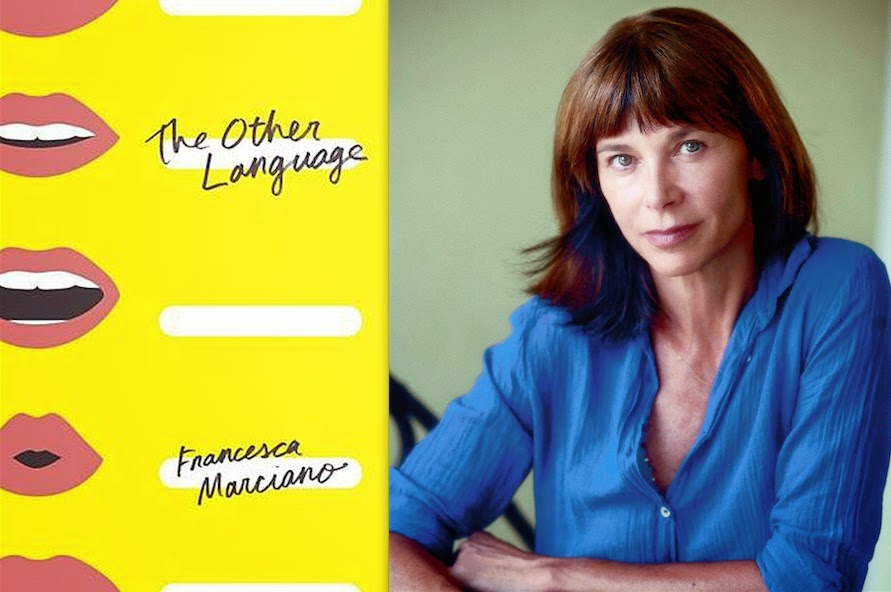
Francesca Marciano's Ten Writing Mantras

In the 22nd in a series of posts on 2014 books entered for The Story Prize, Francesca Marciano, author of The Other Language (Pantheon), offers writing advice. 


You’ve heard it a hundred times already, but a mantra is a mantra because it needs to be repeated, so here we go.

1. Get to work early in the day when the world is quiet and your mind is fresh.

2. Walk a lot. Ideas will pop to the surface like gnocchi in boiling water.

3. Hatch your story, like a hen hatches an egg. Get to the desk only when you know where you are heading.

4. Read a LOT of good books. Don’t be afraid of being influenced, or intimidated by other people’s talent.

5. Stuck? Walk some more. Eventually the gnocchi will pop up with the right solution.

6. Trust yourself. Don’t let other people read your work too soon.

7. Think of the work as building a bridge. A brick a day, and you’ll eventually get across.

8. Don’t panic: your first draft will be terrible. Everyone’s first draft is embarrassing.

9. When you show the work to people you trust, be prepared to listen to criticism and comments you may not agree with. You need to be strong and humble at the same time.

10. Rewrite, de-clutter, polish, like an obsessive housewife, till the page shines.

Thursday, September 18, 2014

James Magruder and the Boyhood Tribulations

In the 21st in a series of posts on 2014 books entered for The Story Prize, James Magruder, author of Let Me See It (TriQuarterly Books), discusses one of his literary touchstones. 


When I’m stuck, really stuck in a story of my own, I read comedy to feel better. The quickest fixes are Welty’s “Why I Live at the P.O.,” Ignatius J. Reilly visiting the Prytania Theatre early on in A Confederacy of Dunces, and the Delbert Bumpus chapter in Jean Shepard’s undervalued Wanda Hickey’s Night of Golden Memories and Other Disasters. Longer wallows would include Dawn Powell’s The Happy Island or A Time to Be Born or Waugh’s The Loved One. Most salutary of all is Herman Wouk’s second novel, The City Boy, or The Adventures of Herbie Bookbinder. Published in 1948, just before The Caine Mutiny would bring Wouk fame, fortune, and (for better or worse) a mass market readership, The City Boy has more honest laughs per page than any other book I know. When I pick it up—and I have probably read it twenty times since I spotted it on the fiction shelf in the Bower Junior High Library in 1973—I promise myself not to go too far, and find myself up all night with Herbie, a fat, brainy Jewish sixth-grader growing up in the Bronx in the 1920’s.

For forty years I have laughed at Herbie getting sick on seven pieces of French pastry at Golden’s
restaurant; Herbie trying to impress Lucille Glass, the red-haired siren of Mosholu Parkway, by changing the part in his hair, only to have it spring up like a boxwood hedge in a romantic moment; Herbie teaching Lenny Krieger, his jock cousin and nemesis, the difference between a dactyl and a trochee. My favorite episode, “The Dubbing of General Garbage,” features a giddily horrible Decoration Day Pageant commemorating Flanders Fields, after which Herbie and Lenny play Grant and Lee in “The Surrender at Appamatox.” For once, Herbie triumphs with his clear diction, natural ham, and a trick button only he has noticed on General Lee’s scabbard.

The novel broadens, and the cast widens, a third of the way in, when Herbie and his sister Felicia, Lenny, and Lucille head upstate for a month in the Berkshires at Camp Manitou. Tribulations pile up for our hero—on the pond, in right field, in his cabin, on a horse, at a mixer. How Herbie redeems himself to become the most popular Manitou camper, win Lucille’s favor (at least for the moment) and, not incidentally, save his father’s ice plant in the Bronx, is a boy’s adventure—breathless, tender, truthful, hilarious—to rival anything in Tom Sawyer or Penrod.

When I discovered City Boy, I wasn’t fat, I wasn’t Jewish, my family wasn’t working class, and I never went to summer camp, but at thirteen, runty, effeminate, four-eyed, unathletic, and often the new kid in class because my father moved us around too much, I understood humiliation. I had learned to make the bullies laugh before they had a chance to hit me. I knew how to charm girls and teachers and pretend I didn’t know the answer sometimes and claim to love Hot Wheels and Speed Racer and, always picked last for team sports, I knew to get knocked out early in dodge ball before anyone could watch me throw like a girl. I also understood Herbie’s appetite. I craved appreciation. I remember on my first readings how Wouk’s recollections of his Bronx boyhood scared as much as it entertained. Wouk “saw” me, “heard” me, noticed me as no other writer had before (and I was quite a bookworm). I felt both Herbie and I were waiting until life got fairer and the world began to value knowledge over force. Except I kept my head down while Herbie stood as tall as his legs would let him. That’s what made him heroic.

Perhaps I even understood, in my junior high way, that the only way to master your childhood was to put it out there and invite people in. I didn’t allow myself to attempt fiction until my early forties. I am (for better or worse) a very autobiographical writer, and humiliation has been my narrative meat and drink. The last time I read The City Boy was in 2010. My first novel had come out and I was shopping a book of stories. The City Boy frightened me in a new way. The humor remained, for me, bone-deep, inscribed not only in the characters and situations and details, but also in its syntax, its rhythms, and the calibrated distance of the third-person narrator. What I heard in this last go-round was the large, direct, and influential part of Wouk’s voice on my voice. It was as if his sentences had seeped into me on a cellular level. I’m not sure how I feel about this, as I’d rather read my work and hear Forster or Conrad or Dawn Powell. I suppose Herbie is in me that deep because he got me young and hit me hard. In any case, I’ve been giving copies of his adventures to friends and family since college. Perfect material for Steven Spielberg, it is my one free idea for pals who work in movies or television. Now I’ve told you. Fortunately, The City Boy is always in print.

Monday, September 15, 2014

Slice Magazine Offers Writers (and Beer) on Tap

By Nick Fuller Googins
Brooklyn, NY, Sept. 6, 2014

It’s Saturday night at powerHouse Arena (a bookstore/events space in Brooklyn’s DUMBO neighborhood) and the free beer has run out. What’s striking is that this doesn’t seem to faze anyone. Okay, a few people complain, but they’re probably the ones who arrived late. The rest of us mingling beneath the chandelier glow are taking the beer shortage in stride.

In the House: an appreciative audience
Slice magazine’s “Writers on Tap” billed itself as “a reading for discovering new voices and drinking good beer,” and it served as an interlude of sorts to the weekend-long Slice Literary Writers’ Conference. Slice, based in Brooklyn, publishes fiction, non-fiction, poetry, and interviews in a sleek, sexy magazine. According to co-founder Maria Gagliano, who introduced the night’s reading, Slice places a special emphasis on bridging the gap between emerging and established writers, with each issue featuring both well known and up-and-coming authors. The Slice Literary Writers’ Conference, held at St. Francis College in downtown Brooklyn on Sept. 6-7, kept true to this same focus, offering emerging writers the opportunity to meet with agents, attend workshops, and hear from a wide array of literary voices. Many of us here at powerHouse had come straight from the conference.

Earlier that day, we’d heard Tin House editor Rob Spillman, speaking at a panel entitled “The Secret Lives of Literary Magazines,” warn against what he called “Doogie Howser Syndrome,” or the predilection of some beginning writers to tack on an ending that tells the reader everything the previous fifteen pages of the story have already shown. At another panel, “It’s About Me…But It’s Also About You: Writing Nonfiction that Connects with Readers,” Dani Shapiro, author of Still Writing, told us, “Memory is an act of imagination.” During a session on revision, Elissa Schappell, author of Blueprints for Building Better Girls, had this to say: “Anyone who says they write without editing is either full of shit or not a writer…or a genius.”

The “Writers on Tap” reading that evening showcased the work of five writers handpicked by editors from Slice, A Public SpaceOne Teen Storyand Henry Holt & Co. Included in this bunch were authors Kseniya Melnik and Justin Taylor, both of whom released story collections this year, Melnik with her debut collection, Snow in May (Henry Holt & Co.) and Taylor with Flings (Harper), his second book of stories.
Busy man: Justin Taylor reads from Flings

Celia Johnson, co-founder of Slice, introduced Taylor, describing Flings as “a wonderful ensemble of matters of the heart,” a collection filled with “grief, lust, and falling in-and-out-of-love” that “takes you everywhere, from Oregon to Hong Kong.” Taylor, who later confided that he’d done five Flings readings in the past couple of weeks, took to the podium and said he needed a break from the collection. Instead he read from a thick sheaf of papers, a section of his novel-in-progress about a former child actor who’s leveraged his faded glory into part ownership of a bar—one that he himself patronizes often, especially if a certain female bartender is on duty. Of the former actor: “He liked to sit at the bar and let his longing run away with itself,” and he “assumed that all girls knew all things and modified his behavior accordingly.” If the audience’s reaction offered Taylor some focus-group-like insight as to the response his completed novel may elicit, he can anticipate having to include plenty of pauses for laughter at future readings. But that assumes he’ll have time for pauses.

Justin Taylor is a busy man. In addition to being on tour for his third book, working on his fourth, and teaching at more than one university, he is currently writing a review for Bookforum on Denis Johnson’s new novel, The Laughing Monsters. In preparation, Taylor explained that he’d been reading much of Johnson’s backlist, including his plays.

“Denis Johnson writes plays?” I asked.

Taylor reached into his bag, pulled out Soul of a Whore and Purvis and flipped through, exclaiming with no small degree of admiration that Denis Johnson not only writes plays but he writes them in verse.

Not so La-Z: Kseniya Melnik reads from Snow in May
Sarah Bowlin, editor at Henry Holt, introduced Kseniya Melnik, praising her writing for its ability to “reveal something cutting very easily and something emotional very slyly,” as well as possessing a “human quality that transports you.” Transport us it did, all the way back to Post-War Russia, where much of Melnik’s linked collection is set. She read from “Strawberry Lipstick,” a story that begins with heart-broken Olya, who “lay in bed between her younger sister, Dasha, and her older sister, Zoya, feeling that, at eighteen, her life was over. For what was life without love? A never-ending shift at a factory assembly line.” Bittersweet, cutting and emotional, the tone seemed to instantly and precisely evoke that of a love-sick teenager living through a Soviet winter.

Melnik admitted she enjoys writing stories about snowy places. It comes as little surprise because she grew up in Russia, moved to Alaska at age fifteen, and went to school in upstate New York. Currently she resides and writes in El Paso where it does in fact snow on occasion, though not often and not in recent memory. A word Melnik uses to describe the place is “sweltering.” The incongruity of writing much of Snow in May while living a few football fields from the Mexican border is so delicious that Melnik must be sick of people mentioning it. So I didn’t. But I had to wonder how she coped with such contrast. What was her secret?

The next day, Melnick answered my unasked question while participating in a panel entitled, “Literary Quirks,” when she said, “I cannot write at a desk. I write in a La-Z-Boy. I trick myself to think I’m relaxed.” If that helped her write so sharply about life in snowy Russia while living in El Paso, then that must be one hell of a La-Z-Boy.

Photos courtesy of Slice magazine and © Maria Gagliano

Friday, September 5, 2014

Monica McFawn and the Pursuit of Clarity

In the 20th in a series of posts on 2014 books entered for The Story Prize, Monica McFawn, author of Bright Shards of Someplace Else (University of Georgia Press), draws inspiration from a guy named Murray.


Do you ever borrow characters or situations from real life?
Years ago, I was living in a rural town in southern Michigan, working as a 4-H agent. My job was to manage the county’s 4-H program, and my duties were varied. I organized a shipment of shavings for the fair’s show ring, I counted unused piles of blue ribbons, I wiped the grease off pigs after a greased pig contest and other unimagined tasks. It was a far cry from the writing community I had just left, so far that when I once told a 4-H volunteer that I had an MFA in Poetry, he responded, “A Masters in Poultry? That’s good. Lots of kids here are interested in showing turkeys…”

My boss, Murray, liked to joke about my impractical background and citified ways. Despite our lack of things in common—I was a vegetarian poet in my late twenties, he was a sixty-something beef farmer—I liked him. Everyone did. Murray was tall and lean, with a concavity to his whole body, like a sapling bent by snow. Whenever he walked into a room, he aggressively put people at ease with little jokes and questions. Even the most withdrawn person would eventually be charmed, if only by his persistence. More than any of the colorful scenarios the job offered up, it is Murray’s character that I remember most.

Without fail, Murray seemed to force openness out of people who were normally anything but. This was most obvious during the weekly Horse Council meeting, a font of drama and infighting. The first moments of these meetings would be an idle volley of a low-stakes part of the agenda—perhaps what company would donate the paint for the horse stalls, or something. Then, the topic would shift into controversial territory, and the discussion would become a dense weave of puffery, posturing, and roundabout justifications. Murray would watch, sometimes drumming a leg and sighing. Then he’d speak.

“So the issue here, he might say, “is that the Horse Princess duties aren’t spelled-out? Right?”

It was his tone, rather than his words, that seemed to change the atmosphere. His voice had a frank, confessional quality, as if he were asking you advice over a beer. Yet he was also loud and exuberantly clear. Some people would answer him frankly, while the more scheming or indecisive types would look disconcerted, as if he’d spoke in another language. But the room, overall, would feel suddenly brighter, and the conversation would resume with new transparency. I took great pleasure in witnessing this—not because Murray was right but because, blunt as he was, there was an artfulness to his interruptions. He would break into moments of circuitous mutterings, so the clarity of his voice would be perfectly juxtaposed.

When I talked with Murray after these meetings, he’d lament the inability of the Horse Council to speak plainly. He couldn’t—or wouldn’t—understand why the group constantly ran aground in ambiguity and disagreements. He seemed certain that if people just got down to brass tacks, if they just spoke the basic truths within them, then there could be no misunderstanding.

Was Murray right? On one hand, I admire the embodied worldview of that boisterous, honest voice, a voice that could chase away any shadows, that could cut through guile and doublespeak to what lay beneath. On the other, the Horse Council’s problems were complex. The mix of personalities, ethical issues, and multi-familial tensions created a texture that was, in some ways, impenetrable. People could speak their deepest truths, and the impasse might only deepen. There is only so much clarity to be found.

It’s something I think about in my writing. Should a short story aim to say something clear about the world—should it be clearer than the world? Or should it instead faithfully recreate the entanglements, subtleties, and white noise of daily life? Maybe the answer seems obvious—we don’t want to end our stories with neat little morals. But the flip side is also true—a short story can’t just be eloquent murk. Everyone’s read beautiful prose in a story that seems to say nothing. It’s no better than being didactic.

Murray does appear, somewhat transfigured, in one of my stories. But his larger impact has been that he made me consider the role of clarity in art. My favorite stories are not like Murray, or the Horse Council, but like Murray at the Horse Council. The Council is colourful, difficult, fascinating, and opaque. It is the part of the short story that recreates life. Then Murray speaks. The tone shifts. His voice is the epiphany or a philosophical turn in a short story. Yet even as it illuminates the problem, it doesn’t solve it. All it does is startle us, for a moment, with a name for what we all see.