Showing posts with label pictures from The Story Prize event. Show all posts

Wednesday, April 1, 2026

What the Judges had to say about the winner of The Story Prize, OTHER WORLDS by André Alexis

photo © Nathalie Schueller
When the three judges for The Story Prize make their choices, they write citations for their top choices. This year's judges were writer and copyeditor Benjamin Dreyer, writer and past winner of The Story Prize Ling Ma, and librarian Stephen Sposato. We include the citations in congratulatory letters we present to each finalist, along with their checks ($20,000 to the winner, $5,000 to the other two finalists). To protect the confidentiality of the judges' votes and the integrity of the process, we don't attribute citations to any particular judge. Here's what the judges had to say about winner Other Worlds by André Alexis.

Other Worlds so seamlessly traverses the boundaries of time, of nationality, and of genre that such boundaries seem diaphanous. This fleet-footed collection is both rooted in oral and literary traditions and yet entirely contemporary. Being many things at once, full of sly innovations, and quietly upending of conventions, Other Worlds is wholly original and wholly itself. It is also very funny.” 

-------------- 

“The stories in André Alexis’s Other Worlds are enthralling in their variety (of geographical setting, of period, of theme; some profoundly intimate, others wide-ranging) and elegance, haunting and haunted, often mystically—indeed and as promised in the collection's title—otherworldly and yet very much grounded in our own actual, solid world. Some of the stories focus with great precision on issues of class, race, and culture; all of them aim for and achieve a humane universality. And for those of us who thrive on plot, suspense, and surprise, those are all in abundance here as well. 

“I began reading each story—of a young woman's chance encounter with a fabled painter whose connection to her own history might be of even more paramount importance than she suspects; of a writer who takes on a job as a kind of custodian to a mystifyingly unnerving town; of, even, a talking horse (this one nearly broke me)—thinking ‘I can't imagine where this is going to go’ and then following along delightedly (though often anxiously, in the best possible way) as Alexis confidently guided me. 

“I particularly enjoyed this collection on a sentence by sentence basis: There's a kind of gossamer lightness to Alexis's prose, a seeming effortlessness, but as I reread passages, which I found myself doing frequently, I appreciated all the more the erudition and the gorgeous construction.”

What The Story Prize judges had to say about LONG DISTANCE by finalist Ayşegül Savaş

Photo © Nathalie Schueller
When the three judges for The Story Prize vote for the winner of the award, they write citations for their top choices. This year's judges were writer and copyeditor Benjamin Dreyer, writer and past winner of The Story Prize Ling Ma, and Chicago librarian Stephen Sposato. We include the citations in congratulatory letters we present to each finalist, along with their checks ($20,000 to the winner, $5,000 to the other two finalists). To protect the confidentiality of the judges' votes and the integrity of the process, we don't attribute citations to any particular judge. Here's what the judges had to say about Long Distance by finalist Ayşegül Savaş: 

“Across thirteen subtle and captivating stories, Long Distance masterfully explores the dislocations and disruptions of the modern world, from the macro level of war and immigration to the intimate twists and shadows of the human heart. Savaş patiently tests her characters, probing their relationships to friends, family, lovers, colleagues, hosts, servants, and strangers alike, revealing the initial moments of cultural and moral fissure that crack open between them. Empathetic and clear-eyed, these masterful, gracefully written stories portray characters grappling with the unexpected decisions that will define their lives.” 

What The Story Prize judges had to say about ATAVISTS by finalist Lydia Millet

Photo © Nathalie Schueller
When the three judges for The Story Prize vote for the winner of the award, they write citations for their top choices. This year's judges were writer and copyeditor Benjamin Dreyer, writer and past winner of The Story Prize Ling Ma, and Chicago librarian Stephen Sposato. We include the citations in congratulatory letters we present to each finalist, along with their checks ($20,000 to the winner, $5,000 to the other two finalists). To protect the confidentiality of the judges' votes and the integrity of the process, we don't attribute citations to any particular judge. Here's what the judges had to say about Atavists by Story Prize finalist Lydia Millet:  

Atavists is brilliantly constructed, with stories that not only intricately connect a web of common characters but also advance a satisfying chronological narrative. With great skill, Millet both pokes fun at her characters and evokes tender feelings toward them, revealing the essential truth that we are as much defined by our flaws—and our acceptance of the flaws of those around us—as by our aspirations and accomplishments. Even the titles are clever, each reflecting an ‘ism’ specific to the point-of-view character. Though the deftly written stories in Atavists are humorous in tone, they also explore serious contemporary issues, without shrinking away from the ominous, near certain repercussions in the not-too-distant future. And yet, the final, well-earned ism remains a hopeful one.”

Wednesday, March 26, 2025

What The Story Prize Judges Had to Say About Highway Thirteen by Story Prize Winner Fiona McFarlane

photo: Beowulf Sheehan
When the three judges for The Story Prize make their choices, they write citations for their top choices. This year's judges were writer and editor Elliott Holt, writer Maurice Carlos Ruffin, and bookseller Lucy Yu. We include the citations in congratulatory letters we present to each finalist, along with their checks ($20,000 to the winner, $5,000 to the other two finalists). To protect the confidentiality of the judges' votes and the integrity of the process, we don't attribute citations to any particular judge. Here's what the judges had to say about Highway Thirteen by Fiona McFarlane.

“Highway Thirteen is a kaleidoscopic collection, offering a multifaceted view of the ordinary people affected by one serial killer in Australia. Fiona McFarlane writes with psychological precision and a masterful sense of suspense. Each story is artfully constructed and the way they fit together, spanning twenty-eight years, is nothing short of dazzling. Fiona McFarlane’s book is a tour de force about the stories we tell, the surprising ways our lives connect, and the ripple effects of violence.”

What the Story Prize Judges Had to Say About Ghost Pains by Jessi Jezewska Stevens

When the three judges for The Story Prize vote for the winner of the award, they write citations for their top choices. This year's judges were writer and editor Elliott Holt, writer Maurice Carlos Ruffin, and bookseller Lucy Yu. We include the citations in congratulatory letters we present to each finalist, along with their checks ($20,000 to the winner, $5,000 to the other two finalists). To protect the confidentiality of the judges' votes and the integrity of the process, we don't attribute citations to any particular judge. Here's what the judges had to say about Ghost Pains by Jessi Jezewska Stevens: 

Photo: Beowulf Sheehan
“Few books luxuriate in the possibility of language as does Ghost Pains. And few authors take such apparent pleasure in the swirl of wordplay, anxiety, and loneliness as does Jessi Jezewska Stevens. The nervous, insecure narrators are a joy to meet—at an interview for a light journalism piece, at a catastrophically sad party, out in the world—because they represent the uncertainty of the reader, the longing for connection, and the impossibility of true comfort or rest. In these times, this is a book that meets the moment head-on and refuses to look away. That Stevens is a master of words elevates each tale to the level of high art.” 


What the Story Prize Judges Had to Say About There Is a Rio Grande in Heaven by Ruben Reyes Jr.

When the three judges for The Story Prize vote for the winner of the award, they write citations for their top choices. This year's judges were writer and editor Elliott Holt, writer Maurice Carlos Ruffin, and bookseller Lucy Yu. We include the citations in congratulatory letters we present to each finalist, along with their checks ($20,000 to the winner, $5,000 to the other two finalists). To protect the confidentiality of the judges' votes and the integrity of the process, we don't attribute citations to any particular judge. Here's what the judges had to say about There Is a Rio Grande in Heaven by Ruben Reyes Jr.: 

Photo: Beowulf Sheehan
“Ruben Reyes Jr. shows there is no way to outrun the past. The distance someone attempts to travel away from all the selves they carry is the same distance one must travel from their own physical body. The consequential state of this is a half-lived experience in permanent limbo. There Is a Rio Grande in Heaven portrays the fragility of hunger for convenience and control. Then Reyes Jr. explores the distinct consequences of believing that control can be bought, which causes constant unsettling murmurs in one’s soul. Ultimately, he shows the impossibilities of buying ourselves out of pain while shattering this notion’s associated capitalistic ideals.

“This story collection and its anachronistic approach to grief show the ever-present nature of its cyclical appearances even as some characters attempt to run from the feeling. The nonlinear style mimics the blurriness of time as it exists through memories. Reading these stories has shown me there is no easy transactional way to connect with generational past or identity, and it is impossible to skirt around the pain of confrontation. This repeated confrontation of self is a necessary step on the path to the freedom of living in the present moment. This book delicately balances both the profound proudness and guilt of immigrants living completely different lives compared to those of even recent ancestors. These stories caution against the pseudo ideal of assimilating into capitalism that ultimately causes the removal of the history of self and severs the connection to our humanity”

Tuesday, March 25, 2025

The 21st Winner of The Story Prize Is Highway Thirteen by Fiona McFarlane!

Photo: Beowulf Sheehan
The winner of The Story Prize for books published in 2024 is Fiona McFarlane for Highway Thirteen (Farrar, Straus and Giroux). The other finalists were Ruben Reyes Jr. for There Is a Rio Grande in Heaven (Mariner Books) and Jessi Jezewska Stevens for Ghost Pains (And Other Stories). The Story Prize’s $20,000 top prize is among the largest first-prize amounts of any annual U.S. book award for fiction. As runners-up, Reyes and Stevens each received $5,000. 

Highway Thirteen is McFarlane's fourth book of fiction and her second short story collection. The judges cited the book for the conceptual and thematic ingenuity of the collection as a whole and the precise and astute execution of the individual stories.

Director Larry Dark and Founder Julie Lindsey selected the three finalists for The Story Prize, now in its 21st year, from among 107 short story collections published in 2024, representing 87 different publishers or imprints. Three judges—writer and editor Elliott Holt; writer Maurice Carlos Ruffin, and bookseller Lucy Yu—determined the winner from among the three books chosen as finalists.

Wednesday, March 27, 2024

What The Story Prize Judges Had to Say About The Hive and the Honey by Story Prize Winner Paul Yoon

photo © Beowulf Sheehan

When the three judges for The Story Prize make their choices, they write citations for their top choices. This year's judges were critic and writer Merve Emre, librarian Allison Escoto, and writer Tania James. We include the citations in congratulatory letters we present to each finalist, along with their checks ($20,000 to the winner, $5,000 to the other two finalists). To protect the confidentiality of the judges' votes and the integrity of the process, we don't attribute citations to any particular judge. Here's what the judges had to say about The Hive and the Honey by Yiyun Li: 

“The seven stories in The Hive and the Honey are uncanny tales of loss and longing. A mother loses a child. A child loses a father. One man loses his home. Another loses his sense of time. Each loss is experienced by the character as a private or secluded grief, but Paul Yoon excavates grief's historic dimensions, revealing the long-lived aftershocks of the Korean War. The genius of the collection lies in its steadiness of style—Yoon's prose is quiet and fine and, at times, painfully precise—and its variety of genre. Domestic realism sits alongside folk tales, ghost stories, and imperial histories. The present is haunted by the past, and the past is violently and beautifully summoned in the present.” 

The Hive and The Honey is a collection of astonishing breadth, offering a panoramic portrait of Korean diaspora, of lives rescued from the margins of history. Here we encounter a samurai tasked with protecting an orphan boy; a haunted Korean settlement in Far East Russia; men and women fleeing brutal pasts, seeking connection or safety. And yet these characters are more elusive than can be summarized. They reveal themselves most acutely through intimate gestures: a girl inviting a bee to her teacup, a kid licking at the blood from his own broken nose, a man coming home from war with vegetable seeds tucked into his chest pocket. Such moments infuse the ordinary with lasting wonder and could only be achieved by a writer as patient, curious, and masterful as Paul Yoon.”


What The Story Prize Judges Had to Say About Wednesday's Child by Yiyun Li

photo © Beowulf Sheehan
When the three judges for The Story Prize make their choices, they write citations for their top choices. This year's judges were critic and writer Merve Emre, librarian Allison Escoto, and writer Tania James. We include the citations in congratulatory letters we present to each finalist, along with their checks ($20,000 to the winner, $5,000 to the other two finalists). To protect the confidentiality of the judges' votes and the integrity of the process, we don't attribute citations to any particular judge. Here's what the judges had to say about Wednesday's Child by Yiyun Li: 

“Profound loss and its aftermath permeate this elegant collection of stories by a truly gifted writer. The people in these captivating stories are all moving through grief: a woman on a solo trip to Europe after the death of her child. A temporary nanny guides a new, dubious mother through the turbulence of the early days of motherhood, knowing she will have to leave the baby to an uncertain fate. An elderly dying professor reminisces about the small but meaningful moments of her life as her caretaker looks back on the events that guided her to this moment in her life. These characters are indelible, the quiet moments of their lives described through beautiful language. They lead lives that are both compelling and relatable; they stay with you long after you leave their story.”

What The Story Prize Judges Had to Say About Other Minds and Other Stories by Bennett Sims

Photo @ Beowulf Sheehan
photo © Beowulf Sheehan
When the three judges for The Story Prize make their choices, they write citations for their top choices. This year's judges were critic and writer Merve Emre, librarian Allison Escoto, and writer Tania James. We include the citations in congratulatory letters we present to each finalist, along with their checks ($20,000 to the winner, $5,000 to the other two finalists). To protect the confidentiality of the judges' votes and the integrity of the process, we don't attribute citations to any particular judge. Here's what the judges had to say about Other Minds and Other Stories by Bennett Sims: 

“Bennett Sims is an original. There are no other stories like the stories in Other Minds and Other Stories (except perhaps those in his previous collection). The book amounts to an intense and artful exploration of the difficulty of truly understanding other minds, and as such also serves as a deep dive into the question of individual identity, of the mind that is seeking to understand. Some of the stories seem to be as much essays or philosophical explorations as they are fiction and unfurl via a single, long unbroken paragraph, a form that echoes the work of the great W.G. Sebald. Sims is extremely erudite with an expansive vocabulary, but his choice of words never seems strained. Other Minds is a collection that challenges the reader but also offers satisfactions comparable to cracking a code or solving a puzzle. When you get it, you get it. These stories invite you to engage, to join the enquiry—and they never condescend. It is an impressive high-wire act, a reading experience unlike any other.”


Thursday, March 16, 2023

What the Judges Had to Say About The Story Prize Winner, Bliss Montage by Ling Ma

Photo © Beowulf Sheehan

When the three judges for The Story Prize make their choices, they provide citations for the books. This year's judges were critic, writer, and editor Adam Dalva, writer Danielle Evans, and bookseller and podcaster Miwa Messer. We include the citations in congratulatory letters we present to each finalist, along with their checks ($20,000 to the winner, $5,000 to the other two finalists). To protect the confidentiality of the judges' votes and the integrity of the process, we don't attribute citations to any particular judge. Here's what the judges had to say about Night of the Living Rez by Morgan Talty:

“There is much to love about this stylish, inventive collection—Ma melds humor and the surreal beautifully, resulting in a project that is at once absurd and insightful. Two of the stories feel like all-time greats: ‘Peking Duck’ is a many-layered masterpiece of telling and retelling that serves as counterpoint to the argument that nothing can be gained by writing about a writing class; ‘Returning’ is a meandering, brilliant look at separation, art, and unique traditions. The rest of the collection lives up to these high points, especially ‘Office Hours,’ with its uncanny ending. Who but Ling Ma could give us flirty yetis and an unforgettable baby arm, dangling? This is an expansive, bold, and delightful book.”

“The stories in Ling Ma’s collection, Bliss Montage, sneak up on you. Relationships old and new, a marriage on the rocks, a friendship that’s run its course, a wildly challenging pregnancy—we think we’ve heard these setups before. But then Ma takes a remarkable tack: 100 ex-boyfriends in your home, an unexpected baby arm, a Yeti, a harrowing homecoming (of sorts). At first the absurdities reveal a familiar sense of disbelief and loss. Sit longer, and the comically outlandish stories in Bliss Montage reveal a thrumming rage and grief, the shocking truths we try to ignore.” 

Friday, March 4, 2016

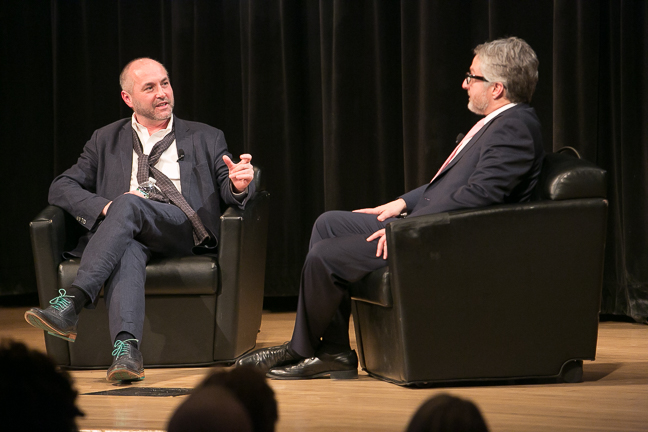
What The Story Prize Judges Had to Say About Colum McCann's Thirteen Ways of Looking

Photo by Beowulf Sheehan
When the three judges for The Story Prize make their choices, they provide citations for the books. This year's judges were Anthony Doerr, Rita Mead, and Kathryn Schulz. We include the citations in congratulatory letters we present to each finalist, along with their checks ($20,000 to the winner, $5,000 to the other two finalists). To protect the confidentiality of the judges' votes and the integrity of the process, we don't attribute citations to any particular judge.

Here's what the judges had to say about Colum McCann's Thirteen Ways of Looking:

"Part police procedural, part Ulysses, strung across the wirework of a Wallace Stevens poem, the title novella dazzles. It combines a playfulness for genre-melding with the delight of Mendelssohn’s wordplay with the author's wide-open empathy for every character—even the despicable Elliot—to open giant questions about race, aging, and especially class. And while so many layers—is the novella a retelling of Joyce’s 'The Dead'? a rumination on the culture of surveillance? do fathers bear the sins of their sons?—can be teased apart, tasted, and appreciated individually, at bottom the piece remains a gripping murder mystery, and compels a reader to consume it in a single gulp. In the three remaining stories, McCann continues to prove himself a master of sensory detail and the sentence fragment; the confrontation at the climax of 'Treaty' leaves one thrilled, nauseous, and fully-dilated. Few writers use prose this well to show how the human mind can simultaneously occupy multiple places and times."

Thursday, March 14, 2013

Pictures from The Story Prize Event on March 13

 All photos © Beowulf Sheehan


The finalists: Junot Díaz, Claire Vaye Watkins, and Dan Chaon

Dan Chaon reads from his collection Stay Awake

Claire Vaye Watkins discusses Battleborn
with Story Prize Director Larry Dark
Junot Díaz discussing This Is How You Lose Her—and more

Story Prize Founder Julie Lindsey, winner Claire Vaye Watkins, and Larry Dark