Here's the video of The Story Prize event, featuring the three finalists—Edwidge Danticat (the winner), Kali Fajardo-Anstine, and Zadie Smith—reading from and discussing their work:
Showing posts with label Edwidge Danticat. Show all posts
Showing posts with label Edwidge Danticat. Show all posts
Wednesday, March 4, 2020
Thursday, February 27, 2020
What The Story Prize Judges Had to Say About This Year's Winner, Everything Inside by Edwidge Danticat
 |
| Photo © Beowulf Sheehan |
Here what the judges had to say about Everything Inside by Edwidge Danticat:
“The stories contained in Everything Inside are powerfully written. They are rooted in place and in family. From beginning to end, I found myself spellbound by the care taken with character. Relationships between parent and child, between neighbors and coworkers, and between created families: These bonds were so incredibly, carefully rendered. Love beginning and ending. Life beginning and ending. The way that Edwidge Danticat writes about place—specifically Miami and Haiti—left me feeling as though I were seeing something for the first time. We are all lucky such an important voice is in the world, creating such tender work.”
“It is something to see a writer whose previous work is already canonical write a story collection with the fierce desperation and love usually seen in first books. But Danticat is not one of our regular writers, she is a harking angel. She comes to tell us that the world is new, again and again, and that stories will not lose their urgency, their necessity. These stories zoom from the globality of immigration and natural disaster, to see the human being beneath the news stories and the humanity within each tragedy. Death is a major theme of these stories, and hope does not always prevail, but there remains a belief in human dignity and the importance of acknowledging the humanity in others. This shows in Danticat's choice of words but most often in her choice of narrator—not a spurned wife, but the daughter who never knew her father; not an earthquake survivor, but his lover. Danticat is a cherished writer for lovers of fiction and this book will also be cherished by lovers of politics, sociology and well, lovers of human beings.”


Wednesday, February 26, 2020
Edwidge Danticat Is the First Ever Two-Time Winner of The Story Prize for Everything Inside!

In the days and weeks to come, we'll post the judges' citations for the three books, photos from the event and after-party, and a link to the video.
Thursday, January 9, 2020
The 2019/20 Finalists for The Story Prize Are: Edwidge Danticat, Kali Fajardo-Anstine, and Zadie Smith
|

Monday, January 20, 2014
An Index of Posts from Authors of 2013 Story Collections
For the fourth straight year, in 2013 The Story Prize invited each author of a collection we received as an entry to contribute a guest post to our blog. Out of 94 authors, 62 chose to participate. We thank them for their thoughtful , interesting contributions. Since 2010, when we began doing this, TSP has featured 266 guest posts from 263 writers.
According to Blogger's statistics, every author post received at least 100 page views, with most getting 300 or more and the most active page (Jess Walter's) so far drawing more than 1,200 hits. The posts with the second and third most hits this year were Edwidge Danticat's and George Saunders'. The links, in alphabetical order by the author's last name, are to each guest post.
A-B
Mary Akers Attends to the Details
Stevan Allred Populates a Town
Louise Aronson Answers "The Question"
Where David S. Atkinson Gets His Ideas
Ramona Ausubel and the Story About the Spool Farmer
Tom Barbash Zeroes in on a Quandary
Andrea Barrett's Science Fiction
Kevin Barry and the Deeply Esoteric
C-D
Elizabeth Cohen on What Her Stories Leave Out
Carolyn Cooke's Anti-House
Candace Coulombe's Flash Fabulism
Edwidge Danticat Gives the Reader a Story
Amber Dermont and the Incorrigible Student
Andre Dubus III Asks: What Would That Be Like?
E-G
B.C. Edwards and the Terrifying Malady
Jim Gavin: Some Notes on “The Partridge Festival” by Flannery O’Connor
Sarah Gerkensmeyer Learns to Tolerate Messes
Manuel Gonzales' Strange, Meandering Thought Process
Peter Grandbois Listens to Images
Allan Gurganus: A Few Words for the Novella
H-K
Cary Holladay's Reluctant Art Form
Jessica Hollander and the Naked Workout
Seth Johnson and the Anti-Story
Jessica Francis Kane vs. the Beautiful Chaos
Kristiana Kahakauwila Starts with an Image
Laura Kasischke: On Childish Things
L-M
Andrew Lam's American Beginning: Learning a New Language, Seeing a New Future
Rebecca Lee Gets an Offer She Can't Refuse
Norman Lock's Subconscious Needs
Kelly Luce Takes a Hatchet to Her Work
William Luvaas: How It All Starts
Donald Lystra and That Sense of Discovery
Courtney McDermott on Encountering Ideas Everywhere
Kate Milliken Builds a House
O-R
Chinelo Okparanta Paints the Truth
Peter Orner Walks Around with It
Sara Pritchard on Making Stories That Are Big on the Inside
Alex M. Pruteanu's Guerilla Writing Tactics
Jamie Quatro and the Anarchic Image
Victoria Redel's Secret Joke
Ethel Rohan Says: "Enough"
Ito Romo and the Lives of Others
Ethan Rutherford on Knowing When to Quit (and Not Quitting)
Jean Ryan and the Abandoned Story
S
George Saunders Talks Shop
Saïd Sayrafiezadeh and the Pressure of Having to Say Something
Katey Schultz on Writing What She Doesn't Know
Aurelie Sheehan Comes Out of Hiding
Ranbir Singh Sidhu Seeks to Broaden the Landscape
Joan Silber Makes Thematic Connections
Gregory Spatz Runs Hot and Cold
Susan Steinberg and the Story of the Twelve-Foot-High Chair
Ben Stroud Learns to Adapt
T-W
Susan Tepper on Making the Most of Insignificant Things
Johnny Townsend Asks "What If?"
Valerie Trueblood on the "When" of Stories
Laura van den Berg's Journey to "Antartica"
Anthony Varallo and "A Basket of Apples"
Shawn Vestal and the Artistic Takeover
Anthony Wallace and the Everyday Eternities
Jess Walter's "Process"
Guinotte Wise Gets Unstuck
 |
| Popular posters: Walter and Danticat |
A-B
Mary Akers Attends to the Details
Stevan Allred Populates a Town
Louise Aronson Answers "The Question"
Where David S. Atkinson Gets His Ideas
Ramona Ausubel and the Story About the Spool Farmer
Tom Barbash Zeroes in on a Quandary
Andrea Barrett's Science Fiction
Kevin Barry and the Deeply Esoteric
C-D
Elizabeth Cohen on What Her Stories Leave Out
Carolyn Cooke's Anti-House
Candace Coulombe's Flash Fabulism
Edwidge Danticat Gives the Reader a Story
Amber Dermont and the Incorrigible Student
Andre Dubus III Asks: What Would That Be Like?
E-G
B.C. Edwards and the Terrifying Malady
Jim Gavin: Some Notes on “The Partridge Festival” by Flannery O’Connor
Sarah Gerkensmeyer Learns to Tolerate Messes
Manuel Gonzales' Strange, Meandering Thought Process
Peter Grandbois Listens to Images
Allan Gurganus: A Few Words for the Novella
H-K
Cary Holladay's Reluctant Art Form
Jessica Hollander and the Naked Workout
Seth Johnson and the Anti-Story
Jessica Francis Kane vs. the Beautiful Chaos
Kristiana Kahakauwila Starts with an Image
Laura Kasischke: On Childish Things
L-M
Andrew Lam's American Beginning: Learning a New Language, Seeing a New Future
Rebecca Lee Gets an Offer She Can't Refuse
Norman Lock's Subconscious Needs
Kelly Luce Takes a Hatchet to Her Work
William Luvaas: How It All Starts
Donald Lystra and That Sense of Discovery
Courtney McDermott on Encountering Ideas Everywhere
Kate Milliken Builds a House
O-R
Chinelo Okparanta Paints the Truth
Peter Orner Walks Around with It
Sara Pritchard on Making Stories That Are Big on the Inside
Alex M. Pruteanu's Guerilla Writing Tactics
Jamie Quatro and the Anarchic Image
Victoria Redel's Secret Joke
Ethel Rohan Says: "Enough"
Ito Romo and the Lives of Others
Ethan Rutherford on Knowing When to Quit (and Not Quitting)
Jean Ryan and the Abandoned Story
S
George Saunders Talks Shop
Saïd Sayrafiezadeh and the Pressure of Having to Say Something
Katey Schultz on Writing What She Doesn't Know
Aurelie Sheehan Comes Out of Hiding
Ranbir Singh Sidhu Seeks to Broaden the Landscape
Joan Silber Makes Thematic Connections
Gregory Spatz Runs Hot and Cold
Susan Steinberg and the Story of the Twelve-Foot-High Chair
Ben Stroud Learns to Adapt
T-W
Susan Tepper on Making the Most of Insignificant Things
Johnny Townsend Asks "What If?"
Valerie Trueblood on the "When" of Stories
Laura van den Berg's Journey to "Antartica"
Anthony Varallo and "A Basket of Apples"
Shawn Vestal and the Artistic Takeover
Anthony Wallace and the Everyday Eternities
Jess Walter's "Process"
Guinotte Wise Gets Unstuck
Wednesday, November 27, 2013
Edwidge Danticat Gives the Reader a Story
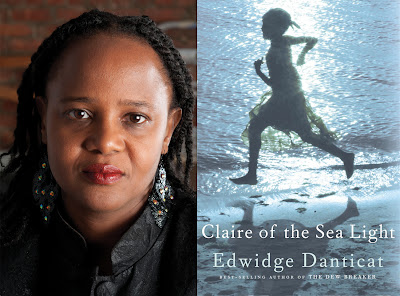
In the 44th in a series of posts on 2013 books entered for The Story Prize, Edwidge Danticat, author of Claire of the Sea Light (Alfred A. Knopf), reveals how she thinks and works.
How often does an idea for a story occur to you, and what triggers those ideas?
I get quite a few story ideas that never pan out, never become actual stories. I get them in the shower, in dreams, while I’m doing my hair, while I’m playing with my kids, sometimes while I’m cooking, and often when I’m reading newspapers or magazines, or books. The trick is their acutally becoming stories. Sometimes I begin writing a story and get stuck, then I try combining several of my story ideas. And sometimes after putting a half a story away for a while, it beckons me back and finally becomes a full story. But what triggers story ideas I’m never sure. It’s not something you can seek out, I think. You can just be curious and expose yourself to new experiences and hope the ideas come.
If you've ever written a story based on something another person told you would make a good story, what were the circumstances?
Actually, I try to stay away from those types of proposals because I’m always afraid that person would sue me or say I stole their idea. If writers got a dime for every person who told them they had an idea that would make them rich, they would actually be rich.
What's your approach to organizing a collection?
I try to organize the stories in a way that makes sense to me and I hope will make sense to the readers. I imagine the reader as having a story herself or himself in the book. The reader is the character in the book who is trying to figure out the rest of the stories.
What's the worst idea for a story you've every had?
I once tried to write a story about foreign missionaries who lead to a baby boom in a small Haitian town by providing support to Haitian pregnant women who are thinking of aborting their babies. Thanks to their program, all of the town’s women of child bearing age get pregnant so they can get the aid and it becomes a kind of epic disaster. This is partly based on a true story, but as hard as I tried I could not get it out of the zone of caricature into even satire.
What's the best story idea you've had that you've never been able to write to your satisfaction? I’m still working on and I’m afraid that revealing it out would kill it.
Where do you do most of your work?
In a small office I have at home, often in the middle of the night.
What obstacles have you encountered as a writer, and what have you done to overcome them?
As far as writing itself, time is always an obstacle. Finding time is always a challenge. Sometimes you have to ignore important things—you’re not always timely with that e-mail, two hour phone calls with friends are gone—just so you can find the time to do this work for which there is no clocking in or out, which in essence you are always doing, no matter what else is going on in your life.
In what other forms of artistic expression do you find inspiration?
In film. I used to work in film and I think it is a very instructive medium for short story writers in terms of the economy of pacing and dialogue, etc... I sometimes like to think of my stories as short films.
What's the best and worst writing advice you've ever gotten?
I’ve never gotten really bad writing advice. Or maybe I’ve just blocked it out. The best writing advice I ever got was from a writing teacher in college who told me never to expect my work to match the image in my mind. There are so many words in any language, she said, but the mind is infinite. You try to get as close as possible to the film in your head, knowing it will never be the same.
Tuesday, September 22, 2009
Genius Authors, Enduring Works, Book Club Choices, Best-Sellers, Award Winners
I can't keep up with all of the great things that are happening for short stories and short story writers, so for now, I'm just going to list the latest and hope to circle back later to discuss some of these at greater length. Here's what has been happening so far this month:
Two Short Story Writers Win MacArthur Foundation Fellowships.
Among this years "genius grant" recipients are short story writer Deborah Eisenberg (a pure play) and the first ever winner of The Story Prize, Edwidge Danticat, whose second short story collection, The Dew Breaker, is often classified as a novel.
Four of the Six Finalists for the Best of the National Book Awards Fiction Are Short Story Collections.
In 60 years, and out of 77 books, only 11 have been short story collections. But a panel of 140 writers chose four of those books among the six finalists. Those collections are: The Stories of John Cheever, The Collected Stories of William Faulkner, The Complete Stories of Flannery O'Connor, and The Collected Stories of Eudora Welty. Short story collections are, without a doubt, among the most enduring works of American literature.
The Latest Oprah's Book Club Selection Is a Short Story Collection.
On September 18, Oprah Winfrey announced that Say You're One of Them by Uwem Akpan is the next book club selection--the first time she's chosen a short story collection.
Soon There Will Be Three Short Story Collections on The New York Times Best-Seller List.
When Akpan's book hits The New York Times Best-Seller List for trade paperbacks, it's very likely that it will join two other short story collections: Olive Kitteridge by Elizabeth Strout and Unaccustomed Earth by Jhumpa Lahiri. Who says short story collections don't sell?
The Inaugural $50,000 St. Francis College Literary Prize Goes to a Short Story Collection.
On September 12, as part of the Brooklyn Book Festival, Aleksander Hemon's short story collection Love and Obstacles was announced as the winner of this new book award for mid-career authors.
In addition, the Frank O'Connor International Short Story Award just announced it's surprising winner, Simon Van Booy's Love Begins in Winter.
More on much of this later. For now, I rest my case.
Two Short Story Writers Win MacArthur Foundation Fellowships.
Among this years "genius grant" recipients are short story writer Deborah Eisenberg (a pure play) and the first ever winner of The Story Prize, Edwidge Danticat, whose second short story collection, The Dew Breaker, is often classified as a novel.
Four of the Six Finalists for the Best of the National Book Awards Fiction Are Short Story Collections.
In 60 years, and out of 77 books, only 11 have been short story collections. But a panel of 140 writers chose four of those books among the six finalists. Those collections are: The Stories of John Cheever, The Collected Stories of William Faulkner, The Complete Stories of Flannery O'Connor, and The Collected Stories of Eudora Welty. Short story collections are, without a doubt, among the most enduring works of American literature.
The Latest Oprah's Book Club Selection Is a Short Story Collection.
On September 18, Oprah Winfrey announced that Say You're One of Them by Uwem Akpan is the next book club selection--the first time she's chosen a short story collection.
Soon There Will Be Three Short Story Collections on The New York Times Best-Seller List.
When Akpan's book hits The New York Times Best-Seller List for trade paperbacks, it's very likely that it will join two other short story collections: Olive Kitteridge by Elizabeth Strout and Unaccustomed Earth by Jhumpa Lahiri. Who says short story collections don't sell?
The Inaugural $50,000 St. Francis College Literary Prize Goes to a Short Story Collection.
On September 12, as part of the Brooklyn Book Festival, Aleksander Hemon's short story collection Love and Obstacles was announced as the winner of this new book award for mid-career authors.
In addition, the Frank O'Connor International Short Story Award just announced it's surprising winner, Simon Van Booy's Love Begins in Winter.
More on much of this later. For now, I rest my case.
Saturday, September 12, 2009
Short Stories Stand Tall at the Brooklyn Book Festival

Tomorrow (Sept. 13) I'll be moderating a panel at the Brooklyn Book Festival. Here's the listing:
ST. FRANCIS AUDITORIUMIn addition, the festival is honoring first-ever winner of The Story Prize Edwidge Danticat with the Brooklyn Book Festival Best of Brooklyn, Inc. (BoBi) Award. Danticat grew up in Brooklyn after leaving Haiti as a child. My connection to Brooklyn is that I've been there several times.
(180 Remsen St.)
11:00 a.m. Short Stories Stand Tall. A panel discussion exploring the advantages, tools, and inspiration authors gain by writing shorter fiction. Featuring Jeffery Renard Allen (Holding Pattern), Joan Silber (Ideas of Heaven: A Ring of Stories) and A.M. Homes (Things You Should Know). Moderated by Larry Dark, director, The Story Prize.
I didn't come up with the theme for the panel, but I think it's a good one—the short story is standing tall—and I'm looking forward to sharing the stage with Jeffrey, Joan, and A.M. If you would like to suggest any questions, you can send them to me at ldark@thestoryprize.org.
Subscribe to:
Posts (Atom)