Showing posts with label short story collections. Show all posts

Sunday, December 4, 2016

Amina Gautier on Loving the Short Story

In the 49th in a series of posts on 2016 books entered for The Story Prize, Amina Gautier, author of The Loss of All Lost Things (Elixer Press), on the artistic challenges short fiction presents.


I hear it time and time again at various writers’ conferences. An agent/editor/publisher is saying it to me or to someone else: Now that you’ve written a short story collection or two, you really should write a novel, if only to challenge yourself. If only to challenge yourself. Because infusing a three to five thousand word story with life—giving it the blood and bones and tendons known as conflict, drama, and tension—is somehow not a challenge? If pressed further, the agent/editor/publisher will clarify that what he or she meant was that since you’ve already mastered the short story, why not challenge yourself by writing something new? Yet, that same agent/editor/publisher would never approach a writer who has written two or three novels and encourage him or her to challenge him or herself by writing a short story collection, since he or she has already mastered the novel.

There is a misconception that, by virtue of their length, short stories take less effort and time. Short stories are one of the most challenging art forms around; their brevity only makes them that much more so. The writer cannot stage her characters and use body language, props and visual cues to make the story known. She can only use words; and since she is writing a short story, she has only a few words and a few pages in which to make a moment come to life. Short stories are not easy to write; they challenge every single step of the way. Once the writer has gotten the subject matter and a general sense of the plot, she still has to find the words, and each word has to matter, each word has to count. She can’t use them just to tell the story; they need to create the rhythm. What is the mood of the story, what tone does she need to set, what words will help? Does she need sibilants or liquids? Long serpentine sentences, or short staccato ones? How can she best show the story—after all, she has so little time. She does not have chapters to write her way in, or create backstory; she doesn’t have a pocket full of flashbacks and she has neither the time nor the space to insert a new character midway through when the action lags. She does not have pages of filler to pontificate and talk about the weather and the scenery; she cannot introduce characters and then forget about them halfway through; in fact, it’s best that she not take her eye off the characters for one hot second because when she is not looking, they will hop into extra scenes that, while lovely, are not needed, speak lines of dialogue that are not necessary, and swim in pools of redundancy.
Limitations: Only packing what's necessary

The writer of short stories must always stay on her toes. She must choose carefully, select and dramatically render that just right moment that captures the heart of the conflict, takes the emotion and forces it to speak. She cannot afford to be gentle. She is not coming back forty pages later to deepen the image or expand the conflict. She must make each turn count.

As both a reader and a writer, I abhor flabby fiction. I respect concision. I was trained on the “less is more” advice. Short stories function like the baggage limitations at the airport—forcing you to rethink what you really need, to select, to make choices, to choose, to decide, and to excise. A love of conciseness might beg the question why not write poetry? The answer is simple. I love the sentence too much. I love the beauty of sentences in short fiction—whether they be sweeping and lyrical, or short and succinct. Well-crafted sentences are the building blocks of the short story; I am fascinated by the why and how one can carefully manipulate the mechanics of sentences—the grammar, diction, and syntax to pace a story, imbue it with a rhythm or make form follow function. I celebrate sentences, for they are the brick and mortar of any good short story. Whether they be the intellectual ones of Baldwin, the sassy ones of Bambara, the nihilistic ones of Borowski, the poetic ones of Elkin, the journalistic ones of Hemingway, the lyrical ones of Dybek, the serpentine ones of Faulkner, the buoyant ones of Mansfield, the uncompromising ones of O’Connor, or the quietly humorous ones of Paley, the sentence is the foundation of the story, the structure that upholds it so that the writer’s brilliant subject matter takes center stage.

I love the short story in all of her glory, with all of her twists and turns. I love her because she keeps me on my toes. I love her because of what she gives and what she demands.

Friday, October 28, 2016

Katie Chase's Ten Simple Steps to a Short Story Collection

In the 28th in a series of posts on 2016 books entered for The Story Prize, Katie Chase, author of Man & Wife (A Strange Object), offers guidance on producing a collection of stories.


  1. Fall in love with the short story: the earthquake of literature. But more specifically, fall in love with short story collections, the rumbling of one voice along the Richter scale. Extend the metaphor to Moore’s Birds of America, Diaz’s Drown, Munro’s Anything: aftershocks, destruction of your infrastructure.
  2. Write a bunch of stories. Then write a bunch more. Write from life, write from imagination, write from prompts and in a spirit of experimentation. Write a suite of flash fiction, attempt a novella, write a bunch in the sweet spot between 10 and 20 pages.
  3. Write one—just one, everyone starts with one—that is actually pretty good. This, as you’ve well discovered, cannot be willed. In fact, the process will bear similarities to that of stories that were actually pretty bad. It will happen as though by accident, as though in spite of yourself, maybe when you least expect it, maybe when you need it most.
  4. Submit your work, but especially that story, ruthlessly. Start at the top (as you deem it) and pretend to miss the bit about simultaneous submissions. There are so many strong, beautiful, and loving publications these days—just not many that are rich. Good work will find a home, eventually.
  5. Repeat previous steps as needed, until you’ve waved down the attention of a person who wields a moderate amount of power in the literary world (an agent, an editor) and convinced them to give you a lift. Luck will play its role alongside that of hard work, so it is best to focus on the latter and ascribe the success of sworn enemies and those picked up by prize anthologies to the former. 
  6. With this new momentum, shape up a thematically or otherwise linked collection of your stories and shop it around to publishers. Preferably not in the same year that a financial crisis has hit and shaken the economy to its core, and not at the same time that a celebrity is conducting a bidding war for his or her story collection. But when it doesn’t sell, don’t despair.
  7. Because of “two-book deals,” start working on a novel. Invest no less than two years in this relationship—you have to give it a fighting chance—but no more than ten. (If you were directed to this and previous steps via the list of Ten Simple Steps to a Novel, congrats; you have a workable draft! If not, proceed to our Step 8.)
  8. When your novel seems not to be working, despair. Put it in a drawer and write more stories: better stories. Write the stories that have been simmering, that bubbled up but that you tamped back down. Write all the stories—right now!—that you have been “saving,” because death, I’m sorry to say, is all too real.
  9. In a simple yet elegant ceremony, renew your vows to the short story. Under a full moon in a clearing, before a candle at an altar, level with the sunrise across the sea: promise to never stray again. (Of course, Step 11, omitted from this list as per its title, is to revive your flirtation, laced with scorn though it may be, with the novel.)
  10. Gather the best of the best of your stories, the ones that stand out on their own and seem to be speaking to one another, even if all you can hear of the conversation is a murmur, and get them, however you may, to a publisher (whether Big Five or small, strong, and beautiful—it’s 2016, after all) who will fall in love and can summon the sound into more of a song. In comparison to the steps that came before—particularly if in Step 9 you became reconciled on the point of money—this last one will be easy. (Easier.)

Monday, November 30, 2015

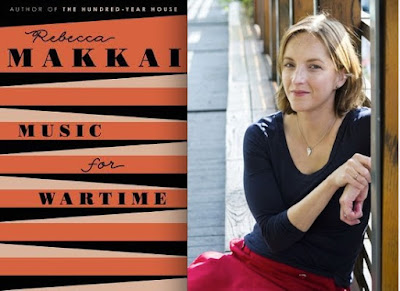
Rebecca Makkai on What Some Readers Are Missing Out on

In the 31st in a series of posts on 2015 books entered for The Story Prize, Rebecca Makkai, author of Music for Wartime (Viking), describes her frustration with some people's reluctance to read short story collections.


I’m one of three authors at a signing table at a benefit. A woman walks up, touching each book. She gets to my story collection. “What’s this about?” she says.

I say, “It’s a collection of stories, and—”

And she goes, “Oh.” Not as in, “Oh, how interesting,” but like, “Oh, I thought the hors d’oeuvre you were passing was foie gras, but it’s Spam.” A little to the left of “Oh, no thank you, I would not care for a dead raccoon.”

And so I decide to call her on it. I make sure to laugh, and I say, “Wait, what’s that about?”

I’m not a confrontational person. It’s just that this is the 300th time this has happened to me since June, and I’ve reached a breaking point.

In November of 2013, I participated for the first time in Small Business Saturday—specifically in Sherman Alexie’s initiative for authors to hand sell books in the indies. I went to Chicago’s City Lit with a list of titles to recommend. In addition to novels and nonfiction, I was pushing three story collections—chief among them Jamie Quatro’s I Want to Show You More. I told people it was beautiful and strange and important. I showed them the gorgeous cover (silvery and festive!). I did everything but cover up the word “stories” with my thumb. Which is probably what I should’ve done. Because in two hours of selling, I moved novels and children’s books and calendars and a coffee table book on horses, but I didn’t sell a single story collection until one guy came in shopping for his girlfriend, an aspiring writer.
Hard sell: Short story collection

At this point, I’d published a novel and had another due soon; but the stories I’d been writing all along had always been just as important to me. More, possibly. I knew, in theory, that a story collection would be a hard road. Yet for every person saying stories didn’t sell, there was some unhelpful optimist going “Yes, but George Saunders is on the bestseller list!” Or “But we have such short attention spans nowadays!” (I assume the latter explains the raging resurgence of the sonnet among teenagers.)

This was my wakeup call. And in plenty of time. I was still a year and a half away from the barrage of “So this one’s just stories?” and “I only read novels,” and “My book club would never go for a collection,” and “I always skip those in The New Yorker.” I had time to steel myself. I had time to remind myself to be doubly grateful this time for every reader, for every review, for every kind bookseller who made space on the shelf. Triply grateful, in fact. Is quintuply a word?

And on the one hand, I’ve made my peace with it. Because every year I watch the Oscars, and when they announce the short films, I haven’t seen a single one. I get up and refill my wine glass. I know that I should see them, that they’re important, but as a general consumer I just don’t seek them out. And I tell myself maybe it’s the same with stories: They’re important to writers, to serious readers, but they’re not for the average palate.

But NO, NO, NO, NO, NO. Good God. People don’t know what they’re missing. Scarred by some Hawthorne story they read in high school, or maybe seeking a weeks-long immersion rather than a plunge in the icy pool, they’ve turned their backs on our newest voices, our sharpest experimentation, our wildest dreams. They’re missing out on Lydia Davis and Alice Munro. They’re missing the brilliant short work of Kevin Brockmeier and Julie Otsuka. They’re missing the faceted perfection the short form can approach. They’re missing experiments of voice and form and subject that can be maintained for 5,000 words, but not 90,000. (Who wants to read a 300-page novel about a man turning into a cockroach?)

Which is why I snap and ask this woman what she means by “Oh.”

She says, “I shouldn’t have said that! I do read stories. I do. I’ll probably buy this one.” And she turns it awkwardly over, reads the back.

I assure her I was just joking, that I know stories aren’t for everyone. We have a pleasant conversation.

She moves along the table, and when she reaches the end, she looks back to see if I’m watching. I pretend I’m not. She leaves the book right there.

Monday, June 23, 2014

Don't Call It a Comeback

Over at The Quivering Pen blog, David Abrams has published his extensive and knowledgeable Great Big Roundup of 2014 Short Story Collections, as well as an addendum to that list, which together cite more than sixty short story collections. And Abrams has something interesting to say about each one of them. Even more short story collections have been or will be published in 2014—probably well over a hundred altogether. And you'll see posts on this blog from authors whose books we will be considering for The Story Prize throughout the year.

Please, please, please don't say that the short story is enjoying a renaissance or anything along those lines. It isn't. This is consistent with the output I've seen over ten years of reading story collections for The Story Prize. Just because someone is only noticing it now doesn't mean it's only happening now. The short story comeback piece is one of two no one should ever write again, in my opinion. Nor should it be the preamble to a review by a reviewer who clearly hasn't been keeping up.

The other piece that I hope to never see again is the one on the death of the short story. It hasn't happened, and isn't going to happen, because writers will always be interested in exploring the many artistic and storytelling possibilities inherent in the form. Period. Established writers will continue to write stories or return to them. And emerging writers will start out writing them—and in many cases will continue to do so throughout their careers.

Two other angles that are equally dubious are taking potshots at MFA programs and bemoaning what someone might perceive to be a dominant style (past or present). Writing students aren't tabla rosas subject to the imposition of a particular style or approach. Most have already established their own approaches and are in a studio program to gain time to write and to hone their skills. And no one style has predominated in the past hundred years or more, despite perception. Examples to the contrary abound.

The big publishers have done a very good job of supporting short fiction. I speak to agents and editors who truly have a passion for short fiction. But the support commercial publishers can offer to short story collections does have practical limits. While some story collections have made the best-seller lists (Junot Diaz, George Saunders, and Lorrie Moore, to name a few), most won't break into the black. Commercial publishers are supporting the form because they are supporting authors they are committed to and because they know it's smart to get in on the ground floor of potentially great writing careers. What has been a particular boon to the form has been the support of both established independent publishers and small presses, old and new, which together help publish and promote a great many other deserving books each year.

Whether you like short fiction or not (another tired reviewing approach is the "I generally don't like short story collections but I like this book" approach), it's not going anywhere. Anyone who follows the form knows this, and anyone who doesn't should inform him or herself before resorting to sweeping generalizations and tired observations about the so-called state of short fiction. The story is bigger than any of us.

Saturday, February 15, 2014

Up on My Soapbox for Publishers Weekly

I've written a Soapbox column for Publishers Weekly to share some of the perspective on short story collections I've gained from reading for The Story Prize for 10 years. It will appear on the back page of the next issue of PW. Here's the opening:

"At the end of every year of reading collections for The Story Prize, four copies each of approximately 100 books end up stacked in my small home office, a space already crammed with volumes from previous years. My wife has pointed out that I could create more room for myself by asking for only two books per entry and requesting additional copies of the three finalists when I needed to send them to the judges in January. However, I want to have books ready to send out the instant Julie Lindsay, the founder of The Story Prize, and I make our final choices. And I like to think that any collection that comes our way could make the cut."

To continue reading...

Wednesday, January 23, 2013

Favoring Humanity: Deborah Eisenberg, George Saunders, and the Short Story

By Patrick Thomas Henry

Stranded: Eisenberg, Wittmann, and Saunders
On Jan. 11, readers escaped Manhattan’s rain-dowsed Union Square for an evening celebrating the contemporary short story. The event, at The Strand bookstore, paired Deborah Eisenberg and George Saunders for a reading and a discussion moderated by Newsweek/ Daily Beast books editor Lucas Wittmann. The event’s cover charge was the purchase of Saunders’ newest collection Tenth of December, Eisenberg’s The Collected Stories of Deborah Eisenberg, or a ten-dollar Strand gift card—but the buzz among the sold-out crowd was that buying either book was a better deal than the gift card. The readings and discussion were held on an elevated dais at the rear of the Strand's rare books room, where shelves of collectible volumes served as a backdrop for the night’s conversation.

Eisenberg’ and Saunders’ accomplishments rank them among the top writers specializing in the short story. Eisenberg, among other accolades, has received a Guggenheim Fellowship, a MacArthur Fellowship, and the 2011 PEN/Faulkner Award for The Collected Stories of Deborah Eisenberg. She taught in the University of Virginia’s MFA program from 1994 to 2011 and now teaches at Columbia University. Saunders, also a MacArthur Fellow, was recently the subject of Joel Lovell’s New York Times Sunday Magazine cover story “George Saunders Has Written the Best Book You’ll Read This Year.” Saunders’ first book, CivilWarLand in Bad Decline, was a finalist for the PEN/Hemingway Award, and his collection In Persuasion Nation was a finalist for The Story Prize. Saunders has been a member of the graduate writing program faculty at Syracuse University since 1997.

George Saunders
Saunders read from “Home,” a short story from Tenth of December. In “Home,” a traumatized veteran finds his family and community in disarray. The story’s narrator cannot interpret the transformations in his town and personal life, and he eventually admits, in typical Saunders fashion, “I started feeling like a chump, like I was being held down by a bunch of guys so another guy could come over and put his New Age fist up my ass while explaining that having his fist up my ass was far from his first choice and was actually making him feel conflicted.”

Eisenberg then read an excerpt from “Revenge of the Dinosaurs,” first collected in Twilight of the Superheroes. In this story, the protagonist, Lulu, returns to the East Coast after her Nana suffered a disabling stroke, and Lulu’s miscommunications with her brother Bill lead to vocal clashes over Nana’s care. As a backdrop to Lulu and Bill’s vitriolic exchanges, Nana—rendered mute from her stroke—incessantly watches the black-and-white television’s shifty, grainy images, a resonant metaphor for the muddled conversations that govern our lives.

In response to these readings, Lucas Wittmann observed that each writer eloquently captured the inexpressive and inarticulate qualities of everyday speech. This interpretation of their work initiated a discussion on writing and teaching short fiction. Eisenberg and Saunders described how their work correlates to lived experiences and, furthermore, to teaching MFA students to sincerely depict their surroundings. Wittmann, invoking the footage of war protests in “Revenge of the Dinosaurs” and the recently discharged veteran in “Home,” asked the authors to place their stories in the context of recent political events. Eisenberg responded, after Wittmann queried her about the recently averted fiscal cliff and the crumbling vision of the American middle class. “One assumed there would always be a middle class. But now, to see it eroded and to see ourselves on this planetary cliff for everything—it couldn’t be more terrifying and riveting,” said Eisenberg.

Deborah Eisenberg
Eisenberg’s remarks suggested that the writer’s task is to express the intrinsic—and simultaneous—beauty and terror of our ever-shifting reality. Yet, both she and Saunders cautioned students against giving ideology priority because that approach can crowd out characters and genuine sentiments. These emotions, they argued, welcome the reader into a story’s fictionalized world. For this reason, Saunders commented that he often teaches Eisenberg’s Twilight of the Superheroes to his MFA students because of the collection’s “intelligent surface and overall charm.” For Saunders, the “charm offensive” of Eisenberg’s stories is effective because her prose explores the dramatic tension between characters and their circumstances, so that the larger ideas arise from the characters’ behaviors. When an author crafts a story in this way, Saunders claims, the ensuing symbols, tropes, and metaphors that convey a narrative’s message become “more honest, sincere.” This critical assessment could be swiveled around to accurately judge Saunders’ own stories, such as “Home,” which reveals the muddle of ideology to express the illegibility of its narrator’s circumstances at home.

Another reason to resist idea-based fiction is what Eisenberg termed the “danger of imposing rules.” Indeed, Saunders jocularly dismissed the misconception that MFA programs allow students to “receive the secrets on a silver platter.” Based on this conversation, Wittmann suggested that the purpose of an MFA program isn’t one of passing down strictures but of teaching students to read themselves and others. Eisenberg and Saunders both endorsed this mission. Yet, as both writers continued praising the short story’s compression as a means of amplifying a narrative’s clarity and momentum, I suspected that they were imparting a message as pervasive—yet easily neglected—as the shrouding mists outside The Strand. The writer’s craft must emphasize conveying sensation and emotion accurately, fairly, and evocatively—in defiance of our own worst habits. Eisenberg intimated as much when she discussed a conversion in her own writing habits: the decision to keep notebooks during the aftermath of September 11. Eisenberg said, “9/11 was a huge obstacle.  I felt that things were going to start changing immediately . . . and that it would be impossible to remember accurately.” So she bucked her own methods, kept journals, and resisted the urge to soliloquize in a manner that would emphasize concepts over humanity.

What Eisenberg and Saunders imparted on a cold, rainy night is a warming sentiment: May all writers have a vision crystalline enough to remember why they write, and for whom. This hope is as pervasive in Eisenberg’s Collected Stories and Saunders’ Tenth of December, as it was at their reading at The Strand.

Tuesday, January 15, 2013

The Story Prize Spotlight Award—Oh, Do Not Ask: "What Is It?"

This year, we're introducing something new: The Story Prize Spotlight Award, which will provide an additional prize of $1,000* to the author of a book entered for The Story Prize.


Why create another award? 
Author Krys Lee
Because The Story Prize’s aim is to support fiction and encourage authors who write it. The finalists and eventual winner, we believe, bring added attention to the form. But we read more than 90 books each year, and more than the three we choose as finalists are worthy of attention. So we decided to add another award to cast a wider net. The winner of the Story Prize Spotlight Award might be the work of an emerging author, an established but overlooked author, or an innovator in the short story form.

Who is the winner this year?
The first winner of The Story Prize Spotlight Award is Krys Lee, author of the story collection Drifting House, published by Viking.

Why this book?
Because this is a powerful and moving debut collection. The nine stories in Drifting House are set in the U.S., South Korea, North Korea, and often—from the characters’ perspectives—the indistinct spaces between these places. We felt this book merited more attention and a wider readership.

Does the jury that chooses the winner of The Story Prize also determine the winner of The Story Prize Spotlight Award?
No. The Story Prize judges only choose the winner from among the three finalists. Director Larry Dark and Founder Julie Lindsey will select the winner of The Story Prize Spotlight Award at their discretion from among the regular pool of entries for The Story Prize. Any book submitted for The Story Prize will also receive consideration for The Story Prize Spotlight Award. The winner might be an emerging author, an established but overlooked author, or an innovator in the short story form.

How will you announce the award, and will the winner be part of The Story Prize event?
We will announce the winner of The Story Prize Spotlight Award along with the three finalists each January, and we will also mention and honor the Spotlight winner at our award night on March 13 at The New School. However, the Spotlight Award winner will not be a participant in the event itself.

* The winner of The Story Prize gets $20,000—the largest top prize of any annual U.S. book award for fiction—and each of the other two finalists gets $5,000.

Wednesday, July 27, 2011

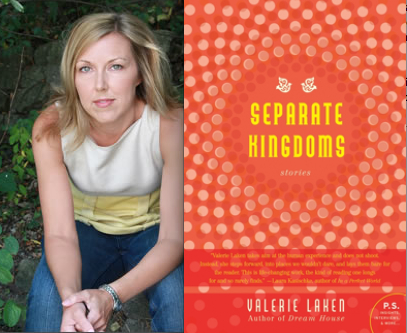
Valerie Laken's Technical Challenge

In the 12th in a series of posts on 2011 short story collections entered for The Story Prize, Valerie Laken, author of Separate Kingdoms (Harper Perennial), lays out what she thinks makes for a good story collection and tells how she went about writing a story told from two perspectives simultaneously.


What do you think a good short story collection should deliver?
A good story collection isn’t anything as tidy as a box of chocolates; it’s more like a variety pack of fireworks. Sure, you recognize them all as fireworks, made at the same factory with similar techniques, and they essentially just shoot into the sky as you would expect. Even though you know they are made to explode, the explosions still thrill and shock you a little. Yet they leave their most powerful impression not at that moment of bursting but in the aftermath, as the burning shards fall toward you and then disappear. When you close your eyes, you can see their silhouettes.

But in addition to that variety there should be some common ground, a larger overall impression that the stories work collectively to create. A good story collection may have greater and lesser stories, but each story will be essential to the overall impression. Common threads, however slender, should run from one story to another. One story might extend, reinterpret or contradict the circumstances or thematic implications of another, so that the unity of impression each story creates becomes challenged, supplemented, complicated by the impressions of the stories surrounding it. Ideally, if you read a story in the context of its collection, it will leave a different impression than if you read it on its own. Otherwise, what’s the point of putting the stories together at all? This can’t be just an exercise of vanity or convenience.

Which story in your collection posed the most technical problems?
The title story, which is structured in two columns of scenes that run simultaneously and unbroken by section breaks, posed the most technical challenges of any story I’ve written so far. It’s set in a small home on a single night when a family of three tries to cope with an industrial accident that has left the father maimed, volatile, and very isolated. The father’s perspective fills one column while the son’s fills the other. When they hear the same noises or come together in scene, those lines have to synch up in time side by side on the page. This meant that if I added or subtracted a line from one column, I had to adjust the other accordingly – and these adjustments went on through every revision and every typesetting.

This may seem a silly way to go about writing a story, but to me the form was essential to the story and ideas I wanted to convey. We all know that two characters will experience and narrate the same events in very different ways; it doesn’t take a two-columned story to show that. What I wanted to do was lay bare the isolation inherent in the fact that we may never view even small aspects of the world in precisely the same way as anyone else. And even when we do share true moments of common perspective, other factors often conspire to keep us from realizing it.

It seems to me that language, art, culture, and intimacy have been our typical means of piercing that isolation and connecting us with others. Yet in our time technological devices have altered, and some might say degraded, those means of connection. Though they’re often thrilling and useful, our TVs and computers, video games and smartphones have splintered our experience of time and space, tempting and distracting us with escape hatches from every face-to-face interaction. Worst of all, they make ordinary real-time life seem awfully dull in comparison to the dazzling worlds we find on our little screens.

Proust said it was the writer’s job to tell the truth about time. It seemed to me that it might take a splintered story to tell the truth about how we are living in this time.

Friday, July 23, 2010

Author Posts on TSP: So Far, So Very Good

We're at the halfway point of our entry period, having received 49 story collections as entries for The Story Prize as of the July 15 deadline for books published in the first half of 2010. The deadline for books published July through December is November 15.
Just some of the collections so far entered for The Story Prize
We're not nearly halfway through our ambitious plan to dedicate a post to each book, having run 18 posts so far. But we have several more lined up and promised. The form the posts have generally taken has either been a short essay by or a Q&A with the author. And we'll write our own posts about the books for which we don't get author contributions.

The aim of The Story Prize, of course, is to promote the short story form. Our efforts in past years have focused on the three books we choose as finalists each year and the six books our judges have chosen as winners. But we've always wanted to do more to promote our objective. We added a long list of other notable books the second year because more good collections come out each year than we can honor. But even our long list isn't long enough. So we decided to use this modest platform to shine the spotlight on every book we read and consider. Many of these books (I'd hazard to say most of them) get far less attention than they deserve.

I was, admittedly, reluctant to do this at first. I'm always concerned about remaining neutral, not wanting to reveal what we think of individual collections until we announce our finalists and long list in January. But neutrality hasn't turned out to be a problem with the posts. The introduction for each is short and straightforward; we're letting the authors' words speak for themselves rather than hype the books. And because we're posting about each one, we can remain evenhanded.

What has been surprising to me has been how consistently interesting these posts have been. Our contributors' insights into their own process, what interests them, and how their collections took shape reveal just how different and personal each writer's approach is. What they have in common is a sense of being attuned to the world and a desire to make something that reflects and amplifies their unique sensibilities.

Thanks to the thoughtful essays and answers the authors have provided, we're beginning to amass a good resource for readers, students, and writers interested in the short story form. We're only going to build on that in the months ahead. So stay tuned.

Tuesday, April 6, 2010

Going Long: Robin Black on Her Collection If I Loved You, I Would Tell You This

I met Robin Black in late 2000 at the University of Pennsylvania Writers Conference, and I agreed to read a few of her stories and give her a little general feedback. I was pleasantly surprised by her work. The stories were better than most of the 3,000 I read each year for the O. Henry Awards, and I was confident she'd be able to get them published if she persevered. Years passed. Then, over lunch with Hannah Tinti and Maribeth Batcha of One Story in early 2008, Robin's name came up. They were excited about publishing a story of hers, "Harriet Elliott." Later, I learned Robin had sold a collection to Random House. Her book, If I Loved You, I Would Tell You This, is just out, and I'm pleased that we've received it as an entry for The Story Prize. 

As the first in a series of posts about the story collections we're reading for The Story Prize this year, Robin Black offers her thoughts on her propensity to write short stories that are a bit on the long side.

"After writing steadily for a few years, there came a point at which it became difficult for me to tell a story in under thirty pages. But maybe that’s the wrong way to put it. That sounds so defeatist, as if every page over the twentieth were some kind of failure, which isn’t true, of course, though the realities of publishing can be punitive to the loquacious among us. Swell up over 20 pages, or around 6,000 words, and you’ll find a precipitous drop in the number of journals to which you can submit. So, in that way, long short stories often do feel like failures—failures of career planning, if nothing else. And there’s even something unfortunate about the term “long short stories,” with that contradiction built right in there, as though the work were clumsily pretending to be something it isn’t. Even the novella, underrated as it has long been in American literature, has its own name. A diminutive, yes, but infinitely more dignified than say, 'a puny long book.'

"Because they’re so impractical, nobody I know sets out to write long short stories, though some of us have accepted that we do. In my collection, five of the ten pieces are between 8,500 and 13,000 words and four of those make up all the short(ish) fiction I have written since 2006. What I’ve come to realize lately is that, with my stories anyway, the length is not a matter of extending timelines or of adding secondary plotlines, but of a more qualitative change in the nature of the work.

"One of the first things you’re told as a short story writer, just after 'write what you know' and 'chop out those adverbs ruthlessly,' is that everything in a short story should feel necessary—very much as though the writer were on a budget she has to defend. None of this was frippery, I promise! I didn’t buy anything I didn’t absolutely need. For me, the difference between writing a long short story and writing the regular kind is a step away from this requirement of requirement.  

"An example from my collection: In the story 'Tableau Vivant,' coming in at 8,500 words, there’s an early scene in which the central figure, Jean, crafts a sling out of a scarf so she can pretend to others that an arm weakened by a stroke has actually been sprained. The deception is necessary to the story, but it’s hard to argue that the scene itself is. The whole thing could be handled with a summary sentence: 'In the guest bedroom that morning, Jean had made a sling for herself out of the old turquoise scarf.'  

"So why keep it? Because while it isn’t necessary to the course of the story, it informs the reader’s relationship to the story, if on a largely unconscious level. The scene includes an image of Jean struggling to craft the sling with only one good hand while the fabric slips away from her, and that sense of being unable to hold on lies at the heart of the story. When Jean returns to the guest bedroom later to gauge some disturbances, the reader is not only told what has changed but, having been there before, experiences the differences. 

"The lure of resonances like those is a seductive one. But still this opens up the question—one I face all the time—of what justifies including elements that wouldn’t be missed by a reader with no knowledge of the original version. The answer for me comes in what sounds suspiciously like a mathematical formula but is actually, like so much in writing, a frustratingly vague combination of intuition, guesswork, and hope: The added length is only justified by an equal or greater added depth. 

"Not exactly Pythagoras, I know. And it’s a little scary to admit so publicly that I’ve opted to keep elements in stories that I know aren’t, strictly speaking, necessary. It feels dangerously close to saying yeah, this could have used some further editing, I know. Though that’s not what I’m saying, at all. Because, finally, for me, that sense of excess has its own beauty—just as the lean muscularity of other stories does. The aesthetic of spillover suits my intent more closely than the aesthetic of necessity. So maybe at this point it’s time for me to realize that I am writing long short stories purposely, after all—inconvenient career move though it may be. 

"I just wish we had a better name for the form." 

Note: Robin Black will be in Denver for the AWP conference:

Thursday, April 8, 6:30 pm
Reading & Signing
Tattered Cover Bookstore
2526 East Colfax (at Elizabeth Street)

Friday, April 9, Noon to 1:00
Signing
One Story's Book Floor Table: # L1

Wednesday, March 31, 2010

Big Payoffs, Prize-Winning Collections, Self-Publishing Heavies, Celebrity Authors

While we wait for the 2010 entries to roll in, here (as we've done before) are some notable news briefs about short stories and short story collections.

A Kiwi Breaks the Bank
The winner of The Sunday Times EFG Private Bank short story award is New Zealand writer C.K. Stead for his story "Last Season's Man." At £25,000, this is probably the largest prize for a single story.

Alexie Wins the PEN/Faulkner Award
Sherman Alexie's story collection War Dances has won the prestigious annual $15,000 PEN/Faulkner Award. Another short story collection, Lorraine M. Lopez' Homicide Survivors Picnic was a finalist, adding to the list of 2009 short fiction titles honored as book award finalists. Alexie's collection, by the way, was not entered for The Story Prize.

A Big Time Literary Author Goes DIY
Author John Edgar Wideman has self-published his latest book, a story collection, Briefs: Stories for the Palm of the Mind (inspired by Kawabata's classic Palm of the Hand Stories), on the Lulu site. Lulu has also brought back into print much of Wideman's back-list. Mark my words, this is one way disintermediation is going to play out, and more authors are likely to go the do-it-yourself route.

Two Actor/Writers (and One Writer/Actor)
Esquire magazine has published a story by MFA student and movie star James Franco, "Just Before the Black." Scribner will be publishing Franco's collection Palo Alto in September. Another actor, Gene Wilder, has a collection just out from St. Martin's Press, What Is This Thing Called Love. And let's not forget Sam Shepard, who earned his rep as a writer before gaining fame as an actor. His book, Day Out of Days, is on shelves now from the good folks at Alfred A. Knopf.

Soon to come: PEN/Malamud and the Pulitzer Prize, which I'm hoping a short story collection will once again win (though I'm not holding my breath).

Friday, March 19, 2010

For Every Story Collection, A Post

I've set an ambitious goal for this blog. I hereby pledge to write a post about every single book entered for The Story Prize in 2010. The posts may be observations about the book, a focus on design, a Q&A with the author, an author essay, a book trailer--who knows.

I hope this will bring a little more attention to a lot more story collections. Last year we read 78 of them, and I expect about the same number this year. So brace yourselves.

Monday, December 28, 2009

Best Books of 2009: Tallying The Short Story Collections Mentioned

I said I wouldn't do this, but I couldn't help myself. Music and book blogger Largehearted Boy made it too easy to compile a list of short story collections that appeared on yearend lists by pulling together fairly comprehensive links to best books lists, and I've tallied the number of mentions various collections have received. (Note: I did not include three popular collections—Alice Munro's Too Much Happiness, The Stories of Lydia Davis, or My Father's Tears by John Updike. The latter two aren't eligible for The Story Prize, and we did not receive an entry for Munro, whose collection was probably mentioned in the most lists.)

Two short story collections showed up more times than any others by a solid margin: Wells Tower's Everything Ravaged, Everything Burned (12 votes) and Daniyal Mueenuddin's In Other Rooms, Other Wonders (9 votes). It's no surprise because these two were among the most widely reviewed. Here's the tally from most mentions to fewest:

12

Everything Ravaged, Everything Burned by Wells Tower

9

In Other Rooms, Other Wonders by Daniyal Mueenuddin


4

That Thing Around Your Neck by Chimamanda Ngozi Adichie

Love and Obstacles by Aleksander Hemon

Once the Shore by Paul Yoon


3

American Salvage by Bonnie Jo Campbell

Don't Cry by Mary Gaitskill

It's Beginning to Hurt by James Lasdun

Both Ways Is the Only Way I Want It by Maile Meloy

Love in Infant Monkeys by Lydia Millet


2
A Good Fall by Ha Jin
How It Ended by Jay McInerney
Nothing Right by Antonya Nelson
Reasons for and Advanatages of Breathing by Lydia Peelle
Do Not Deny Me by Jean Thompson

1

The Heyday of the Insensitive Bastards
by Robert Boswell

Elegy for Easterly by Petina Gappah

In the Valley of the Kings by Terrence Holt

Spoiled
by Caitlin Macy

Going Away Shoes by Jill McCorkle

Big World by Mary Miller

What the World Will Look Like When All the Water Leaves Us by Laura van den Berg


As I said
last year, The Story Prize doesn't choose its three finalists by critical consensus, and we probably read more short story collections than most of the booksellers, bloggers, or reviewers who put out yearend lists do, so we're choosing from a different and larger pool. We'll be announcing our finalists in the next ten days or so, and shortly after that our notable books. I can tell you right now that some of the 21 books on this list won't be among our finalists or on our list of other notable books. And it's also possible that we will honor collections that none of the 26 sources below named. There were a lot of excellent collections in 2009, and we hope to also shine the spotlight on some that haven't gotten enough attention.

Sources: About.com (Tower), Amazon.com (Tower, Meloy, Hemon, Boswell, Holt, Gaitskill), Atlantic (Lasdun), Barnes & Nobel (Tower), Chicago Tribune – Printer’s Row (Campbell, Mueenuddin), Christian Sceince Monitor (Adichie), Cleveland Plain Dealer (Campbell), Entertainment Weekly Shelf Life (Mueenduddin), Idlewild Books (Mueenuddin), Kansas City Star (Campbell, Hemon, Jin, Mueenuddin, Peele, Tower), Largehearted Boy (Lasdun, Miller, Millett, Peele, Thompson, Towers), L.A. Times (Adichie, Lasdun, Meloy, Millet, Yoon), Louisville Courier-Journal (van den Berg), Miami Herald (Thomspon), The New Republic (Adichie, Tower), New York Magazine (Tower), New York Times (Gaitskill, Hemon, Ishigiro, McInerny, Meloy, Mueenuddin, Nelson, Thompson, Tower, Yoon), NPR (Gappah, McCorkle, Mueenuddin (2), Yoon), Philadelphia Inquirer (Jin), Providence Journal (Millet), Publishers Weekly (Mueenuddin), San Francisco Chronicle (Adichie, Gaitskill, Hemon, Macy, Mueenuddin, Nelson, Tower, Yoon), Slate (Tower), St. Louis Post Dispatch (McInerny), Time (Mueenuddin, Tower), Village Voice (Tower).

Saturday, December 5, 2009

Mystery Back Cover Revealed: John Grisham's Ford County

The results are in. The unadorned back cover I previously posted belongs to none other than John Grisham's Ford County. Blogger Kathleen Gerard was the first to correctly identify the title of the book and will be getting a copy, courtesy of The Story Prize. Thanks to all who sent their guesses.

What struck me about this particular back cover was the absence of review quotes, blurbs, an author photo, or a description of the book. Indeed, all the collection really needs to sell it is two of the words on the front cover: John and (especially) Grisham, a brand so powerful it speaks for itself. Needless to say, out of the 78 entries we received for The Story Prize, this was the only one that had such a clean back cover. And the book, despite being a collection of short stories and not a novel, jumped right to the top of many best-seller lists (the fifth best-selling story collection this year, joining those by Uwem Akpan, Stephen King, Jhumpa Lahiri, and Elizabeth Strout).

Ford County is crafty and fun to read, and Grisham is a very skillful storyteller. I confess, I've seen movies based on his books but never before so much as picked one up. Some might call it snobbery, but I think it's more a matter of demographics. People with my background and interests, for the most part, generally don't read Grisham. And the books I generally read are unlikely to find their way into the hands of most of Grisham's readers. Of course there's an overlap, but I doubt it's very large because the audience for literary fiction isn't very large to begin with. In any event, I'd encourage more readers to cross those lines both ways—Grisham readers who haven't done so before might also enjoy reading stories by Alice Munro, William Trevor, and many others.

The short story has become a genre form in many respects, but its roots (as everyone knows) are as a form of entertainment. Before radio and television, short stories appeared in newspapers and many more magazines than today, pitched to the public at large. For the short story to thrive and grow, readers and writers must avoid embracing marginality. I love well-executed stories that value language above all else, those that are character-centric, those that are multi-layered, and those that are cleverly conceptual. But let's not forget the value of plot. Readers and students of short fiction could learn a lot about storytelling from reading the stories in John Grisham's Ford County.

Friday, December 4, 2009

The Back Cover

The back cover of this book is rather striking. Why? Because, aside from the UPC code, there's nothing on it. It's a recently published short story collection. Any guesses as to the title and author? The first to send an answer to info@thestoryprize.org, and explain how he or she knew, wins a copy. (And no trying to read the ISBN number, please).

Sunday, September 27, 2009

What We Talk About When We Talk About Collaboration

I gave my son The Library of America's recently released Raymond Carver: Collected Stories for his eighteenth birthday a few weeks ago. He had discovered Carver's stories this past summer while attending a writing workshop at Lewis & Clark College in Portland, Oregon, and Carver immediately jumped the list to become his favorite writer.

When I was a young man with writerly aspirations of my own, Raymond Carver's stories also made a deep impression--so deep, that I felt moved to write the author a letter about my favorite story from his 1983 collection Cathedral, "A Small, Good Thing." Weeks later, to my astonishment, I received a handwritten reply from Carver, cementing my attachment to him and his work. I've had cause to correspond with many writers over the years, but this letter remains particularly meaningful.*

"A Small, Good Thing" is also my son's favorite Raymond Carver story. As many readers know, it's a longer version of a story called "The Bath" that appeared in What We Talk About When We Talk About Love. Much has been made of Gordon Lish's strong hand in editing Carver's work on that collection. And questions have arisen about the importance of the edited versions in establishing Carver's reputation. In December 2007, The New Yorker ran the story "Beginners," which was Carver's longer version of the title story, along with an account of his conflicting feelings about Lish's changes and, online, a recreation of Lish's edits. The Library of America edition includes a section, called Beginnners, that presents the original manuscript of What We Talk About When We Talk About Love that Carver submitted to Lish.

I've always liked "A Small, Good Thing" better than "The Bath," but I have to give Lish his due for his role in Raymond Carver's development as a writer and some credit for the critical reception What We Talk About When We Talk About Love received. Editors matter, and I'm sure other editors have (perhaps more quietly) played a significant role in a writer's reputation. Collaboration is an important part of the creative process and shouldn't necessarily detract from an artist's success. Here's an analogy I would make: Would the Beatles be the Beatles without producer George Martin? Yes, but Martin undoubtedly made a huge contribution that is impossible to separate from the band's lasting reputation. Would Raymond Carver be Raymond Carver without Gordon Lish? I have little doubt. With or without Lish's contribution, Carver is--and still would have been--a great short story writer. In any event, readers can now compare the different versions and see what they think.

* I'm not sure of the legalities, but maybe if I can sort that out, I'll post a copy of the letter some time.

Friday, September 18, 2009

The Untrue Story of How Oprah Chose Say You're One of Them for Her Book Club

Oprah Winfrey finally did it. For the first time ever, she picked a short story collection, Uwem Akpan's Say You're One of Them, for Oprah's Book Club. Thank you, Oprah, I hope this won't be the last. Followers of this blog, who number in the low dozens, may remember that I've been lobbying for her to do this for more than a year, and obviously my efforts have been effective. In fact, now the top secret behind-the-scenes negotiations can be revealed.
Somewhere in New Jersey. The official Story Prize phone (i.e., my cell phone) vibrates on a hot August night.
LD: Hello?
OW: Hello, Larry Dark. It's Oprah.
LD: Oprah who?
(Silence.)
LD: Just kidding, Oprah Winfrey. The most influential person in America. A thousand apologies, she who sells more books than anyone.
OW: Ha, ha, ha, ha, ha. I understand you think I should pick a short story collection for my book club.
LD: I do, indeed.
OW: I think I'm ready. What were you thinking of?
LD: How about In the Gloaming?
OW: Isn't that a Christopher Reeve movie? What else?
LD: Well, Ron Hogan thought you were going to choose Edward P. Jones's All Aunt Hagar's Children a few months ago. That's a good one.
OW: You know Ron Hogan?
LD: Who doesn't?
OW: What else?
LD: Did I mention The Dew Breaker? The Hill Road? The Stories of Mary Gordon? Like You'd Understand, Anyway? Our Story Begins?
OW: You did.
LD: Let me think about what your readers might like.
OW: Something powerful and moving like In the Gloaming.
LD: Hmmm. Well, there's another book I read last year that might be perfect.
OW: Namely?
LD: Say You're One of Them by Uwem Akpan, a Nigerian priest with an MFA from Michigan. It's well written, describes terrible events in the lives of children, and, to quote myself: "Any of the six stories in this collection set in Africa is enough to break a reader's heart."
OW: Perfect. Be sure not to tell anyone, especially not Ingram. They're sure to blow it.
LD: I promise. And, by the way, don't worry about what Rob Spillman thinks.
OW: I won't worry about anything, Larry Dark. Thanks for all your critical wisdom.
LD: Thank you, Oprah Winfrey--for being you.
That's pretty much how it happened--in my dreams. In any event, I'm thrilled that Oprah has chosen a short story collection. I've been reading some great ones so far this year. The short story continues to gain momentum, and this is a huge boost.

Monday, August 17, 2009

Psst! Agents and Publishers, Short Story Collections Aren't Poison

As I've said before, it's high time that publishers and agents stopped perpetuating the myth that there isn't an audience for short story collections. Two interviews I saw on the Web last week (via Twitter links) addressed this truism. First, this from an interview with Petina Gappah (An Elegy for Easterly) on the Short Review Web site:
I did not have a collection in mind at all, especially because very early on in my writing career, someone pretty high up in publishing had told me that there was no interest in story collections. So I wrote stories as a way of flexing my writing muscle, and to find my "voice," with no thought of collecting them in a single volume, until my agent . . . suggested putting them together in a single manuscript. I was stunned when Faber offered to publish them. This went against all that I had heard about publishers' loathing of short stories.
And James Lasdun addressed similar concerns in an interview he did for the Edinburgh Festival Guide, billed as "A Strident Defence of the Short Story":
Over the years James Lasdun has turned his pen to novels, screenplays, travel writing, journalism and poetry, but short stories are his current medium of choice, having recently published his third collection, It's Beginning to Hurt. Lasdun suggests that the short story should have great appeal ‘because it’s short, it’s quick and people have limited time and short attention spans. One would think it would fit right into the habits of mind that people have in this era.’ He offers a few hypotheses as to why it remains as the novel’s lesser-seen younger sibling. ‘I think there’s a feeling that this is an insider’s game, that it’s an artsy type of writing, and if you’re not part of that world then you might just be wasting your time and money and why not go out and get a novel by some novelist that you know and love?’
There was also a provocative post on the Rumpus last week, as well as one on the One Story blog.

The fact is, some short story collections have sold very well in the last year or two. Elizabeth Strout's Olive Kitteridge has been on the New York Times trade paperback list for 16 weeks. And, Jhumpa Lahiri's Unaccustomed Earth was number one on the hardcover fiction list last year and is having a substantial run (18 weeks so far) on the trade paperback list. Stephen King's Just After Sunset also hit the best-seller list last year. Wells Towers' Everything Ravaged, Everything Burned, made some extended best-seller lists a few months ago. The Best American Short Stories routinely sells more than 100,000 copies a year. And I'm sure Science Fiction and Horror collections and anthologies, which are often overlooked in these discussions, draw a very solid audience. They're certainly staples of these genres and worth reading.

I know, Strout won the Pulitzer Prize--but I'd bet her collection has sold better than many novels that have won the same award. Oh, and Jhumpa Lahiri is a perpetual best-seller--but the book that put her on the map was another short story collection, Interpreter of Maladies (also a Pulitzer winner). When all is said and done, her two short story collections have probably sold as well as her novel, The Namesake, which had the advantage of being made into a film. Of course, Stephen King is Stephen King--I have nothing to counter that, of course.

The point is, story collections aren't poison, and agents and publishers should stop treating them as such. Collections by established writers with strong followings will still sell. And debut collections probably perform no worse than debut novels. Story collections that get support from publishers and reviewers (as in Towers' case), have a chance to find an audience. In addition, I have no doubt that the digital age is going to be a boon to the short story, as shortness becomes a greater advantage.

I could go on and on and on (and no doubt will). But the bottom line is: Writers should keep writing stories. And agents and publishers should stop repeating empty truisms and get behind short story collections instead of offering resistance.

Wednesday, July 15, 2009

Sixty Years of the National Book Awards (and a Losing Streak for Short Stories)

What do National League baseball and the short story have in common? Similar losing streaks, at least by one measure. Including last night's 4-3 loss to the American League, the National League hasn't won the All-Star game since 1996, which is the last time a short story collection--Ship Fever by Andrea Barrett--won the National Book Award for fiction.

This has come to my attention because, in celebrating its 60th Anniversary this year, the National Book Awards is currently looking back at the 77 works of fiction (some years there were multiple winners for different categories) it has honored. Altogether, 11 short story collections have won National Book Awards for fiction since 1950:

1951: The Collected Stories of William Faulkner
1959: The Magic Barrel by Bernard Malamud
1960: Goodbye, Columbus by Philip Roth
1966: The Collected Stories of Katherine Anne Porter
1972: The Complete Stories of Flannery O'Connor
1974: A Crown of Feathers and Other Stories by Isaac Bashevis Singer
1981: The Stories of John Cheever (paperback)
1983: Collected Stories of Eudora Welty (paperback)
1984: Victory over Japan by Ellen Gilchrist
1985: Easy in the Islands by Bob Shacochis (first work of fiction)
1996: Ship Fever and Other Stories by Andrea Barrett

This is a pretty solid list, with a virtual Murderers' Row of mid-20th Century short story greats: Faulkner, Malamud, Porter, O'Connor, Singer, Cheever, and Welty. Any book award would be proud to have these authors on its roster. And, of course, it's inevitable that some talent will be stuck on the bench. For instance, it would be nice to see collections by writers such as Donald Barthelme, Raymond Carver, Andre Dubus, Grace Paley, Lorrie Moore, and Tobias Wolff (among others) represented. But arguing with the choices is a futile exercise. It all comes down to how the judges/umpires call it. And it's worth keeping in mind that there were good novels published every year, too. Besides, short story writers play small ball, while novelists often swing for the fences.

In any event, one major reason The Story Prize exists is precisely to rectify this imbalance and make short stories are the star of the game for once. I can only hope that we last for 60 years and compile as vital a list of books and authors as the National Book Awards has (and that a short story collection and the National League will come through one of these years).