Showing posts with label 2012 contributors' posts. Show all posts

Thursday, January 10, 2013

An Index of Posts from Authors of Story Collections Published in 2012

In 2012, for the third straight year, The Story Prize offered the authors of books we read the opportunity to contribute a guest post. The aim is to give more exposure to more books than the three we choose as finalists. Out of 98 short story collections we received as entries, 72 authors availed themselves of this opportunity. 

Authors could either choose from among a set of questions or write a post on a subject of their own choosing. The questions we provided were:

  • What made you want to become a writer?
  • Where do you find inspiration?
  • What obstacles have you encountered in your work, and what have you done to overcome them?
  • What's the shortest time it has taken you to write a story?
  • What's the longest time it has take you to write a story?
  • How often does an idea for a story occur to you, and what triggers those ideas?
  • If you've ever written a story based on something another person told you would make a good story, what were the circumstances?
  • What's the worst idea for a story you've every had?
  • Where do you do most of your work?
  • What writer or writers have you learned the most from?
  • What story by another writer do you most wish you'd written?

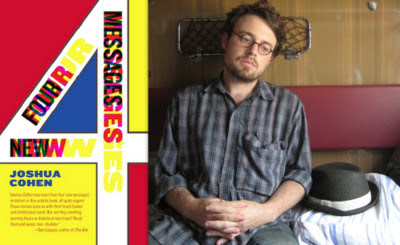
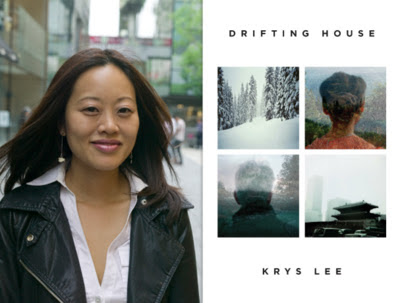
The format is consistent for each post—a standard introduction followed by a composite image of the author and book cover, then the author's post. The aim is to let the entry speak for itself. According to Blogger's stats, posts usually received at least 50 page views, with most getting 100 or more and the most active page (Junot Díaz's) attracting more than 1,200 views. 

Here's an alphabetical listing of 2012-13 posts by author's last name, with links to each: 


Monday, January 7, 2013

Claire Vaye Watkins and the Myth of the Good Idea

In the 72nd in a series of posts on 2012 short story collections entered for The Story Prize, Claire Vaye Watkins, author of Battleborn (Riverhead Books), discusses bad ideas for bad stories and bad ideas for good stories.


What’s the worst idea for a story you ever had?
It’s difficult to determine the worst idea I ever had for a story, and not just because I’ve had so many. There was the one about a town that builds a rocket ship to colonize the moon, deciding to leave all the rabble-rousing feminists behind. There was the one about a stoner dropout whose absentee father recruits him to repair his failed marriage (the stoner agrees, inexplicably, and ends up with his dad, watching his stepmother have sex with her new lover atop a trampoline. Naturally, they watch from beneath said trampoline). There was the one about two brothers who ride bikes through town after a flash flood has garlanded the streets with carcasses of drowned tabby cats. A Judy Garland figure tries to seduce a young guest—a trailer park chubber named Jellyroll—at her ten year-old daughter’s birthday party. A couple travel to Fort Vancouver to nurture their last shred of love and respect for each other, which is, of course a literal shred that closely resembles menstruate, and which they keep in a Tupperware dish, for it is, yes, animate (chase scene!). There was the one—a comedy—about a mother who returns to college and chains her son to a boulder in their front yard because she suspects him of masturbating to an issue of Reader’s Digest she’s not yet read.
Titillating

Those are perhaps obviously rotten ideas, but what about the 9/11 story wherein a teenage girl allows her best friend to be gang raped? Or the story about a gay madam who falls for a foxy Italian tourist who holes up in his brothel when the Italian’s companion disappears in the desert? Or the one about the Forty-Niner who can see the future? Or the one where pretty much nothing happens except two abortions?

Those all sound pretty lousy, too, and they may be, but those are the ideas for some of the stories in Battleborn. My thinking is there’s no such thing as a bad idea for a story. Or perhaps what I mean is every idea for a story is bad until you make it good. Any time I’ve written anything good I’ve spent the vast majority of the composition process convinced it was an utter stinker. And they were stinkers, until they weren’t, at which point they were done. The only way to get from one to the other is work. That’s the tiny, tremendous membrane separating Joshua, the homesick and clairvoyant Forty-Niner in “The Diggings,” from poor lil’ Jellyroll.

Debunking the myth of the good idea is essential for the short story writer. It is, I think, essential for any writer working in any genre other than film or television. There’s a reason fiction writers don’t pitch their books (imagine Toni Morrison saying, “Picture this! Ghost baby has sex with her mom’s boyfriend! It’ll win a Nobel!”). The idea is a formality, mere permission. The triumph is what you do with it.

This post is dedicated to the memory of young Jellyroll. May he rest in peace.

Sunday, January 6, 2013

Brian Evenson and the Twelve-Year Story

In the 71st in a series of posts on 2012 short story collections entered for The Story Prize, Brian Evenson, author of Windeye (Coffee House Press), discusses the long and short of it.


What made you want to become a writer?
When I was twelve my mother published a science fiction story in a small anthology, and then went on to write a few more stories. To give herself time to write, she would set my four siblings and me up doing something while she was writing—drawing, painting, etc. Since I was the oldest, she set me up with our manual typewriter and encouraged me to write a story. After spending an hour or so seeing how many keys I could make stick together by hitting them at once, I ended up deciding it might be worth it to actually try to write something. I did, and was surprised to find I really liked the process of writing.

Where do you find inspiration?
I’ve always been a strong believer in the idea of a writer finding inspiration from anywhere, and trying to be open to all the different directions inspiration might come from. I get a lot of inspiration from other stories, from reaching a point in a story where I think, What might have happened if the story had gone in this direction instead? But I also get inspiration from music, from events in life, from idle thoughts—just about everything at one time or another.

What obstacles have you encountered in your work, and what have you done to overcome them?
I think most of my obstacles have been self-inflicted. A big part of being a writer is figuring out how to get out of your own way.

What's the shortest time it has taken you to write a story?
When I was very young, I’d write stories in a single long sitting, then revise them a few times very quickly. The story could potentially go from flash of inspiration/idea to finished product in less than a week. The only time recently I had something like that happen was when I wrote “Windeye”—the actual writing was very quick, and it didn’t need much revision: All that was done in just a few days. At the same time, I’d had the idea for the story probably several months before, so it had had a long time to percolate.

What's the longest time it has take you to write a story?
There’s a story that I began when I was 17 and which I didn’t finish until I was 29. I obviously didn’t work on it the whole time, but I worked on it quite a bit over the years. I couldn’t quite get it right, but also still felt there was something there, waiting to happen. Finally, after twelve years, it did.

How often does an idea for a story occur to you, and what triggers those ideas?
I’m lucky in that I have many more ideas for stories than I can actually write. I think it’s really a question of being willing to let your mind explore the possibilities that the world or other books don’t take—not only living your life or following that plot but always thinking about what might have happened if that life or plot had swerved in another direction, even very quietly. That for me is the trick—quiet differences rather than dramatic ones that very slowly open onto completely other worlds.

What’s the worst idea for a story you've every had?
Lackluster protagonist
When I was in my early teens, I wrote a story that began “I am a rock. I live in the center of the earth.” Turns out that it’s hard to have dramatic tension if you’re a rock that can’t actually move, surrounded by other rocks. I tried to make the most of it, but that story is mercifully hidden away in my files.

What story by another writer do you most wish you'd written?
There are a lot of stories I really admire by other writers. I think my choice would be Franz Kafka’s “A Country Doctor,”,which strikes me as doing about as perfectly as possible what I’d like to do with my own fiction. But there’s also William Trevor’s story “Miss Smith.” And there are so many others out there:  Kelly Link’s “Catskin,” Jessie Ball’s “Pietr Emily,”  Dino Buzzati’s “The Falling Girl,”  pretty much anything James Salter has written. It’s very hard to choose…

Saturday, January 5, 2013

Joshua Cohen's Nine Worst Story Ideas

In the 70th in a series of posts on 2012 short story collections entered for The Story Prize, Joshua Cohen, author of Four New Messages (Graywolf Press), gives several answers to a question.


The Story Prize has asked: “What’s the worst idea for a story you’ve ever had?” Below are nine answers—from a late teens/early twenties flirtation with “scifi.”

1.  Once upon a time a machine was invented to invent every possible scifi story. It made stories of space opera, space western, interspecies romance, time travel, parallel universe, cyberpunk, steampunk, utopia, dystopia, apocalypse noir. It created literally billions of stories. This story you are reading now is #45,059,534,455.

2.  Scifi writers, at their annual convention in Newark, decide to take over Hollywood by writing nothing original anymore but by merely novelizing movies with great accuracy: describing setting, transcribing dialogue. For years no new scifi is written, while the only scifi that gets published remakes recent movies in prose. Gradually filmmakers forget this fact and begin remaking scifi into movies again: remakes of remakes, remakes of remakes of remakes. This will continue until filmmakers forget about literature entirely. Gradually.

3.  A boy reads a scifi story in a book, but the book, being old and maltreated, is missing pages, specifically the story’s last three pages, and so while the boy is under the impression that the story he’s reading has ended, really the ending has been missed. In the last three pages the hero who the boy thinks has died is revealed as actually being alive, and his death nothing but an alternate destiny. The story, then, has something of a trick ending. Too many scifi stories have trick endings…

Years later the boy’s on a date. This is the first date he’s been on in months, and he’s nervous. The girl, similarly dateless of late, is nervous, too. Over dinner they begin talking about movies, which leads to booktalk and, after they’re comfortable with one another and a smidgen drunk, their geekiness blooms (like a rose) or spurts (like a cream-filled chocolate) as they discuss scifi. The girl mentions a story familiar to the boy and proceeds to detail its plot. The boy stops her eagerly, fills in much of the rest, then adds, I thought it was so sudden though, that he died.

 She says, He didn’t die, that’s the point, he was alive the whole time.

 He says, That’s not how I remember it.

And the girl, who until now had been entertaining great prospects with this boy, frowns, thinking anyone who can’t remember an ending isn’t worth beginning with.

4.  Someone writes a scifi story that features a character called Nul. A movie’s made and is called Nul. Duly, Nul apparel appears in stores, Nul lunchboxes and actionfigures, a Nul videogame. Then, civilization crumbles (this, of course, is the funnest aspect of scifi, just saying that, just doing that—crumbling).

A million years later the alien equivalent of archaeologists discover a lost planet that worshipped a god called Nul and bring this cult of Nul back to the home galaxy, where its objects are venerated, if not religiously then for reasons of historical respect. Until, that is, a subsequent research team manages to translate what are known as “intellectual property laws,” and the alien intelligentsia, previously the most ardent servant of Nul, becomes suddenly ambivalent.

5.  A young writer of scifi outlines an elaborate story that serves as a political allegory. Alien People A are very poor and oppressed by Alien People B. The writer, who is a liberal like all young writers, obviously sympathizes with People A. The book is a smash hit, and he spends the rest of his life writing sequels. But, over the years, as he gets richer and tired, more old and conservative, he finds he agrees more with People B, and begins to suspect that People A are responsible, to some degree, for their own poverty and ignorance.

However this sense also passes, and at the very end of his life the allegory has been forgotten entirely as the writer grinds out books describing only kidnappings, rapes, and murder, in an unending war between two mutually incomprehensible selves.

6.  A man who produced scifi comicbooks was a rarity for his day: He both wrote the words and drew the pictures. One day, the day his wife left him for drinking too much and smoking marijuana and sleeping with the redhead down on the third floor, he developed a terrible problem. Everywhere he walked a bubble would follow: a thought bubble, and in it people could read each of his thoughts, floating just above his head. When the redhead left him a month later for an assistant harpist with the San Francisco Symphony, the thought bubble, which had been connected to his head by sundry puffs, became connected to his mouth by a wisp, and turned into a speech bubble, which meant that now everything he said could be heard everywhere, as if he were speaking from the clouds. Some people had begun to think he was a god, but the women in his neighborhood knew he was just an egomaniac who kept odd hours, drew dirty pictures, and never washed his pants.

7.  Once an elderly scifi writer was solicited by the new young editor of the last scifi magazine to appear in print and, in response, submitted a story that involved squid—he thought it was a squid. But then when the magazine finally printed the story—two years later in the last issue of any scifi mag to ever appear—and he received his single complimentary copy at the Westchester assisted-living facility he’d just been moved into by his daughter following his second stroke, he found that every instance of the word “squid” had been changed to “pickup truck” (though once it was just “pickup”). Other than that, the story appeared unchanged—not even copyedited, all its typos intact.

The writer spent the last two years of his decline wondering how all his squids had become trucks, and tried his hand at various fictional explanations (squid meant truck in an alien dialect into which his story had been translated before being translated back into English by the alien editors of a periodical that was, in truth, to serve as an alien constitution, and so on—because the aliens had lost the original manuscript and had to work hurriedly)—all of which attempts were failures, though his daughter, who typed every single one of these stories from his shaky handwriting on napkins, would never have admitted that to Dad.

8.  Once a literary genre was invented to relieve the psychic pressure brought to bear on human life by mechanization, and the encroachments of technology. But once that technology overtook life, and life became just one more form of mechanization, there was no more need for this genre. What formerly had been fiction now was fact, and that was perhaps the strangest story conceivable.

9.  There once was an inventor who invented a machine to invent, and categorize, every possible scifi story. His machine made stories of space opera, space western, interspecies romance, time travel, parallel universe, cyberpunk, steampunk, utopia, dystopia, apocalypse noir. It created literally billions of stories. This story you’re reading now is from category #45,059,534,456.

(The writer of the above story sat back in his chair, well satisfied. His happiness lasted until he realized he could not think of a single magazine left that would publish him.)

Friday, January 4, 2013

Krys Lee Navigates Between Worlds

In the 69th in a series of posts on 2012 short story collections entered for The Story Prize, Krys Lee, author of Drifitng House (Viking), discusses what motivates and inspires her.


What made you want to become a writer? 
Reading saved my life when I was young, and unfortunately, I’m not exaggerating. The next step, moving from reading to writing, came naturally, as I grew up loving the escape into stories and words. Discovering a world—and word—I didn’t know, was a thrill, and to put words down on paper showed me that there was so much rage, hurt, and love I hadn’t been able to express. Writing allowed me to release that secret self that was uglier, harder, as well as more hopeful and more willing to dream, than my public self. I wanted to write and create a world that wasn’t about me, but by writing, I found myself looking back at me from the pages. Today, I write for those reasons, and more. When I can’t change or fix what I find unjust in the world, or see the secret selves of misunderstood or neglected others, I find myself wanting to write. 

Where do you find inspiration? 
The world and its people are my inspiration. I’ve lived on three continents and have spent exactly half my life speaking in two different languages. I grew up in the United States without knowing what it meant to have health insurance and saw my parents lose the very little that they had before I was twenty-one, and now live a stable life with more opportunities than my parents. My good friends range from professors, park rangers, writers and readers, to North Korean defectors. This navigation between worlds has liberated me from a fixed sense of what is real, what is right, and who I (or anyone) is. This constant relativity can be a bit dizzying, and sometimes a little lonely, but I try to understand the rich chaos of the world is through fiction. 

Books are also a source of excitement and inspiration. When I read a book that excites me, I feel, as Emily Dickinson put so well, as if the top of my head were taken off. Most recently, I had that experience when I read Jeet Thayil’s incredible novel Narcopolis. I also turn to history, philosophy, poetry. Words, words, words. They excite me. 

What obstacles have you encountered in your work, and what have you done to overcome them?
I’m my greatest obstacle. When I first began writing, it was my lack of confidence and feeling that nothing I wrote would ever be worth reading. Later, it was my lack of concentration. I’m a restless person, have never been great at sitting down for extended periods of time unless I’m reading, and I don’t take Adderall or any of those other aids that some writers use to pull them through the writing day. Instead of fighting this, I allow myself to stay involved in other work that I care about, go kayaking when that’s what my body is wanting, read, travel, or wander around different neighborhoods. I began writing for myself as an act of need and pleasure, and I want to respect that first impulse. As long as writing is a steady part of my life, I accept my restlessness, though I wish I had the work habits of Philip Roth.

How often does an idea for a story occur to you, and what triggers those ideas? 
When I was working on the stories, new ideas came to me nearly every other day. I saw the world through story, or as story. I jotted down entire introductions to ideas that excited me that I haven’t had time to return to yet. But since I began working on a novel, this has been happening to me far less. In my experience, there’s something about being immersed in the universe of the novel that seems to suppress the impulse toward all the disparate story ideas that might come to a person in a day. Rather, if I get ideas, they are already implicitly a part of the novel or are new novel ideas, all which have a very different feel and shape than my story ideas did. Writing stories allowed me to imagine radically.

Where do you do most of your work? 
I write most of the time in the library, cafes, or in bed. I enjoy the library because all the others studying helps writing feel like a slightly less isolating endeavor. The distractions are always entertaining too, as men have occasionally clipped their toes or started rambunctious rows a few feet away from me. These days I’m usually in my favorite book café in Seoul run by a major South Korean publisher. The high ceilings, the presence of books, and the buzz of people talking about and writing create a good working environment. And the incredible hot chocolate doesn’t hurt either. I resort to the bed when I can’t bear the idea of sitting upright and working. Something about staying prostrate while sipping hot chocolate and tapping at the keyboard with two fingers reminds me that writing is also play and pleasure.

But the real answer is that if I don’t feel as if I can write in a certain environment, I’ll write wherever I can, whether it is the subway, in a tent camping, or sitting on a bench in a park. Days off writing and away from the desk are an important part of writing, too. 

What writer or writers have you learned the most from?
I’d like to claim everyone from Gabriel Garcia Marquez to Kurt Vonnegut, but in retrospect I think the economy and restraint of Ernest Hemingway and Elizabeth Bishop the poet have been influential. I grew up as a teenager reading the oeuvre of Hemingway and Bishop (a modest collection), and it seems to have influenced my impatience with pretty words that aren’t doing much on the page. Virginia Woolf was also very important to me. Her narrative vision and the tension and energy of her sentences were important to me, as were her life-long obsessions with time and death. 

What story by another writer do you most wish you'd written? 
There are so many. I admire Anton Chekov’s “The Lady with the Dog” for its understated, heartbreaking power and the way we feel the expanse of the characters’ lives within a moment. Nikolai Gogol’s “The Overcoat” is a story that anyone interested in stories as well as the human condition should read. Also, if I can throw another one in, it would probably be Lorrie Moore’s “Which Is More Than I Can Say About Some People.” It’s a wicked, funny story that turns into one of understanding and even tenderness. I admire humor in fiction precisely because it eludes me. I may start with draft of a comic story but as I revise, it inevitably turns into some dark tale. 

Thursday, January 3, 2013

L. Annette Binder: Five Passages I Wish I’d Written (and a Poem)

In the 68th in a series of posts on 2012 short story collections entered for The Story Prize, L. Annette Binder, author of Rise (Sarabande Books), offers some of her favorite quotes.


Sometimes when I’m hard at work on a piece of fiction, I can’t read other prose. I’ll read magazines, foreign language dictionaries, camping gear catalogues, anything around the house that won’t encroach on my work. This can go on for weeks at a time.

Then I’ll finish my story or my chapter and resurface for a little while. I’ll read five or ten novels or story collections in quick succession, and I’ll be struck again by how many wonderful writers are out there, and even as I’m reading I’ll want to get back to work.

Here are a few fiction excerpts—some recent and some not, some only a sentence, some a little longer—that I return to time and again.

Number One:
“He was too excited to eat and afraid to go home. He felt as though his heart were a bomb, a complicated bomb that would result in a simple explosion, wrecking the world without rocking it.”
– Nathanael West, Miss Lonelyhearts
Sometimes restraint leaves too many questions unanswered, as if the writer were undecided about the story and the characters and decides to cover for the undercooked narrative by withholding. Other times, as here, it opens entire worlds in a single paragraph.

Number Two:
“This is suffering’s lesson: pay attention. The important part might come in a form you do not recognize.”
– Sarah Manguso, The Two Kinds of Decay
Crystalline prose that describes—and transcends—the effects of serious illness on the body and the self. By the time Manguso gets to her final observation (just a few lines after this excerpt), it stops me still. It wrecks me every time I read it.

Number Three:
 “The overcoat was a trademark of his. It was an impermeable thrift-shop special with a plaid flannel lining and wide lapels, and it looked as though it had been trying for many years to keep the rain off the stooped shoulders of a long series of hard cases, drifters, and ordinary bums. It emitted an odor of bus station so desolate that just standing next to him you could feel your luck changing for the worse.”
– Michael Chabon, Wonder Boys
Large-hearted, funny, with wonderfully precise and ornate prose. A lesson in how to linger in a moment and how description can create character, and a reminder that stories don’t have to be dark to have great power.

Number Four:
“He just rode on past and he had this blanket wrapped around him and he had his head down and when he rode past I seen he was carrying fire in a horn the way people used to do and I could see the horn from the light inside of it. ”
– Cormac McCarthy, No Country for Old Men
Astonishing. This novel is one of the most remarkable things written in the English language and one of the truest and most moving uses of first person I’ve read. Every time I see the moon I think of this passage.

Number Five:
“With a guide and a handful of children Maria walked through the chambers, stared at the turbines in the vast glittering gallery, at the deep still water with the hidden intakes sucking all the while, even as she watched; clung to the railings, leaned out, stood finally on a platform over the pipe that carried the river beneath the dam. The platform quivered. Her ears roared. She wanted to stay in the dam, lie on the pipe itself, but reticence saved her from asking.”
– Joan Didion, Play It As It Lays
A key moment in the novel, in Didion’s distinctive prose. Reticence brought Maria to this terrible place, and reticence saved her, too. This novel taught me that a character can be passive and still be compelling. It showed me, too, how prose rhythm can heighten the reader’s experience of the characters’ alienation.

And the Poem:
The warning that reiterates across
The water: there might someday be fog
(They will be lost), there might very well
Be fog someday, and you will have nothing
But remembrance, and you will have to learn
To be grateful.
– Sarah Hannah, “For the Foghorn When There is No Fog” (full poem)
When a new journal comes to my house, I always read the poems first. They are a tuning fork and a comfort and this lovely poem by Sarah Hannah is one I return to often, for the perfection of its form and its soulfulness.

Remembrance and gratitude, these are two things that writing has taught me. Look around at the world, take it in, and be grateful for the chance to write your story and for the interruptions, too. You could have two hundred years to write and it wouldn’t be enough.

Wednesday, January 2, 2013

E.J. Levy and the Sympathetic Practice

In the 67th in a series of posts on 2012 short story collections entered for The Story Prize, E.J. Levy, author of Love, in Theory (University of Georgia Press), discusses the evolution of her subject matter.


“All literature is autobiography,” modernist novelist Virginia Woolf once claimed. When I first tried my hand at writing fiction at the age of 30, in an evening extension class at City College in New York years ago, I found Woolf’s words a comfort: that the material of my life and those I knew might be the stuff of literature delighted me. I’d grown up in Midwestern suburbs, that most unromantic of places, had studied economics as an undergrad, that most unromantic of subjects. I worried that our lives were not the stuff of art. I did not reside at Mansfield Park, had not spent time in an orphanage or in a war, but Woolf’s work and words about writing promised that our lives might matter nonetheless, if observed closely and well.

So I took notes on how we lived in Brooklyn at the end of the 20th century—the tribe of lesbians I lived among in Park Slope then, the artists and editors at the magazine where I worked—and I wrote my first story, “Theory of Transportation,” in a single sitting, a story that would in time become the seed of my first collection, Love, In Theory, winner of the 2011 Flannery O’Connor Award. Above all, I read and reread the wonderful short stories of Amy Hempel, Lorrie Moore, David Leavitt, and John Cheever, amazed by their alchemy, how they transformed daily-ness into drama and significance.

Octopus: seed of a story
Almost a decade later, I got up the nerve to go to graduate school where I wrote most of the stories in the debut book that was published this year. As I wrote, I leaned away from the personal, drawn to the mystery of lives unlike my own: an octogenarian on an ornithological tour in Costa Rica; an orderly in a psychiatric ward in northern Minnesota; a gay male oncologist home for a wedding; a rug collector in Chicago; a woman pursuing her beloved to an ashram, after having been dumped for God. These days, the seeds of my short stories most often come from The New York Times—a young Pakistani woman who flees a brothel with her beloved’s help, only to find that their parents want to send her back; elderly Chinese workers speed dating at IKEA; intelligent octopodes. These days the inspiration for story often lies far from my life, in the mystery of what is not known.

Conducting research for a story can be, for me, nearly as engaging as writing; both provide the singular pleasure that poet Elizabeth Bishop famously described as “a self-forgetful, perfectly useless concentration.” Writing, we are lost in thought—or, more accurately, we are found.

Increasingly I write to shrug off the yoke of self and slip into other lives, to know what it is to be human at this point in history; I write, in short, for the same reasons that I read. Mine is a common trajectory for fiction writers: First we write to affirm and understand our own experience, then we write to understand other lives. (Of course, the division isn’t nearly so neat between the two subjects: writing about the one, we are engaged in the other.) For me, fiction writing has always been a practice of disciplined empathy. It’s just that when I first set out to write at thirty, I needed to develop empathy for myself and for those I lived among; now the human circle is expanded.

There was a time not long ago when my first stories began to be published—in the Paris Review, North American Review, publications where those writers I’d admired had published, too—when I worried whether writing fiction was self-indulgent. I wondered, Why write? When so much was wrong with the world. Answers to that question are obviously as various as writers are, as diverse as their work. The best answer lies in the work itself, and in the working. In the patient practice of noticing and noting down the details of one’s life and those of others, we gently stitch ourselves more tightly to the world. The act of writing restores a conversation with oneself that we are sorely in need of having in our increasingly distracted culture. It’s a kind of communion with the self, which is the foundation for a communion with others and the world.

These days I tell my graduate students that fiction writing is a sympathetic practice—by imagining our way into others’ lives, we exercise and strengthen our ability to care for and about others, transcending briefly our egoism; writing, we exercise that most important muscle, the heart.

Monday, December 31, 2012

Dan Chaon: The Bradbury Chronicles

In the 66th in a series of posts on 2012 short story collections entered for The Story Prize, Dan Chaon, author of Stay Awake (Ballantine Books), describes how a famous writer inspired and encouraged him to write.


Ray Bradbury changed my life.

Perhaps that sounds melodramatic, but it’s not meant to be. I would not be the same person—I would not have become a writer—if it weren’t for Ray Bradbury.

I started reading Bradbury at an early age. I wish I could remember the first book of stories I read—I think it might have been The October Country—but in any case, by the time I was ten or eleven, I was well on my way to reading his entire oeuvre, and one of the results of this reading was that I was inspired to write myself. I wrote sequels to his stories, and imitations of his stories, because I couldn’t get enough of them.

Ray Bradbury (photo by Alan Light)
I was growing up then in Nebraska, in a very rural western corner of the panhandle. The village I lived in had about 20 people in it, and I was the only child in my grade. I was bussed to school in a bigger town, ten miles away, but I was always glad to come home to my books. I didn’t fit in very well with the kids in town.

When I was in seventh grade, my English teacher, Mr. Christy, gave us a strange assignment. He asked us to write a letter to our favorite writer, living or dead. In the letter, we were supposed to explain why we liked their writing.

I decided that I would write to Ray Bradbury. But I went further than the assignment. I went to the library and found Ray Bradbury’s address in Contemporary Authors, and I sent him some of the stories that I’d written. I asked him if he thought I could become a writer.

A few weeks later, I got a letter back from him.  It was typed on the most beautiful stationery that I’d ever seen, and it was addressed to me.

“Dear Dan Chaon: You must never let anyone tell you what you want to be. If you want to be a writer, be a writer. It’s that simple. When I was your age, I wrote every day of my life, and my stuff wasn’t half as good as yours. Quality doesn’t count, to begin with, quantity does. The more you write, the better you’ll get. If you write a short story a week for the next three or four years, think of the improvement you’ll find in yourself. And, above all, what fun! Are you intensely library-oriented?  I hope so. If not, from now on, you must be in the library, when you’re not writing, reading, finding, knowing poetry, essays, history, you name it! Keep at it!”

Then, a week later, he sent me a critique of the story I had sent him, and I was so hooked, and so crazy in love. I grew up in a family where no one read, and books were not a big part of daily life, and I felt intensely as if I had been rescued. Ray sent me his book, Zen and the Art of Writing, and Brenda Ueland’s If You Want To Write, and I read them over and over.


During the next few years of junior high and high school, I would send stories that I thought were good to Ray Bradbury, and he would write me back about them. “The story is a small gem, and perhaps, as with your other stories, too small,”  he would say. Or:

“Take a look at your structure here. What does Mr. B. want from life? I guess you have left that out. My characters write my stories for me. They tell me what they want, then I tell them to go get it, and I follow as they run, working at my typing as they rush to their destiny. Montag, in F.451, wanted to stop burning books. Go stop it! I said. He ran to do just that. I followed, typing. Ahab, in MOBY DICK, wanted to chase and kill a whale. He rushed raving off to do so. Melville followed, writing the novel with a harpoon in the flesh of the damned Whale!”

And:

“Your werewolf story is too short! It is an idea in search of conflict,  but you are close to finding a short story—some nice ideas there. Develop them! What about the other people in the ‘school?’ You drop hints, but I would like to know about the others. It is almost like the start of a longer story. What happens when he arrives at the school, or does he ever arrive? Play with the idea.”

By the time I went away to college, I had started writing other kinds of stories, and my correspondence with Ray began to peter out. I was distracted by undergraduate life, and I was thoughtless in a lot of ways. Ray wrote:

“Why are you going to college? If you aren’t careful, it will cut across your writing time, stop your writing stories. Is that what you want? Think. Do you want to be a writer for a lifetime? What will you take in college that will help you be a writer? You already have a full style. All you need now is practice at structure. Write back. Soon! Love to you! RBradbury”

I never did write back to him. I was scared by his questioning of college, and, by that time, I was enamored of a different Ray—Raymond Carver. And, ultimately, I didn’t know what to say. I loved college. I thought it did me good. I didn’t want to disappoint him.

And then, daily life took hold. I published a few stories in magazines, and I sent them to Ray, but he never wrote back. I spoke about him in interviews, his influence on me—and once I even saw him briefly at the Los Angeles Festival of Books, but the line to see him was hours long, and when I came to the front of it I wasn’t sure whether he recognized who I was. I gave him copies of my books, and he said “Thank you, thank you,” and then I was hustled along. He was a very old man, and he had been signing books for hours and hours. I don’t know whether he knew who I was, or not.

Oh! I thought. How I wished I had written him back, all those years ago. How I wished I had kept up our correspondence.

Now I am nearly the same age that Ray was when he first wrote to me—and that desperate twelve year old is very far in the distance. But I can see now how fully Bradbury has fitted himself into my brain. It is not just that he was a mentor to me at a time when I needed him most; it is also that his style, his mood, his way of thinking, has seeped into the very core of my work.

I think that most of us are really writing for other writers, writers we love, dead writers a lot of the time. When I wrote my first short story I was obsessed with Ray Bradbury and I remember wishing, I don’t know, wouldn’t it be cool if Ray Bradbury read this—!! But I might as well have been writing for Edgar Allan Poe or H.P. Lovecraft or Charles Dickens.

Even though no one would make a connection between my work and his, Bradbury is still the kind of person I think of most. I like the idea that I’m in some weird way having conversations with other writers that I really admire. To me, at least part of what you’re doing in art is connecting to this larger chain of stuff that you’re responding to. Whether it’s literature or whether it’s film or whatever.

It’s this living connection between you and the world of the “story,” which is somehow alive…alive outside of anything on a page,  alive outside of anything in your head.

Think of a story, that story, that mute story, coiled and dormant inside a book in a library’s forgotten  back room. Think of how you might accidentally open it.

It’s waiting for you.

Saturday, December 29, 2012

Charles Yu's Cyborg Laboratory

In the 65th in a series of posts on 2012 short story collections entered for The Story Prize, Charles Yu, author of Sorry Please Thank You (Pantheon), talks about trying to push himself outside of his comfort zone and how his ideas germinate.


What obstacles have you encountered in your work, and what have you done to overcome them?
I struggle with sameness of voice, sameness of outlook for my narrators. I have experimented with a fairly wide variety of forms, but in terms of tone and general worldview of my characters, I have not taken as many chances as I would like to have taken, and that is something I am looking to change. Writing from the same philosophical or psychological point of view all the time can get boring, and it limits the kinds of stories I can tell. The problem, of course, is that it’s natural to go to what you know, to go to what you are. So what I am doing now is imposing constraints on myself. Not censoring or pre-editing my ideas, but deliberately, actively trying to do things that don’t feel natural, steering away from what I am comfortable with and straight toward what I am most of afraid of—sort of writing with the weak side of my imagination. I’m trying to write with my brain’s left hand.

What’s the shortest time it has taken you to write a story?
If we’re talking about a story that has made it out into the world, then probably about two weeks. A relatively short story – less than 2,500 words, I think. And the revising process took place over longer. But that was one of those rare occasions when a lot of the story came out in a rush, and that rush ended up being decent enough, close enough to what I was trying to say, that even after revision a lot of the kernel of the first draft was still preserved in the final version.

What’s the longest time it has take you to write a story?
That remains to be seen—there are stories that have been in the laboratory for years now, stories that have cycled between the lab and the landfill, parts falling off, new parts being grafted on, stripped down to their skeletons and rebuilt from the inside out. They’re like my cyborgs, part organic, part synthetic, part breathing and blood-filled, part designed and engineered, and they live in this kind of active ecosystem, a very harsh environment where they are in competition with the other lifeforms. They are competitive for resources, trying to eat up the ideas around them, to expand their territory within the space. And they are cannibalistic, eating others if they need to. All of which is to say, I may have a story that will end up taking years to write—I have an idea that I have been messing around with for four years now, and I can’t imagine how it would ever turn into a story, but I’m not giving up on it. And sometimes these proto-stories, even if they don’t make it out themselves, they have offspring, they give birth to other stories, baby-stories, that do make it out.

What’s the worst idea for a story you’ve ever had?
Oh there are too many to count. That’s like a hundred-way tie. The truly bad ones I can’t even really remember, because I’ve blocked them out. Extremely awful ideas of mine tend to be conceptual, premise-driven, meta- to the point of breaking the fourth-wall, overly clever without any real story in there, intricate without any point to the complexity, and generally just not very well thought out.

Where do you do most of your work?
I do most of my writing in one of two places, either in a chair in my living room, or at a table in my kitchen. Although if I’m being precise, that’s where most of my typing gets done. Most of my thinking gets done unconsciously, in the shower, or in the car listening to Radiolab or music or the news, or right before I fall asleep, or pulling into the parking lot at work. Transitional moments, for some reason, are when I do my best thinking, a moment here, a half-second there, a sudden flash of something that I try to hold onto long enough to capture it in my lab.

Friday, December 28, 2012

Matt Mullins Steps Out of Himself

In the 64th in a series of posts on 2012 short story collections entered for The Story Prize, Matt Mullins, author of Three Ways of the Saw (Atticus Books), contrasts the writing process with playing in a jam band.


I write for the same reasons I’ve played guitar in improv or “jam” bands for so many years: to get inside that imaginative place where all invention and spontaneity seem to exist. When I’m creating anything compelling to me, my mind enters that place and my ego dissolves and I become another world. With music, the world swirls in bending strings and pulsing drumbeats made by fellow travelers, and it goes where it will go, sometimes with guideposts we’ve agreed upon beforehand. With writing, the world is filled with characters saying and doing, conceits, structures, dead ends, surprise turns, slow realizations, and sudden illuminations, as well as the shape of every single letter and word and the sounds they make alone and in their various combinations.

I’m not sure why I like to go to this place so much. Why I’ve always wanted to step outside of me. On the simplest level, I want to because it’s a really fun place to go. Anything can happen, and even on those days when you can’t quite make it or when you come back to face the consequences of traveling there, there’s no physical danger in the going. And you usually learn something about your craft, if not yourself, in the process. If I want to get psycho-analytical about it, I could say maybe I like to go there because I’m running away from (and looking for) myself and what I mean at the same time, but such an idea doesn’t hold all of what I experience while I’m there. Because I also like the challenge of trying to pull a good story from that imaginative place and bringing it back to share. There’s both brass and humility wrapped up in that.

The best thing about jamming with friends is that we are all part of it, all part of the experience of that moment because we are all plugged into it and going to that place together. The transference is communal, visceral and immediate, regardless of if you’re listening or playing. The writer has to go it alone and plug other people in after the fact. The writer has to take the story from that imaginative place and keep it alive on the page so the reader can enter later through the words. This creates the essential difference between what happens in the moment and what you bring back and revise (or not):  the improv jam versus the multi-tracked recording, those characters and scenes and situations as they unfold inside your mind versus what you write down then versus what you craft later.

While playing, all the musicians can hear the song at once, but the reader can’t be inside the writer’s head during the writing, so there isn’t collaboration or collective influence in the now. But if the writing truly connects to that imaginative place, the reader will be as close as possible to the moment as they read. There will be a transference. And it’s the power of this transference of empathy or sympathy or dissonance or harmony from an imaginative place that speaks to us (one in a primal way without words, and the other inside the mind’s ability to conceptualize abstractions and create an imaginary reality through symbols) that I’m talking about here—the universal connections that people, who are physically disconnected from each other by our very nature, feel from this transference, which is part of why our need for it is universal and nearly as old as imagination itself and has existed within art and storytelling since their beginnings. When someone truly accomplishes that transference, you feel it in a profound way. And then you think about what you just felt. Which is exactly what the imaginative place at the core of art is about, at least for me: creating and expressing artifacts that speak to the truths behind what we think and do and feel.

Wednesday, December 26, 2012

Valerie Fioravanti Embraces Hard Work

In the 63rd in a series of posts on 2012 short story collections entered for The Story Prize, Valerie Fioravanti, author of Garbage Night at the Opera (BkMk Press), relates a valuable lesson.


What’s the longest time it has taken you to write a story?
I began a couple of the stories included in Garbage Night at the Opera before I entered my MFA program in 2001, although the final versions are wildly different than those early drafts. Right now, I’m finishing up a second story collection, and I’ve been joking that once I’m finished, I promise to be faithful to my current novel project, Bel Casino, which continues the story of Franca and Lina from Garbage Night at the Opera as they reunite in Italy.

Chances are, I’ll cheat. I’ll want the more immediate gratification short fiction provides, or an essay topic I’ve been contemplating for years will finally coalesce. My writing process doesn’t appear to be naturally quick or monogamous. I need simmer time, and the most productive way through this seems to be to work on multiple projects concurrently. This makes it difficult to talk about how long I worked on something. It could be (if fortune shines upon me) that my second and third books follow quickly, giving the appearance that I am prolific, when the truth is that my book-length projects have been chugging quietly along for years.

When I arrived in Las Cruces (New Mexico) for grad school, one of the first people I met was the writer Becky Hagenston, who had recently published her story collection A Gram of Mars. We were the same age, and our upcoming birthdays so close that she graciously shared her party with me. As we celebrated together, I couldn’t help but compare our writing lives: Her work had found a home, and mine seemed stalled in the land of promise. Becky gave a reading a few weeks later, and afterward a man came up to her and asked, “So, how long did it take to write that story—a month?”

Becky’s chin lifted as she declared, “I worked on that story for five years.”

That man snorted and walked away, but Becky became my hero that night. In her place, asked that question, I would have lied. At the time, I thought a story was something you tinkered with for a few months and then abandoned if you couldn’t get it right. Talent meant the work came easy, right? As I watched my new friend read, my own desires intruded upon my happiness for her. I couldn’t quiet my envy, which fixated upon Why isn’t that me?

Well, had I ever worked on a story for that long? Question asked and answered. It was time to shut up and get to work. Five years was a generous timeframe that allowed me to take my work more seriously without the pressure I was putting on my work to be immediately and exceptionally well done, and Becky’s unflinching declaration helped me reset the image I had of talent as something that bypassed, rather than embraced, hard work. Even though it occurred outside the classroom, it was the most valuable lesson from my MFA experience.

What writer or writers have you learned the most from?
Well, clearly I learned a lot from knowing Becky Hagenston as a person, but I admire “Midnight, Licorice, Shadow” from her second collection, Strange Weather. I’m interested in her sideways storytelling, how two characters naming a cat reveals so much about other aspects of their lives.

When I was working on my story “Earning Money All Her Own,” I returned to Tim O’Brien’s “The Things They Carried” because my story had a refrain of factory closings in the neighborhood, and I wanted those closings, which put more and more people out of work, to build power via repetition.

Richard Bausch’s “What Feels Like the World” is another story I read compulsively while writing the title story of my collection. The fate of the grandfather/granddaughter relationship at the core of the Bausch story had my heart in a vise the first time I read it, and I wanted that same quality for the father and daughter in “Garbage Night at the Opera.”

Monday, December 24, 2012

Luis Jaramillo and the Unintentional Curse

In the 62nd in a series of posts on 2012 short story collections entered for The Story Prize, Luis Jaramillo, author of The Doctor's Wife (Dzanc Books), discusses the different ways writers write.


When I’m writing I usually think I’m doing it wrong, that the stuff I’m trying to serve is too thin a gruel. This feeling becomes worse when I think about Mavis Gallant’s stories like “The Moslem Wife,” or “The Remission,” long stories about money, war, and love, stories that have the weight of a novel. I’m well acquainted with jealousy and envy, but that’s not what I’m talking about here. I admire what Gallant does, and yet I also have a rock solid sense that I’m constitutionally unable to write the same sort of condensed epics.

There’s a danger in reading too much into a fiction writer’s biography, but Mavis Gallant’s story is too good to not tell. At the age of four, her parents sent her to board at a convent run by French-speaking nuns. When her father died she was told he’d taken a trip to England and would be back soon. At the age of 29, Gallant decided she wanted to be a fiction writer, full time. She quit her newspaper job and moved to Paris from Canada. She prepared three stories to send to The New Yorker, telling herself that if all three were rejected she’d give up. She received an encouraging note in response to the first one, and the second was published.

In the afterword to the story collection Paris Stories, Gallant describes a childhood marked by a split in languages—French was the language of order and English the language of her imagination. She points to this duality—of language, of sense of self—as key to the project of writing. “Some writers may just simply come into the world with overlapping vision of things seen and things as they might be seen. All have a gift for holding their breath while going on breathing: It is the basic requirement.”

I’m good at holding my breath, and though I didn’t have to go to boarding school as a toddler, I too have a claim on duality. When I was only a few days old a family friend took a look at me and declared, “Nacio para no ofender,” literally “he was born to not offend,” an unintentional curse of sorts, but meaning I looked like a 50-50 mix of my parents. My mother is of Nordic stock, and my dad’s side of the family is Mexican-American. My first word was agua, said while pointing at a fountain in Mexico City, but I consider English my mother tongue. I grew up in Salinas, California, a farming town, a deeply segregated place very attuned to the differences between white and Mexican, meaning that so was I.

In the same afterword to Paris Stories, Gallant writes that if childhood trauma and a sense of duality were the only determining factors in someone becoming a writer, there’d be a lot more of us—practically everyone would be scribbling away. That clearly isn’t the case, and to go back to my original point, those of us that do write, write in completely different ways. I sometimes think that my style comes from having a stingy, withholding kind of personality. But the truth is I admire other people who write even more concisely, like Lydia Davis in her lovely masterpiece The Cows. The short book is made up of short observations of cows in a pasture, and yet somehow Davis writes a deeply funny book about sex, friendship, and the nature of being. I don’t think I’d have the nerve to go that small. See also Flannery O’Connor, on the opposite end of the dramatic and syntactic spectrum. I tried to write a short story like her once, to disastrous results, ending the story with a wholly unbelievable scene in which junior high school kids bury a mouse, saying a prayer over the tiny gravesite.

I first read Mavis Gallant on an airplane, flying from Portland, Oregon, to New York. I finished each story feeling like I’d eaten a whole pie, but after I closed the book and rested it on my lap for a few minutes I’d find myself opening it again, drawing the fork to my mouth in bite after delicious bite. There’s a difference between writing a story and reading a story. Reading can be an act of gourmandism—I like all sorts of foods, all sorts of books. The writing is a bit more complicated.

Sunday, December 23, 2012

Kate Hill Cantrill Feels the Rhythm

In the 61st in a series of posts on 2012 short story collections entered for The Story Prize, Kate Hill Cantrill, author of Walk Back From Monkey School (Press 53), discuss her belief in the importance of reading her own—and others'—writing aloud.


I am fairly obsessed with rhythm in writing—the cadence of dialogue, the timing of a response, the drum-beat feel of an appropriate repetition. Reading a dull or off-rhythm story is like listening to a poor joke-teller hopped up on wine at the Thanksgiving table struggle through your favorite one about the wide mouth frog, and you’re just dying to leave and start scrubbing some dishes.

I read my work aloud constantly, sentence after sentence, to make sure that it’s doing what it should be doing and saying both what it should say and hopefully something else and maybe luckily something else as well. Ideally I have chosen a word or a combination of words or punctuation that will allow the sentence to be read in a variety of ways. This is mostly true of my flash fiction, but I strive for it as well in my longer stories and even in my novel writing.

I also read aloud the words of others. I know I truly love their work if I find I can’t read a line without stopping and reading it a second or third time aloud. Amy Hempel is one I can’t possibly just read to myself. If I’m on a train or in some other public place then I will at least have to mouth it out. Grace Paley as well. Jamaica Kincaid probably started it all for me, along with Salinger.

I do care what happens in a story, I really do, but if it happens in a vanilla bean manner, then I don’t care. It doesn’t matter if it is a scene of puppies getting hurled off a bridge into a rocky abyss—if it is not written with a masterful rhythm, it will not move me because I will not be there to believe it. My heart will not be pumping with it. Well, ok, so puppies, just the word triggers something, I have to be honest about that. My heart is not made out of Gobstoppers, after all.

I have just now been reminded of John Edgar Wideman’s Two Cities, one of my favorite novels of all time. The final bit was titled something funny—I can’t remember it and I can’t check it because I am an idiot and I loaned my copy to a student and everyone knows that books are never returned, especially the great ones. Now I have to go and buy it again because it made my heart race like crazy—the whole book but especially the ending. It was written in a jazz beat that really floored me. It solidified in my head-ball that words are like any other creative material: paint, clay, instruments, voice, etc.

I just walked by a young woman on the street who was waiting for the bus. She dressed in black and white and adorned heavy black eyeglasses that slid down her nose. It’s a warmish late-fall day so she didn’t wear a coat and on her strappy-the-duck tee (wife-beater to some) she had had pinned a college ruled sheet of paper that flapped in the wind and read: I heart you. It sounds a bit batty, but she was appropriately self-conscious about the whole thing. She was a walking short story, really. After I passed by I wished that I had stopped and told her that I liked her sign, but alas, I didn’t do that and I was late for work. In the short story I’ll write I’ll have a character who will stop and tell her this—that she likes her sign—and it will be as awkward and uncomfortable as it would have been in true to real life, but in the story it will be oh so perfectly timed and the rhythm will be oh so totally spot on. 

Saturday, December 22, 2012

Chad Simpson's Eureka Moment

In the 60th in a series of posts on 2012 short story collections entered for The Story Prize, Chad Simpson, author of Tell Everyone I Said Hi (University of Iowa), tells how reading a single story changed his life.


I had decided in October that I’d made a mistake, that I missed baseball.

This, after I’d turned down a handful of scholarships earlier that year, disappointed I hadn’t been drafted. This, after I’d told myself I was done with the sport forever.

From my dorm room in Peoria, Illinois, I called the coach at a community college in Kansas—Garden City, home of the Garden City Community College Broncbusters—and asked if he’d have me. Then I called a guy I knew from high school back in Indiana, T., who was a sophomore at GCCC, the centerfielder.

As things turned out, T. needed a roommate for spring semester. About a week after Christmas, I filled two black garbage bags with my stuff, and T. picked me up at my girlfriend’s house in Logansport on a cold January morning.

Garden City ended up being this mostly treeless place with unrelenting winds. In the way station that was community college athletics, as a part of its machinery, I quickly realized that I liked the things baseball did for me more than I enjoyed actually playing the game. By the end of January, I was ready to be done with it all over again. I was ready to go home.

I suppose I was having an identity crisis, though I wouldn’t have called it that at the time. I had a bedroom in the apartment I shared with T., but for some reason I slept on the couch the entire five months I lived there.

For the previous two or three years, I’d filled a notebook with bad poems, and not long after I arrived in Kansas, I began visiting the library. At one point, I checked out a novel each by Hemingway and Faulkner, The Sun Also Rises and The Sound and the Fury. I knew nothing about the books or their authors, but I read from them each night before I fell asleep on that ratty couch, and something clicked. I decided I wanted to be a writer.

T. had a subscription to GQ or Details, I can’t remember which, and one afternoon when our double-header was rained out, I was flipping through it and came across an author profile. The writer’s name was Michael Chabon. His second novel, Wonder Boys, had just come out, and the profile mentioned a sentence of his from his story collection, A Model World and Other Stories, as proof of Chabon’s unique way of viewing the world: “It was a frigid May morning at the end of a freak cold snap that killed all the daffodils on the lawns of the churches of Pittsburgh.”

I was slain by those dead daffodils on the church lawns. Later that afternoon, at Hastings, where T. and I rented a lot of movies, I browsed the books and found Chabon’s story collection and purchased it. Later that night, after T. and his girlfriend had quieted down in his bedroom, I read my first short story as an adult, “S Angel.”

I have just reread that story for the first time in almost eighteen years, and it’s hard for me to imagine what I would have thought of it back then. The story itself is simple enough: A young man, Ira, attends his cousin’s wedding and reception in California. There are references to Italian wool trousers, to salmon carpaccio with lemon cucumber and cilantro. There are glancing references to Judaism. There are at this wedding a lot of rich people.

I had grown up in two small towns that each held a hog slaughterhouse. At the time, I don’t think I’d ever met anyone who was actually wealthy. I’d known only a single Jewish person.

But there was language in that story that I’m sure I was drawn to: a “delta of hair” Ira shaved between his eyebrows before attending the wedding, “wadded florets of Kleenex” submerged in one character’s purse.

And there was something else. Ira, who is a little lost in his life, isn’t so sure his cousin who has just gotten married looks happy. He spends much of the story pining for a woman, Carmen, who eventually leaves the reception with another man.

The reader knows, too, that there was a moment in the recent past at which Ira had been attracted to his cousin but that he had not pursued it. So he longs not just for some direction in his life, and for Carmen, but, possibly, for his cousin as well.

I think I would have understood at the time Ira’s longing.

At the end of the story, Ira finds his cousin after she has wandered off from the reception, and the two talk for a second and then kiss and then bam, the story is over.

Even now, it’s mysterious. I don’t know exactly what’s going on. There is a taboo thing taking place, but it’s subtle. It comes out of confusion, out of longing.

At eighteen, I was hooked. I read that first story two more times that night, taking it all in, trying to figure it out. I’ve been reading short stories with the same kind of awe and dedication ever since.